What a Longevity Assessment Can Reveal About Your Health
An annual physical can be helpful, but it is often only a snapshot. It may review basic labs, blood pressure, weight, cholesterol, and general symptoms. Those pieces matter, but they do not always show the full picture of how the body is aging, recovering, moving, metabolizing, and managing long-term risk.
A longevity assessment takes a deeper look. Instead of waiting for symptoms to become obvious, advanced testing can help identify patterns earlier and give patients more useful information about their body.
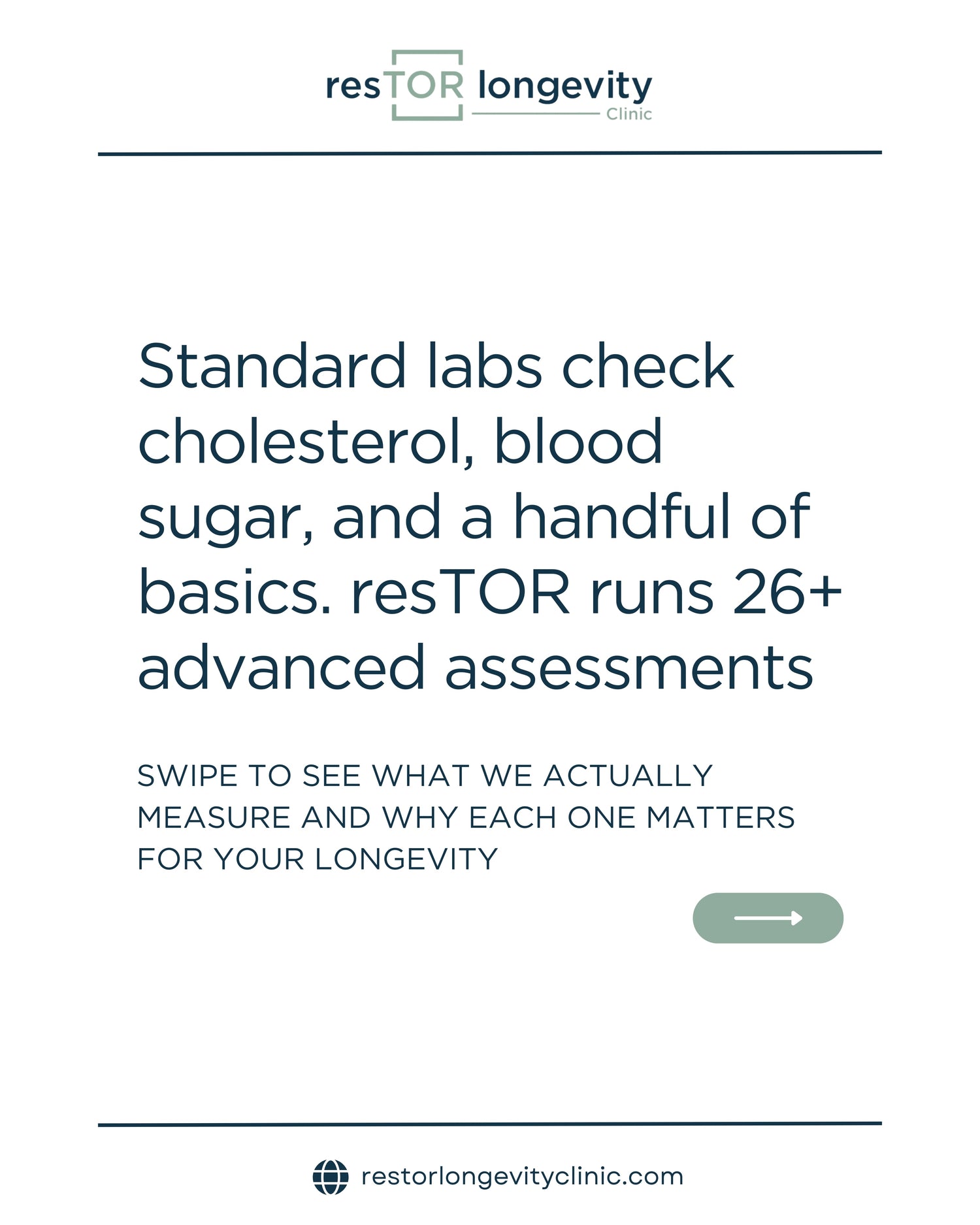
At resTOR Longevity Clinic, Dr. Gregory Burzynski and the resTOR team use 26+ advanced assessments to evaluate areas such as body composition, cardiovascular health, metabolic function, genetics, brain health, sleep, hormones, nutrients, and physical performance. The goal is not to replace routine care. It is to add a more complete layer of insight for people who want to be proactive.
“Longevity care is about understanding the bigger picture,” says Dr. Gregory Burzynski. “The more complete the picture, the easier it is to decide what deserves attention now and what steps make sense next.”
What Does Standard Testing Often Miss?
Standard labs can be useful, but they do not always explain why someone feels tired, stuck, inflamed, weaker, foggy, or less resilient than they used to. They may also miss early changes in body composition, cardiovascular risk, movement quality, glucose response, or recovery.
That is why resTOR looks beyond the basics. Body and performance testing may include:
• VO2 max testing to measure cardiovascular fitness and aerobic capacity
• DEXA body composition testing to evaluate fat mass, lean mass, and bone density
• Grip strength testing to assess strength and functional health
• Video movement analysis to evaluate movement patterns, compensation, and biomechanics
These tests can provide a clearer picture of how the body performs, not just how it looks on paper. For example, BMI cannot show whether a person has strong muscle mass, low muscle mass, higher visceral fat, or changes in bone density. DEXA offers more detail.
Fitness and strength also matter for longevity. Cardiorespiratory fitness has been strongly associated with long-term health outcomes, and grip strength is often studied as a marker of functional health and aging. These measurements can help patients better understand where they are now and what areas may need more attention.
How Can Advanced Testing Support Earlier Action?
Many chronic health issues develop quietly over time. A person may feel fine until symptoms appear, but changes in the body may have been building for years. Advanced testing can help identify certain risks earlier, which may allow for more informed next steps.
Cardiovascular testing may include tools such as CT coronary calcium scanning, CT coronary angiography with AI, expanded cardiac biomarker analysis, and ECG testing. These assessments can help evaluate heart structure, rhythm, arterial plaque, calcium buildup, and other markers that may relate to cardiovascular risk.
Cancer and genetic screening may also be part of a more proactive assessment. This may include hereditary disease screening, whole genome sequencing, prostate cancer detection tools, and multi-cancer early detection blood testing. These tests do not replace recommended screenings such as colonoscopy, mammograms, skin checks, or prostate evaluations. They may provide additional information that should be interpreted with a qualified medical provider.
Brain and aging assessments may include imaging, genetic review, neurodegenerative blood testing, epigenetic biological age testing, and whole-body MRI. These tools can help evaluate different aspects of aging, inflammation, internal health, and possible risk patterns.
The purpose is not to create fear. It is to give patients more context. When results are reviewed together, they can help guide decisions around prevention, nutrition, exercise, sleep, cardiovascular care, hormone balance, and follow-up testing.
Published by resTOR Longevity Clinic | Dr. Gregory Burzynski | Serving Houston and Harris County, TX | (832) 968-7531.
Educational purposes. Not medical advice.