Hormone Testing in Houston: A Smarter Way to Understand Energy, Mood, and Metabolism
Hormones are often talked about like they only move in one direction as we age. For many people, that can feel discouraging. Energy changes, sleep shifts, weight becomes harder to manage, mood feels less steady, and motivation may not feel the same as it used to.
But hormone health is not just about age. It is also about patterns, stress, metabolism, sleep, nutrition, inflammation, and how the body is responding over time. That is why guessing can be frustrating. Without the right data, it is easy to assume symptoms are “just normal” or to try random solutions without knowing what the body actually needs.
At resTOR Longevity Clinic in Houston, Dr. Gregory Burzynski and the resTOR team use hormone testing as part of a broader longevity approach. The goal is not to chase numbers. The goal is to understand what may be contributing to symptoms and build a plan that is guided by real biomarkers.
Why Can Hormones Affect So Many Parts of Daily Life?
Hormones help regulate energy, mood, metabolism, muscle, libido, sleep, stress response, and recovery. When hormone patterns are out of balance, the effects can show up in ways that feel disconnected at first.
Some patients notice fatigue that sleep does not fix. Others feel brain fog, low motivation, changes in body composition, decreased libido, mood instability, anxiety, or slower recovery from workouts. These symptoms can be easy to dismiss, especially when standard labs look “normal.”
Hormone testing can help evaluate whether deeper patterns are involved, including:
• sex hormone changes
• thyroid function shifts
• cortisol rhythm disruption
• nutrient deficiencies
• inflammation or metabolic strain
• stress-related HPA-axis changes
Dr. Gregory Burzynski says, “When patients understand what their data is showing, they can stop blaming themselves and start making decisions that match what their body needs.”
What Does Hormone Testing at resTOR Include?
At resTOR, hormone testing goes beyond checking one marker. A more complete picture may include a full sex hormone panel, thyroid testing, stress hormone evaluation, and micronutrient testing.
A full sex hormone panel may look at testosterone, estrogen, progesterone, DHEA, and hormone metabolites. These results can help show how the body is producing, using, and clearing hormones.
Stress hormone and HPA-axis testing may evaluate cortisol rhythm, adrenal function, and how the body is responding to ongoing stress. This matters because chronic stress can affect sleep, mood, metabolism, energy, and recovery.
Thyroid testing may include TSH, Free T3, Free T4, and reverse T3. These markers can help provide more context around metabolism, temperature regulation, energy, and weight changes.
Micronutrient testing may also be included because nutrients play a direct role in hormone production and function. If the body is missing key nutrients, hormone support may be less effective.
For men over 40, resTOR may also include prostate cancer screening support through PSA and advanced epigenetic biomarker testing when appropriate.
Hormone Health and Longevity
Hormone optimization is not about shortcuts. It is about understanding how the body is functioning and supporting healthier aging with a plan that is monitored over time.
This is especially important because hormones interact with other longevity markers. Poor sleep can affect testosterone and cortisol. Thyroid changes can influence metabolism and energy. Nutrient deficiencies can affect hormone synthesis. Stress can disrupt recovery and mood.
When these systems are reviewed together, the plan can become more specific. For one patient, the priority may be thyroid support. For another, it may be stress hormone regulation, micronutrient repletion, sleep improvement, strength training, or a more advanced protocol.
How Does the OptiMan Program Support Men?
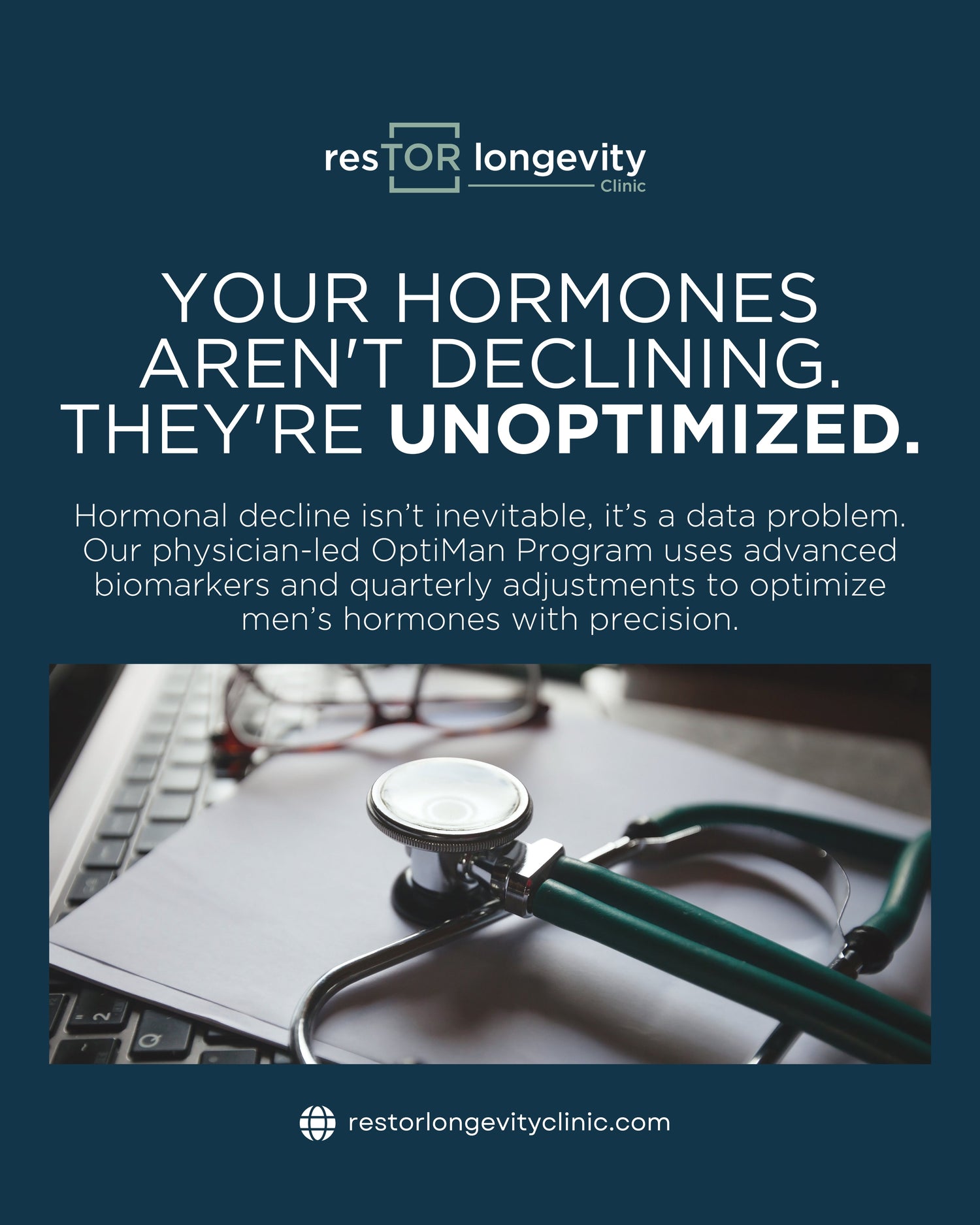
For men, resTOR’s OptiMan Program is designed to provide a more complete, physician-led approach to hormone optimization. Instead of treating symptoms in isolation, the program uses biomarker data to guide decisions and adjust care over time.
The OptiMan Program may include:
• advanced hormone testing
• testosterone and estrogen evaluation
• thyroid and metabolic markers
• stress hormone review
• micronutrient testing
• quarterly data review and plan adjustments
This matters because men’s hormone needs can change with age, stress, body composition, sleep, training, and overall health. A plan that worked one year may not be the right plan later. Quarterly review helps keep the protocol aligned with the patient’s current data and goals.
A Data-Driven Path Forward
Hormone symptoms can be frustrating because they often affect how a person feels every day. Low energy, brain fog, mood changes, stubborn weight, loss of muscle, low libido, and poor recovery can impact work, relationships, confidence, and quality of life.
At resTOR Longevity Clinic in Houston, hormone testing gives patients a clearer starting point. With physician-led evaluation, advanced biomarkers, and a plan built around the whole body, patients can better understand what may be working against them and what steps may help.
For patients in Houston and nearby Harris County communities, resTOR offers a proactive way to evaluate hormone health, metabolism, stress response, and long-term wellness. Contact resTOR Longevity Clinic today to schedule a hormone testing consultation and take the next step toward a more personalized longevity plan.
Book Your Consult Online Now
Published by resTOR Longevity Clinic | Dr. Gregory Burzynski | Serving Houston and Harris County, TX | (832) 968-7531
Educational purposes only. Not medical advice.