Walking After Meals for Better Metabolic Health
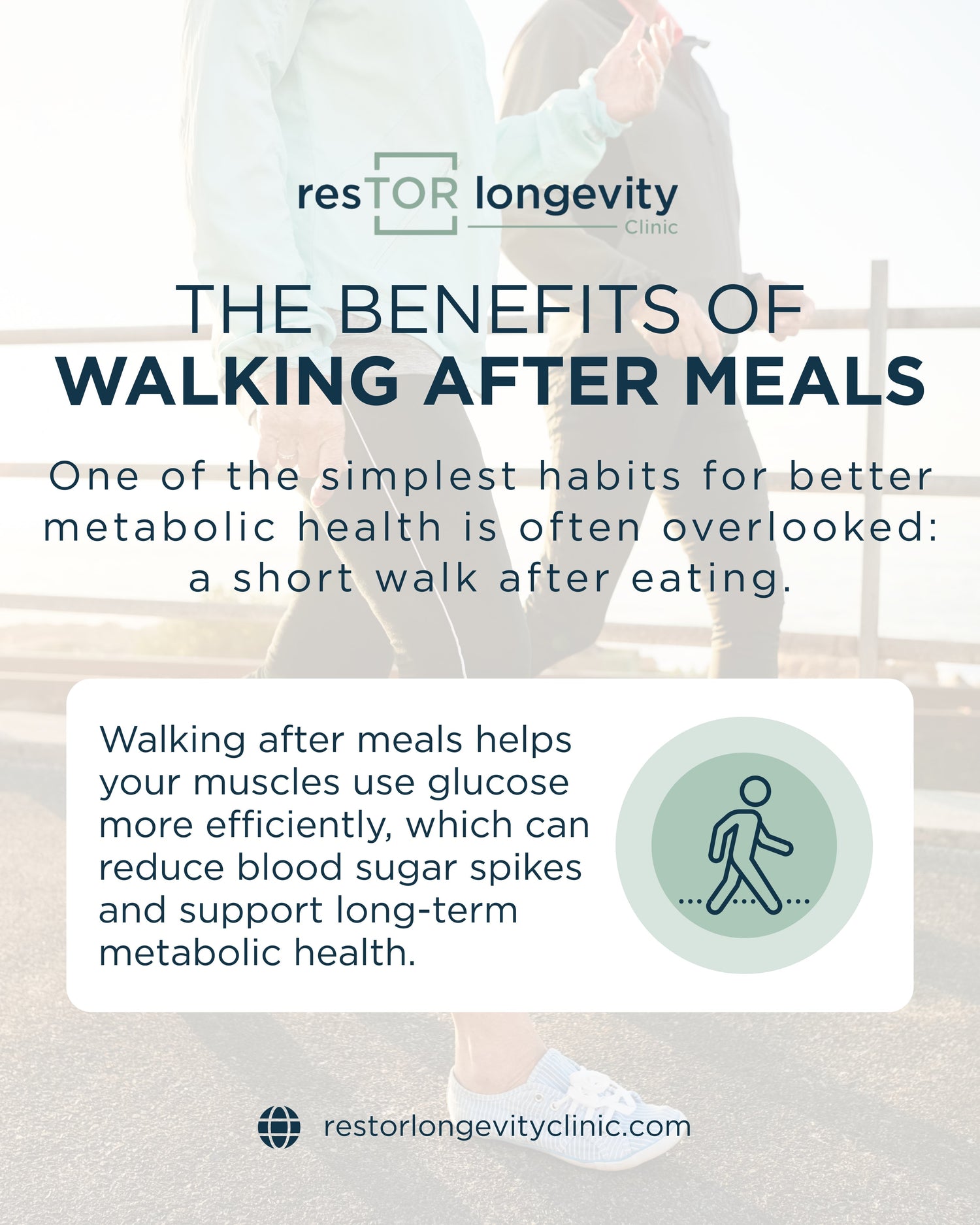
Improving metabolic health does not always require a major change to your schedule. One of the simplest habits you can add to your day is taking a short walk after eating.
Rather than sitting immediately after a meal, a few minutes of light movement gives your muscles an opportunity to use some of the glucose entering your bloodstream. Over time, this practical habit may support healthier blood sugar patterns, physical activity, energy, and long-term metabolic health.
At resTOR Longevity Clinic in Houston, Dr. Gregory Burzynski and the resTOR team help patients understand how daily habits connect with blood sugar regulation, body composition, cardiovascular health, and healthy aging. Patients from Houston and nearby Sugar Land may benefit from identifying small changes that can fit naturally into their routines.
Why Can Walking After Meals Support Metabolic Health?
After you eat, carbohydrates are broken down into glucose, which enters the bloodstream and provides energy for the body. Insulin helps move that glucose from the bloodstream into cells where it can be used or stored.
Physical activity allows working muscles to use glucose for energy. Even light walking may help reduce the amount of time spent sitting and support a more gradual post-meal blood sugar response. Studies have found that brief periods of activity after eating can help lower post-meal glucose levels, particularly in people with insulin resistance or diabetes.
This does not mean everyone needs a long or intense workout after every meal. A comfortable 10- to 15-minute walk may be enough to add meaningful movement without making the habit feel overwhelming. Beginning with a 10-minute walk after dinner and gradually building activity over time can be beneficial.
Potential benefits of regular post-meal movement may include:
• Supporting healthier post-meal blood sugar levels
• Breaking up long periods of sitting
• Adding manageable activity to the day
• Supporting cardiovascular and metabolic health
• Reducing feelings of sluggishness after large meals
“I like post-meal walking because it is realistic. Most people do not need another complicated routine. They need simple habits they can repeat consistently, and a short walk after eating can be a good place to start,” says Dr. Gregory Burzynski.
Making Post-Meal Walking Work for You
Post-meal walking should support other healthy habits, not replace them. Food choices, sleep, stress, muscle mass, medications, and overall activity all influence how the body manages blood sugar.
A short walk may be especially helpful after a carbohydrate-rich meal, but the bigger goal is to combine balanced nutrition with regular movement. The pace does not need to be intense. A comfortable walk outdoors, around the house, on a treadmill, or through the workplace can still be beneficial.
People with mobility limitations may consider standing breaks, seated movement, or another appropriate form of light activity. The best option depends on physical ability, balance, cardiovascular health, medications, and medical history.
How Can You Make Post-Meal Walking a Consistent Habit?
The most effective routine is one you can realistically maintain. You do not have to walk after every meal to begin seeing the value of adding more movement to your day.
Start with the meal that works best for your schedule. Dinner is often a convenient choice because it can become part of an evening routine. Once that habit feels natural, you may decide to add a short walk after lunch or breakfast.
Simple ways to make the habit easier include:
• Scheduling a 10-minute walk after one daily meal
• Inviting a family member or coworker to join you
• Walking indoors when weather conditions are uncomfortable
• Keeping comfortable shoes available at work or in the car
• Starting with a few minutes and gradually increasing the time
Avoid turning the walk into a high-intensity workout immediately after eating. Vigorous exercise may be uncomfortable for some people, especially after a larger meal. Light to moderate movement is usually the more practical approach.
A Broader Look at Metabolic Health
Blood sugar responses vary based on insulin sensitivity, activity, sleep, stress, muscle mass, medications, and other health factors.
Persistent fatigue, increased thirst, frequent urination, unexplained weight changes, or abnormal blood sugar readings should be discussed with a healthcare professional. People taking insulin or glucose-lowering medications should also ask how added activity may affect their levels.
At resTOR Longevity Clinic, metabolic health is reviewed alongside nutrition, body composition, cardiovascular fitness, sleep, lab results, and personal history.
A short walk after eating may seem simple, but consistent habits can support long-term health. Contact the resTOR Longevity Team to learn more about personalized metabolic care.
Schedule Your Consult
Published by resTOR Longevity Clinic | Dr. Gregory Burzynski | Serving Houston and Harris County, TX | (832) 968-7531
Educational purposes only. Not medical advice.