Signs Your Body Is Not Recovering From Stress
Stress is not limited to what happens in your thoughts. It can influence sleep, energy, appetite, concentration, heart rate, physical recovery, and the way your body responds to everyday demands.
A short-term stress response can be helpful. It may improve alertness, help you react quickly, or give you the energy to handle a difficult situation. Problems can develop when that response remains active for too long and the body does not have enough time to recover.
At resTOR Longevity Clinic in Houston, Dr. Gregory Burzynski and the resTOR team consider stress alongside sleep, metabolic health, cardiovascular fitness, body composition, hormone function, and other longevity markers. Patients from Houston and nearby The Woodlands may seek this broader view when they feel tired, unfocused, restless, or unable to recover despite trying to improve their habits.
What Are the Signs Your Body May Be Under Too Much Stress?
Stress can affect people differently. Some notice obvious emotional changes, while others first experience physical symptoms. These signs do not always point to stress alone, but they may suggest that the body is having difficulty returning to a more balanced state.
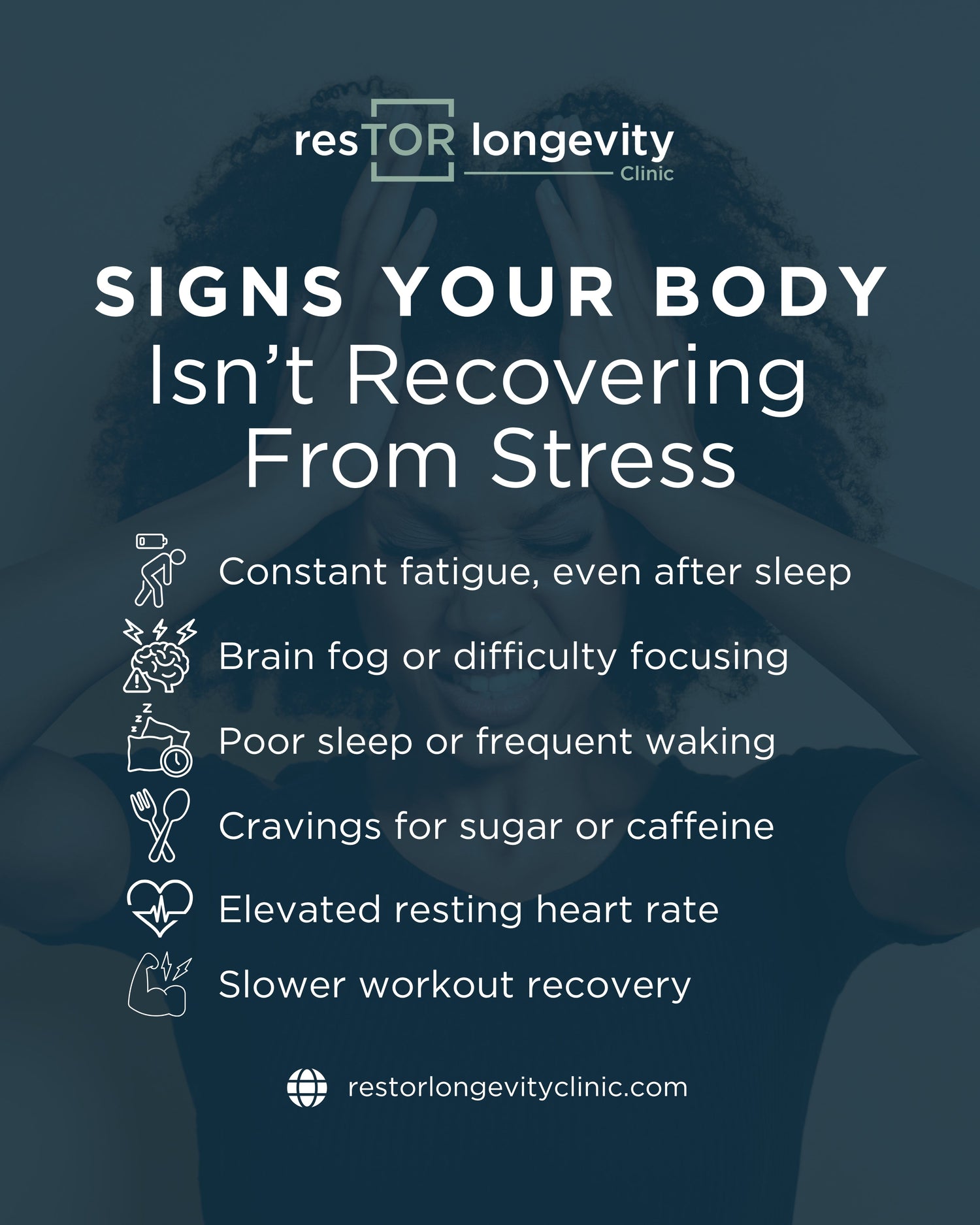
Common signs may include:
• Feeling tired even after a full night of sleep
• Waking frequently or struggling to fall asleep
• Brain fog, reduced focus, or forgetfulness
• Increased cravings for sugar, caffeine, or highly processed foods
• Persistent soreness or slower recovery after exercise
Some people also describe feeling “wired but tired.” They may feel restless, tense, or unable to slow down while also lacking energy. Others may notice changes in mood, digestion, appetite, motivation, or resting heart rate.
These symptoms can have many possible causes. Sleep disorders, nutrient deficiencies, thyroid concerns, medication side effects, metabolic issues, and other medical conditions may create similar patterns. Persistent or worsening symptoms should not automatically be blamed on stress without further evaluation.
How Does Chronic Stress Affect Recovery?
The body’s stress response is designed to help you respond to a challenge and then return to normal. When stress continues, that recovery period may become shorter or disappear altogether.
Ongoing stress may interfere with sleep quality, which can make it harder for the brain and body to recover. Poor sleep can then affect appetite, concentration, emotional regulation, exercise performance, and energy the following day. This can create a cycle in which stress disrupts sleep and inadequate sleep makes stress feel harder to manage.
Chronic stress may also influence eating patterns and activity levels. Some people skip meals, rely more heavily on caffeine, or reach for quick sources of energy. Others may stop exercising because they feel exhausted or push through intense workouts without enough recovery.
“When someone says they are doing everything right but still feel drained, I want to look at the full picture. Stress, sleep, nutrition, movement, and medical factors can all overlap, so the answer is not always to push harder,” says Dr. Gregory Burzynski.
Supporting Better Stress Recovery
Stress management does not require eliminating every difficult situation. A more realistic goal is to create regular opportunities for the nervous system and body to recover.
Helpful strategies may include:
• Keeping a consistent sleep and wake schedule
• Choosing moderate movement when intense exercise feels draining
• Eating balanced meals with enough protein, fiber, and healthy fats
• Building short breaks into demanding days
• Using breathing exercises, mindfulness, or quiet time to unwind
Recovery may also mean adjusting expectations. Someone who is sleeping poorly, working long hours, or dealing with significant emotional strain may not respond well to the same exercise intensity they could handle during a calmer period.
More is not always better. Adding harder workouts, stricter diets, or more supplements may increase the burden when the body already feels depleted. In some cases, reducing intensity and improving consistency may be more useful than trying to overhaul everything at once.
Looking Beyond Stress Alone
Fatigue, poor sleep, brain fog, cravings, and slow recovery can be connected, but they do not always come from one source. A complete evaluation may consider laboratory results, hormone patterns, blood sugar regulation, cardiovascular health, medications, nutrition, sleep quality, and daily routines.
Resting heart rate, exercise performance, and changes in body composition may also provide useful context. The goal is not to label every symptom as a stress problem. It is to identify patterns and determine whether stress is one part of a broader health concern.
At resTOR Longevity Clinic, these factors can be reviewed together to help patients better understand what may be affecting their energy, resilience, and long-term health.
Build a More Sustainable Recovery Plan
Stress is a normal part of life, but feeling constantly exhausted, unfocused, restless, or unable to recover should not be ignored. Small changes in sleep, movement, nutrition, and daily routines may help, but persistent symptoms may require a more personalized evaluation.
Learn More About Personalized Longevity Care
Published by resTOR Longevity Clinic | Dr. Gregory Burzynski | Serving Houston and Harris County, TX | (832) 968-7531
Educational purposes only. Not medical advice.