Smart Health Tech and Longevity Medicine: How Technology Is Changing Preventive Care
Preventive medicine is evolving rapidly, and smart health technology is reshaping how adults understand and manage their health. Tools like AI-powered wearables and smart mirrors now offer insight into sleep quality, posture, heart rate variability, skin health, and metabolic patterns—often before symptoms appear.
In 2026, longevity medicine is no longer limited to annual checkups. Instead, it’s becoming a continuous, data-informed process that helps people take action earlier and more effectively. At resTOR Longevity Clinic in Houston, Texas smart health technology is used to support proactive, science-based care that focuses on improving healthspan—the years of life spent feeling strong, focused, and well.
What Is Smart Health Technology and How Does It Support Longevity?
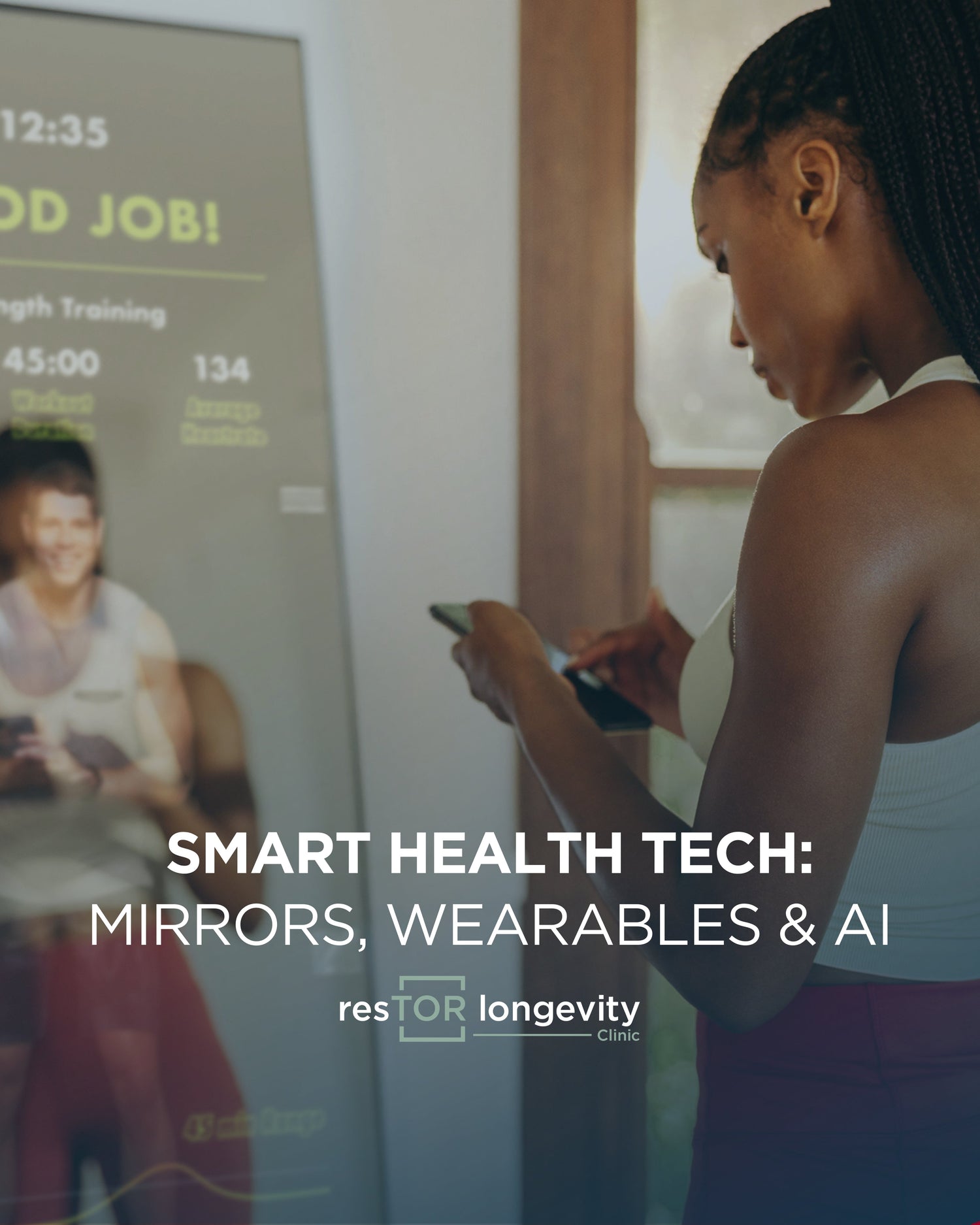
Smart health technology includes devices and platforms that monitor biological signals and lifestyle patterns in real time. Wearables track metrics such as heart rate variability, sleep cycles, activity levels, and stress response, while smart mirrors can assess posture changes, skin quality, and body trends over time.
For longevity medicine, these tools matter because aging often begins quietly. Changes in recovery, sleep efficiency, or daily stress tolerance can signal early inflammation or metabolic strain long before a person feels unwell. Smart technology brings visibility to these early signals, allowing individuals and clinicians to respond proactively rather than reactively.
This early awareness creates opportunities to adjust habits, reduce stress on the body, and protect long-term metabolic and cardiovascular health.
Early Detection Matters in Preventive Longevity Care
One of the most valuable benefits of smart health technology is early detection. Aging and metabolic stress rarely appear overnight—subtle shifts often occur weeks or months before symptoms are noticeable.
Smart devices can surface these early signals, allowing timely adjustments that protect long-term health. Common early indicators include:
- Gradual declines in sleep quality or recovery
- Increases in resting heart rate or stress markers
- Reduced resilience to exercise or daily demands
When these patterns are identified early, care strategies can be refined through lifestyle changes such as improved sleep timing, stress regulation, or recovery-focused movement—often preventing more significant issues from developing.
Wearables as Tools for Behavior Awareness and Consistency
Beyond data collection, wearables influence behavior by providing immediate feedback. Real-time reminders to move, hydrate, or wind down before sleep help reinforce healthier habits throughout the day.
This feedback loop encourages consistency, which is one of the most important factors in long-term health. Over time, individuals begin to see how lifestyle choices directly affect their metrics—and how improving those habits improves how they feel.
As Dr. Gregory Burzynski often shares with patients, “We’re not trying to turn people into data analysts—we’re using these tools to help you notice patterns and make better choices before small problems become big ones.”
How Does AI Personalization Improve Health Decisions Over Time?
Artificial intelligence plays a growing role in interpreting health data. AI-powered platforms analyze patterns across sleep, activity, stress, and recovery metrics to help tailor nutrition timing, exercise intensity, and recovery strategies.
This personalization allows longevity care to evolve with the individual. If data shows increased stress or reduced recovery capacity, care strategies can shift toward rest and nervous system support. When resilience improves, plans can adapt to support strength and performance.
AI does not replace medical care—it enhances it by adding context and precision that support better decision-making.
Technology Works Best Alongside Clinical Testing
While wearables and smart mirrors provide valuable daily insights, they are most effective when paired with clinical testing. Consumer health technology highlights trends, but lab work confirms what’s happening internally.
This combined approach allows longevity care to remain grounded in science while staying responsive to real-world habits. Together, technology and testing help evaluate:
- Hormone balance, inflammation, and metabolic function
- Nutrient status and cellular stress markers
- How lifestyle changes translate into measurable biological improvements
By validating wearable data with lab-based diagnostics, longevity medicine delivers clearer guidance, greater confidence, and more precise personalization—without relying on assumptions.
A Smarter, More Proactive Path to Healthspan
Smart health technology is not about chasing gadgets or obsessing over numbers. When used thoughtfully, it becomes a practical tool for understanding the body, reinforcing healthy habits, and supporting long-term vitality.
By combining smart mirrors, wearables, AI insights, and clinical testing, longevity medicine empowers adults to take control of their health earlier and with greater confidence—creating a proactive, sustainable approach to aging well.