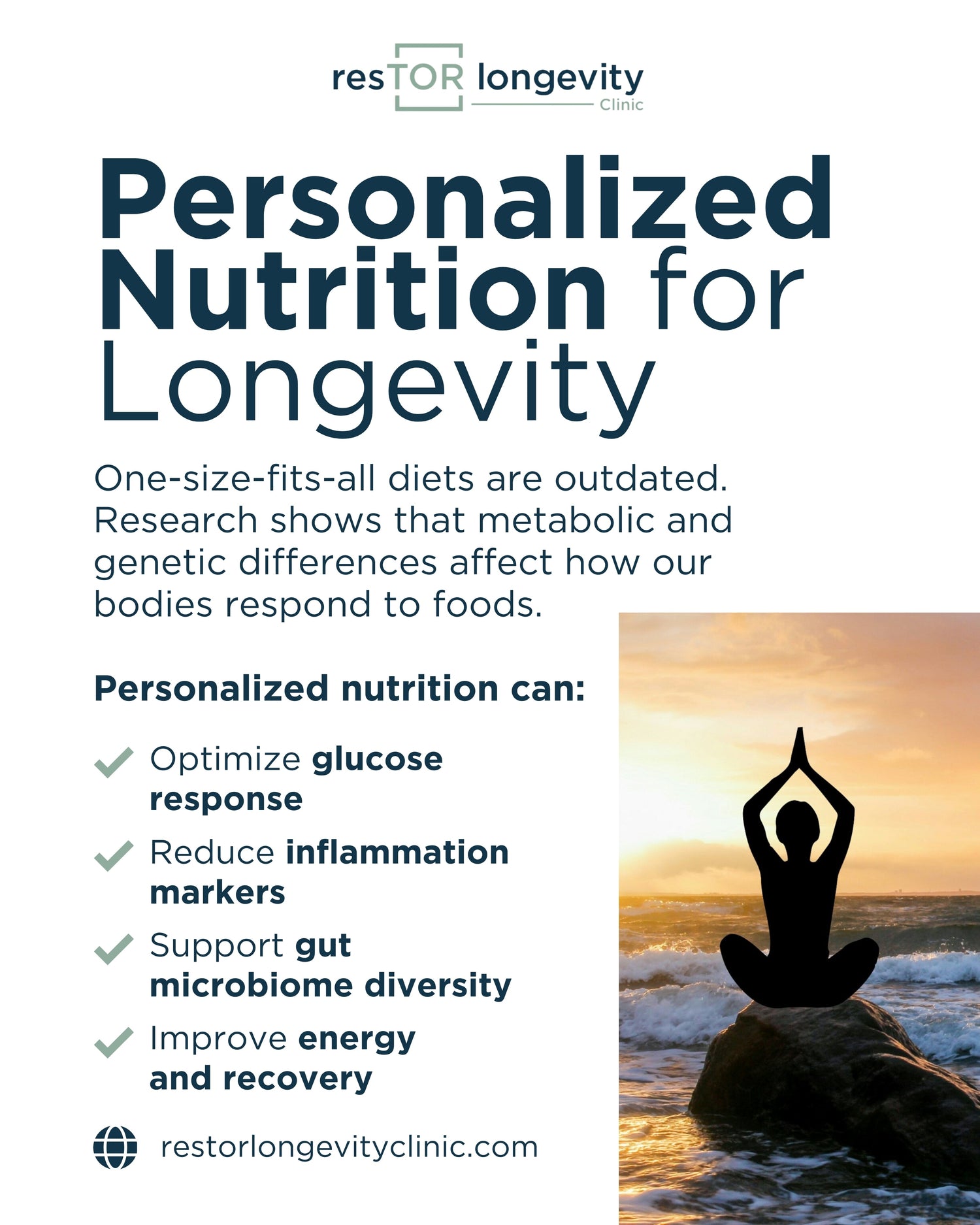
Nutrition plays a foundational role in how the body ages, recovers, and performs over time. Yet for decades, dietary advice has relied on generalized plans that assume all bodies respond the same way. In reality, metabolism, genetics, gut health, hormone balance, and daily lifestyle factors all shape how food is processed and used.
At resTOR Longevity Clinic in Houston, Texas, personalized nutrition is a core component of longevity medicine. Instead of following trends or restrictive plans, nutrition strategies are built around measurable data that reflects how an individual body actually responds to food. This approach supports metabolic stability, sustained energy, and long-term healthspan.
Why Does the Same Diet Work for Some People but Not Others?
Two people can eat the same meal and experience completely different outcomes. One may maintain steady energy and balanced blood sugar, while the other experiences a sharp glucose spike followed by fatigue or cravings. These differences are not random. They are driven by individual biology.
Factors that influence dietary response include:
- Insulin sensitivity and glucose regulation
- Inflammation levels
- Gut microbiome diversity
- Hormone balance
- Sleep quality, stress, and activity levels
Because standard diet plans cannot account for these variables, they often fall short. Personalized nutrition uses real-time data to understand how food affects the body, allowing adjustments to food choices, timing, and portion sizes based on actual response rather than assumptions.
At resTOR Longevity Clinic, Dr. Gregory Burzynski helps patients understand how nutrition connects to metabolism and long-term health goals. “When patients see how their own body responds to certain foods, nutrition stops feeling confusing and starts feeling empowering,” Dr. Greg Burzynski explains.
What Does Personalized Nutrition Look Like in Longevity Medicine?
Personalized nutrition in a longevity setting goes beyond calorie counting or macronutrient ratios. It focuses on optimizing internal health markers that influence aging, disease risk, and daily performance.
This approach may include:
- Monitoring glucose patterns to minimize spikes and crashes
- Identifying foods that increase or reduce inflammation
- Supporting gut microbiome balance through targeted food choices
- Adjusting meal timing to improve energy, sleep, and recovery
- Aligning nutrition with physical activity and metabolic demand
Rather than eliminating entire food groups, this strategy emphasizes strategic, sustainable changes. Even small adjustments, such as modifying carbohydrate sources or shifting meal timing, can lead to noticeable improvements in energy, digestion, and metabolic stability.
Tracking meals alongside energy, mood, and recovery also helps reveal patterns that are easy to miss, allowing nutrition to adapt as the body changes over time.
Personalized Nutrition Supports Long-Term Metabolic Flexibility
Metabolic flexibility refers to the body’s ability to efficiently switch between fuel sources, such as carbohydrates and fats, based on demand. As adults age, this flexibility often declines, contributing to energy crashes, weight gain, and increased cardiometabolic risk.
Personalized nutrition supports metabolic flexibility by reducing constant metabolic stress caused by frequent glucose spikes, chronic inflammation, or poorly timed meals. By stabilizing blood sugar patterns and supporting mitochondrial function, many patients experience steadier energy, improved focus, and better workout recovery. This creates a nutritional foundation that supports resilience rather than short-term symptom control.
The Role of Biomarkers in Nutrition for Longevity
Biomarkers provide objective feedback on how nutrition choices are affecting the body. Instead of relying solely on how someone feels after a meal, data helps confirm whether food choices are supporting or straining metabolic health.
Common areas assessed may include blood sugar regulation, inflammatory markers, lipid patterns, and indicators of gut health. This information helps guide decisions with clarity and precision, making nutrition a proactive tool rather than a reactive one.
Over time, this data-driven approach supports consistency, reduces frustration, and helps patients feel more confident in their choices. Nutrition becomes less about restriction and more about alignment with long-term health and vitality.
A Smarter Way to Support Healthspan
Longevity is not built on short-term diets or extremes. It is supported by habits that work with the body’s biology over time. Personalized nutrition replaces generalized advice with individualized care that evolves as needs change.
At resTOR Longevity Clinic, nutrition strategies are integrated into a broader longevity plan that includes lifestyle, movement, recovery, and preventive care. This holistic approach helps protect metabolic health while supporting energy, resilience, and quality of life as patients age.
If you are ready to move beyond generic nutrition advice and understand what truly works for your body, personalized guidance can make a measurable difference. To learn more about personalized nutrition and longevity care, book an appointment with Dr. Gregory Burzynski and the resTOR Longevity Clinic team in Houston, Texas.