Why Sleep Regularity Matters for Metabolic and Cardiovascular Health
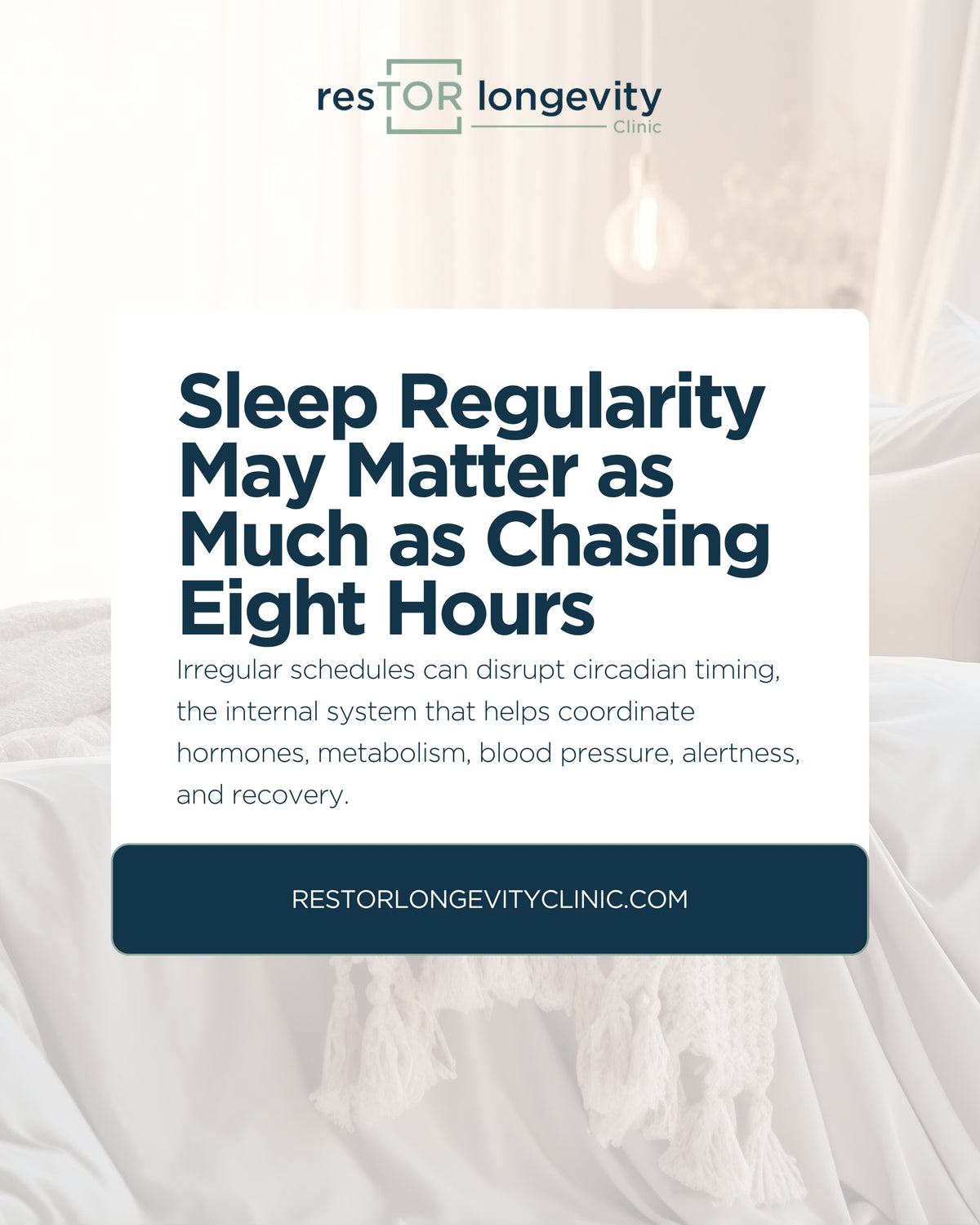
Sleep regularity matters because the body uses consistent light, sleep, wake, meal, and activity cues to coordinate circadian rhythms. Large swings in timing can disrupt metabolic, cardiovascular, hormonal, and cognitive patterns even when average sleep duration appears adequate.
At resTOR Longevity Clinic in Houston, Texas, Dr. Gregory Burzynski, MD, reviews this information as one part of a broader physician-guided assessment. The goal is not to chase an isolated score. It is to connect the result with cardiovascular, metabolic, cognitive, hormonal, fitness, sleep, imaging, and family-history data when those categories are relevant.
Sleep Duration and Sleep Regularity Are Different
Duration answers how long someone slept. Regularity asks whether sleep and wake times remain stable across days. Quality adds another layer, including awakenings, breathing, sleep stages, and how restored the person feels.
A person can average eight hours by sleeping five hours on one night and eleven on another. The arithmetic looks adequate, but the biological schedule is unstable. That is why averages alone may miss an important part of sleep health.
How Circadian Timing Connects to Health
Circadian rhythms help organize predictable changes in melatonin, cortisol, body temperature, blood pressure, appetite, insulin sensitivity, and alertness across the day. Light exposure is a major signal, but meal timing, activity, and social schedules also contribute.
Irregular sleep can create a mismatch between internal timing and daily demands. Studies increasingly associate that mismatch with cardiometabolic risk and lower health-related quality of life, although association does not prove that irregularity is the sole cause.
What to Track for Two Weeks
A short sleep diary can be more revealing than one wearable score. Record bedtime, estimated sleep onset, awakenings, final wake time, naps, caffeine, alcohol, exercise, travel, and morning energy. Wearable data can add context, but consumer devices are not a diagnosis.
Patterns can identify practical targets. A variable wake time may be the main issue. Late alcohol may fragment sleep. Snoring, gasping, or morning headaches may suggest a need for sleep-apnea evaluation rather than another supplement.
Build a Personalized Sleep Anchor
For many adults, a consistent wake time is a useful starting anchor because morning light and activity help set the next circadian cycle. Bedtime can then be adjusted to allow adequate opportunity for sleep.
Shift work, caregiving, menopause symptoms, travel, pain, and medication schedules can make generic advice unrealistic. A clinician-guided plan should account for the reason sleep is irregular and evaluate persistent insomnia, breathing problems, or excessive daytime sleepiness.
Frequently Asked Questions
How much variation in bedtime is too much?
There is no single threshold for everyone, but repeated swings of several hours are worth reviewing, especially when energy, mood, glucose, or blood pressure are affected.
Can a wearable diagnose poor sleep?
No. Wearables can help reveal patterns, but they do not replace clinical evaluation or a sleep study when a disorder is suspected.
Is sleeping late on weekends harmful?
Occasional recovery sleep can be understandable. Large recurring weekend shifts may contribute to social jet lag and signal insufficient sleep during the week.
Turn the Result Into a Plan
A useful longevity test should clarify a decision, a priority, or a trend to follow. To discuss a personalized assessment with Dr. Gregory Burzynski, MD, contact resTOR Longevity Clinic at (832) 968-7531. The clinic is located at 9432 Katy Freeway, Suite 400, Houston, Texas 77055.
This article is educational and does not replace individualized medical advice. Testing and follow-up should be selected with a qualified clinician based on personal history, symptoms, risk, and current guidelines.
Sources
Published by resTOR Longevity Clinic | Dr. Gregory Burzynski | Serving Houston and Harris County, TX | (832) 968-7531
Educational purposes only. Not medical advice.