Muscle Size vs. Muscle Strength: Which Matters More for Healthy Aging?
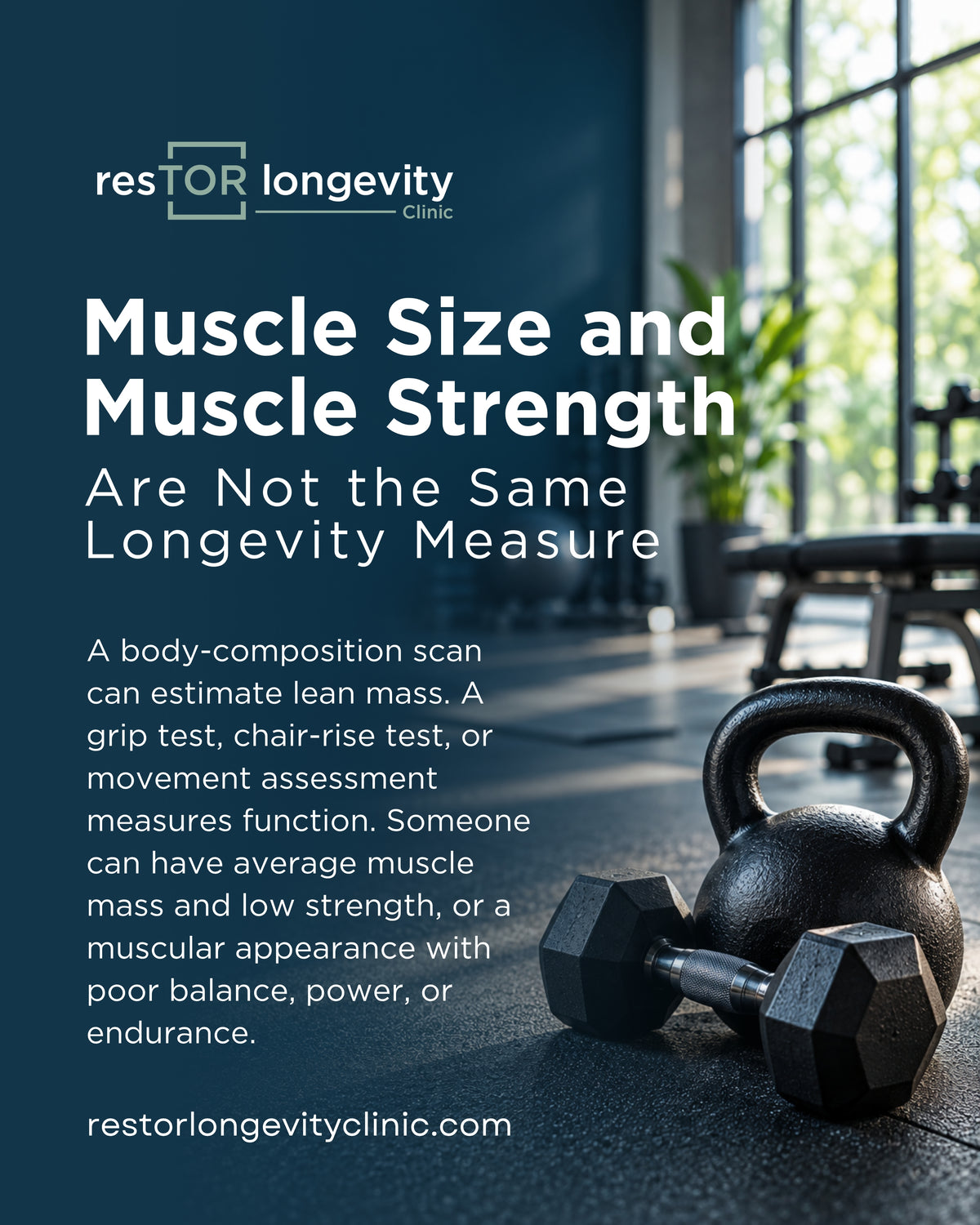
Both muscle size and muscle strength matter, but strength more directly reflects what the body can do. Healthy-aging assessment should consider lean mass together with functional measures such as grip strength, chair-rise ability, movement quality, balance, and cardiorespiratory fitness.
At resTOR Longevity Clinic in Houston, Texas, Dr. Gregory Burzynski, MD, reviews this information as one part of a broader physician-guided assessment. The goal is not to chase an isolated score. It is to connect the result with cardiovascular, metabolic, cognitive, hormonal, fitness, sleep, imaging, and family-history data when those categories are relevant.
Mass, Strength, and Power Answer Different Questions
Lean mass estimates the amount of non-fat tissue in the body, although it is not a perfect direct measurement of skeletal muscle. Strength measures maximum force, while power describes how quickly that force can be produced.
Daily life depends on all three. Rising from a low chair requires strength. Catching balance after a trip requires rapid force. Carrying groceries requires both force and endurance. A scan cannot fully describe those abilities.
Why Strength Can Decline Before Appearance Changes
Muscle quality, nerve signaling, coordination, pain, inactivity, illness, and medications can influence performance. That means someone may look muscular yet perform poorly, or have modest muscle mass but excellent function for age.
Aging also affects motor units and the speed of force production. Training should therefore include more than muscle-building volume. Technique, balance, mobility, and appropriately progressed power work may matter when safe.
How to Measure Functional Reserve
Grip strength is quick and repeatable, but it is not the only option. Chair-rise testing, gait speed, balance tasks, movement analysis, and exercise testing can reveal different limitations. The right combination depends on age, goals, injuries, and baseline fitness.
Repeated measures are valuable because they show whether function is improving. A stable body weight with better strength and movement can be a meaningful success that a scale would miss.
Train for the Life You Want to Keep
Progressive resistance training means gradually increasing the challenge as the body adapts. The plan can use machines, free weights, bands, body weight, or other tools. Consistency and progression matter more than a fashionable method.
Nutrition, sleep, and recovery support adaptation. Medical conditions, dizziness, osteoporosis, joint problems, or recent inactivity may require professional guidance before intensity increases.
Frequently Asked Questions
Is grip strength really useful?
Grip strength is a practical marker associated with broader function, but it should be interpreted with age, body size, hand conditions, and other performance measures.
Can walking maintain all the muscle I need?
Walking is valuable aerobic activity, but it may not provide enough progressive resistance to preserve strength in every muscle group.
How often should strength be measured?
The interval depends on the goal and program. Repeating the same validated measure under similar conditions helps track meaningful change.
Turn the Result Into a Plan
A useful longevity test should clarify a decision, a priority, or a trend to follow. To discuss a personalized assessment with Dr. Gregory Burzynski, MD, contact resTOR Longevity Clinic at (832) 968-7531. The clinic is located at 9432 Katy Freeway, Suite 400, Houston, Texas 77055.
This article is educational and does not replace individualized medical advice. Testing and follow-up should be selected with a qualified clinician based on personal history, symptoms, risk, and current guidelines.
Sources
- National Institute on Aging guidance on strength training
- NIA exercise types for older adults
- resTOR FAQ on grip strength and movement quality
Published by resTOR Longevity Clinic | Dr. Gregory Burzynski | Serving Houston and Harris County, TX | (832) 968-7531
Educational purposes only. Not medical advice.