Circadian Rhythm and Longevity
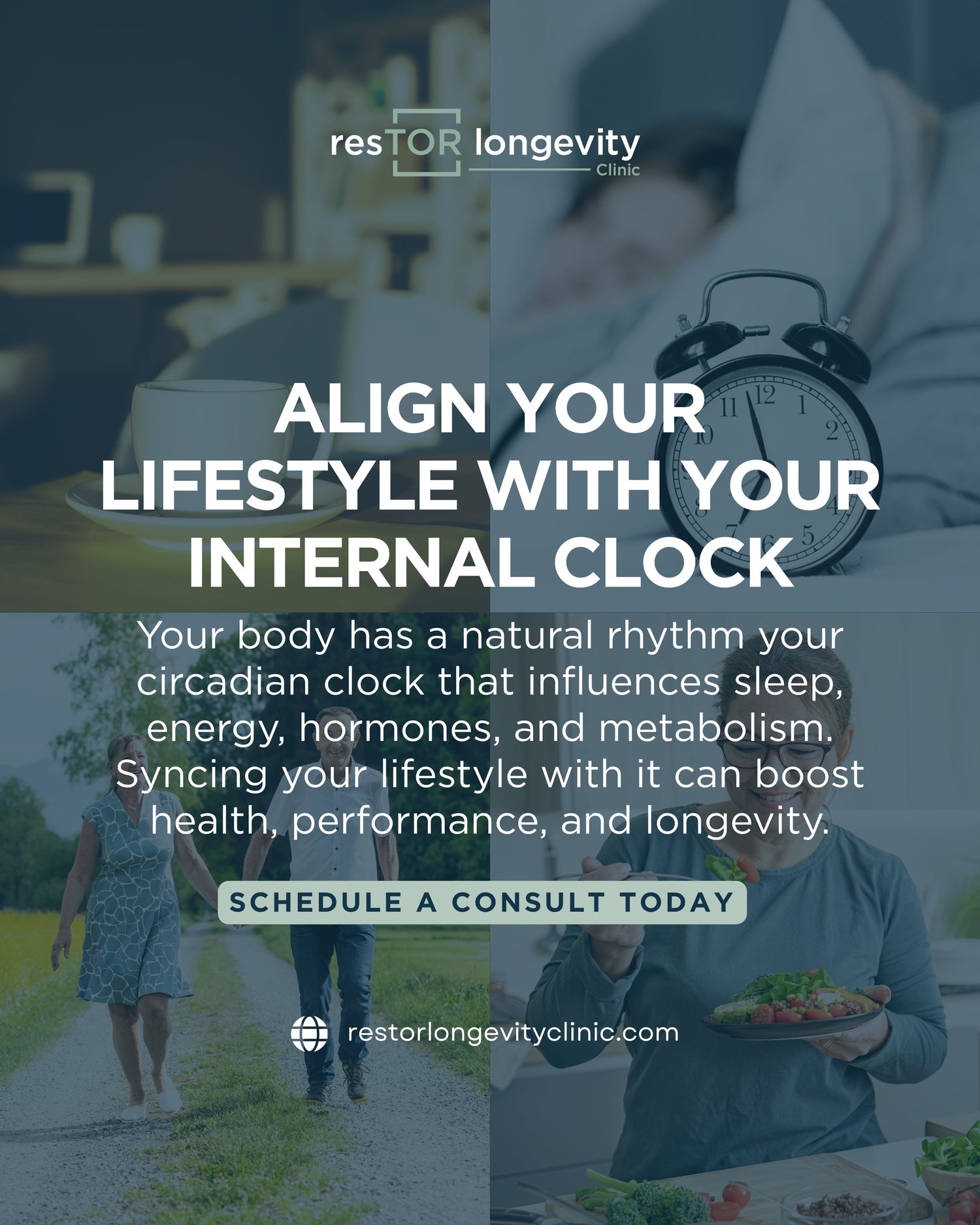
Your body runs on a natural internal rhythm called the circadian clock. This rhythm helps guide when you feel awake, when you feel sleepy, how your hormones shift throughout the day, how your metabolism responds to food, and how well your body recovers. When your daily habits work with that rhythm, your body may function more efficiently. When your schedule works against it, you may notice changes in energy, sleep, cravings, focus, and recovery.
At resTOR Longevity Clinic in Houston, Texas, Dr. Gregory Burzynski and the resTOR team look at wellness through a long-term lens. Sleep, hormones, metabolism, nutrition, movement, inflammation, and recovery are all connected. Circadian rhythm is part of that bigger picture because it influences how the body manages many of the systems involved in healthy aging.
For patients in Houston and those traveling from Katy and Sugar Land, improving daily rhythm does not always require a dramatic lifestyle overhaul. Often, small changes made consistently can help support better energy, deeper sleep, more stable routines, and a stronger foundation for longevity.
Why Does Your Circadian Clock Matter?
Your circadian clock helps your body know when to be alert, rest, digest, and repair. Light exposure, meal timing, sleep patterns, movement, caffeine, and nighttime habits all send signals to this internal system.
When those signals are consistent, the body has a clearer routine to follow. Morning light can support alertness, regular meals can support digestion and metabolism, and steady sleep can support hormone balance and recovery. When that rhythm is disrupted, some people may notice poor sleep, low energy, late-night hunger, weaker recovery, or trouble focusing.
“People often think better health has to start with something extreme, but sometimes the first place to look is your daily rhythm,” says Dr. Gregory Burzynski. “When sleep, meals, movement, and light exposure are more consistent, the body often has a better chance to respond.”
Daily Habits That Support Your Internal Clock
Supporting your circadian rhythm starts with the habits that repeat most often. These small daily choices help your body understand when it is time to be active, digest, recover, and rest.
- Morning sunlight: Natural light early in the day helps signal wakefulness and supports mood, alertness, and a stronger sleep-wake rhythm.
- Consistent meal timing: Eating at similar times each day can support digestion and metabolism. Heavy late-night meals may make it harder to wind down.
- Better sleep routines: A regular bedtime and wake time can support hormone regulation, recovery, and energy.
- Strategic movement: Earlier exercise may support daytime energy and nighttime sleep. Intense workouts too close to bedtime can feel stimulating for some people.
- Less screen time at night: Reducing phones, tablets, and bright screens before bed can help create a calmer transition into sleep.
- Smarter caffeine timing: Morning coffee or tea may fit well into a routine, but late-day caffeine can interfere with sleep quality.
These habits are not about perfection. They are about creating signals your body can rely on. Even adjusting one or two areas may help someone feel more consistent throughout the day.
How Can Circadian Rhythm Affect Energy and Metabolism?
Circadian rhythm can affect energy and metabolism because the body does not function the same way at every hour of the day. Hormones, digestion, insulin response, body temperature, and alertness naturally shift across a 24-hour cycle.
For example, eating late at night may affect digestion and sleep for some people. Poor sleep may influence hunger hormones, cravings, and energy the next day. Irregular sleep may also make it harder to recover from exercise or manage stress well. This is why circadian rhythm is not just a sleep topic. It is also connected to metabolic health, hormone balance, and long-term wellness.
At resTOR Longevity Clinic, Dr. Gregory Burzynski and the resTOR team help patients look beyond surface-level symptoms. If someone feels tired, foggy, inflamed, or stuck despite trying to make healthier choices, it may be helpful to evaluate deeper patterns. Advanced testing and guidance based on results can help connect daily habits with what is happening inside the body.
Building a Rhythm That Supports Longevity
A longevity-focused lifestyle should feel realistic enough to maintain. That may mean starting with morning sunlight, setting a consistent bedtime, moving workouts earlier, or limiting late caffeine. The best plan is one that fits your life while still giving your body stronger daily signals.
Circadian rhythm is one part of a larger wellness picture. When paired with personalized care, advanced testing, nutrition guidance, movement, hormone evaluation, and recovery support, it can help create a stronger foundation for long-term health.
At resTOR Longevity Clinic in Houston, Texas, Dr. Gregory Burzynski and the resTOR team help patients better understand the factors that influence energy, metabolism, sleep, hormones, and healthy aging. To take a closer look at your wellness from the inside out, schedule a consultation with resTOR Longevity Clinic.
Book Your Consultation Now
Published by resTOR Longevity Clinic | Dr. Gregory Burzynski | Serving Houston and Harris County, TX | (832) 968-7531
Educational purposes only. Not medical advice.