Train for Mobility: Move Better, Feel Better
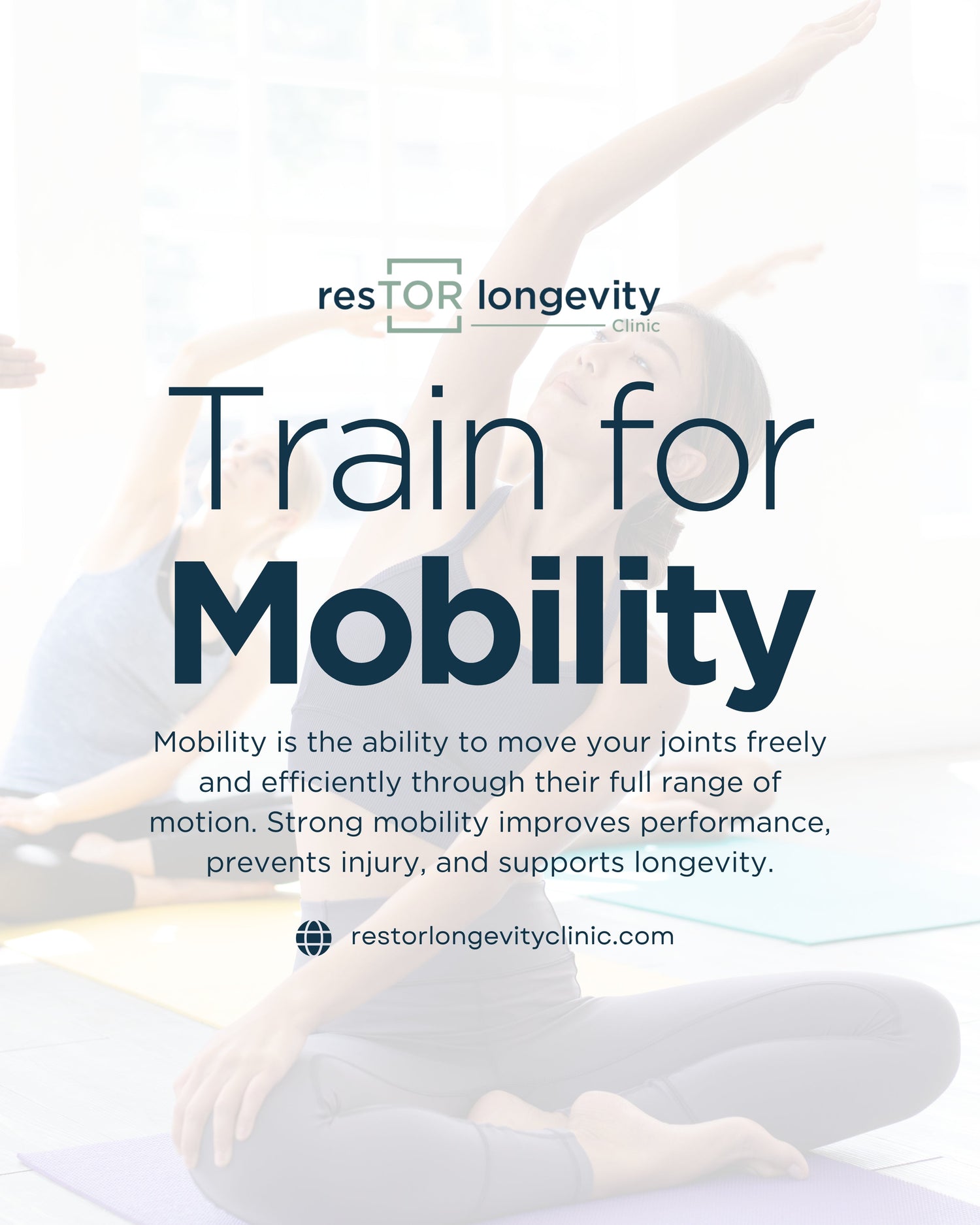
Mobility is more than stretching. It is the ability to move your joints freely, efficiently, and with control through a healthy range of motion. When mobility is limited, everyday movement can feel harder. Simple tasks like reaching overhead, getting up from a chair, walking, exercising, or turning your neck can become stiff, uncomfortable, or restricted.
At resTOR Longevity Clinic in Houston, Texas, Dr. Gregory Burzynski and the resTOR team view mobility as an important part of long-term wellness. Better movement can support strength, balance, injury prevention, recovery, and independence as the body ages.
Why Does Mobility Matter for Longevity?
Mobility matters for longevity because movement affects how well the body functions over time. Good mobility helps joints move smoothly, muscles work properly, and the body stay balanced during daily activities and exercise.
Many people think flexibility and mobility are the same, but they are different. Flexibility is the ability of a muscle to lengthen. Mobility is the ability of a joint to move well with strength, control, and stability. For example, someone may be flexible enough to stretch deeply but still lack the strength or control needed to move safely through that range.
Poor mobility can contribute to:
- Joint stiffness
- Muscle tightness
- Poor posture
- Limited exercise performance
- Higher injury risk
- Reduced balance
- Slower recovery
- Less confidence with movement
Mobility can also affect how consistently someone stays active. If walking, bending, squatting, lifting, or reaching feels uncomfortable, it becomes easier to avoid movement. Over time, that can affect muscle mass, metabolism, cardiovascular health, and overall quality of life.
“Mobility is one of those things people don't always think about until movement starts feeling limited. The goal is to keep the body moving well now so patients can stay stronger, more active, and more independent over time.” -Dr. Gregory Burzynski
How Can You Train Mobility Safely?
Training mobility safely starts with consistency, control, and listening to the body. Mobility work does not have to be extreme or time-consuming. Even 10 minutes a day can help reduce stiffness and improve the way joints feel.
A simple mobility routine may include:
- Dynamic warm-ups: movements like leg swings, arm circles, torso twists, and gentle hip openers help prepare the joints and muscles before activity.
- Stretching tight areas: hips, shoulders, spine, calves, and hamstrings are common areas that can benefit from slow, controlled stretching.
- Strength through range: exercises like squats, lunges, overhead presses, step-ups, and controlled core work help build strength while the joints move.
- Active mobility drills: movements like ankle circles, shoulder pass-throughs, controlled hip rotations, and spinal twists help train the joints to move with better control.
- Daily movement breaks: short walks, posture resets, and gentle stretching throughout the day can help reduce stiffness from sitting.
The key is not forcing the body into uncomfortable positions. Mobility training should feel controlled, steady, and purposeful. Sharp pain, pinching, numbness, or worsening discomfort should not be ignored.
About resTOR Longevity Clinic
At resTOR Longevity Clinic in Houston, Texas, Dr. Gregory Burzynski and the resTOR team help patients take a deeper look at movement, recovery, energy, and long-term wellness. Mobility is not just about stretching tight muscles. It can also reflect strength, inflammation, body composition, hormone balance, metabolic health, and recovery.
Through advanced testing and personalized, physician-led guidance, resTOR helps patients better understand what may be limiting their progress and how to build a realistic plan for healthier aging.
Mobility as Part of a Longevity Plan
Mobility is not a stand-alone fitness trend. It is part of how the body ages, performs, and recovers. When stiffness, weakness, pain, or fatigue keeps showing up, it may be helpful to look deeper at the factors that support better movement from the inside out.
For patients in Houston and those traveling from Sugar Land and The Woodlands, a personalized plan may include body composition analysis, lab work, strength guidance, recovery support, and physician-led recommendations based on the patient’s goals.
Moving better can help you feel better. When mobility improves, exercise often becomes more effective, daily movement feels easier, and the body has a stronger foundation for long-term health. At resTOR Longevity Clinic, Dr. Gregory Burzynski and the resTOR team help patients build habits that support strength, movement, and wellness over time. Contact resTOR Longevity Clinic in Houston to schedule an appointment.
Book Your Consultation Online
Published by resTOR Longevity Clinic | Dr. Gregory Burzynski | Serving Houston and Harris County, TX | (832) 968-7531
Educational purposes only. Not medical advice.