Sleep and Longevity: Why Better Health Starts After You Fall Asleep
Most people think about longevity in terms of nutrition, exercise, supplements, hormone optimization, or advanced testing. Those factors matter, but one of the most powerful influences on long-term health happens every night while you are asleep.
Sleep is often treated like something that can be sacrificed when life gets busy. Many people assume they can make up for lost sleep on weekends or simply push through fatigue with caffeine. Unfortunately, the body does not work that way.
Quality sleep plays a critical role in recovery, hormone regulation, cognitive function, cardiovascular health, metabolism, and healthy aging. When sleep suffers, nearly every system in the body can feel the effects.
At resTOR Longevity Clinic, in Houston, Texas, Dr. Gregory Burzynski and the resTOR team help patients take a deeper look at the factors influencing long-term health and performance. Sleep is often one of the most overlooked pieces of that puzzle.
“Many people focus on diet and exercise but overlook sleep,” says Dr. Gregory Burzynski. “When sleep quality improves, we often see positive changes in energy, recovery, focus, and overall health.”
What Is Your Body Doing While You Sleep?
Sleep is not simply a period of rest. It is an active biological process during which the body performs many of its most important maintenance and recovery functions.
During healthy sleep, the body helps:
• move through deep sleep and REM sleep
• clear waste products from the brain
• support tissue repair and recovery
• regulate breathing, heart rhythm, and blood pressure
• organize and store new information
Different stages of sleep serve different purposes. Deep sleep is especially important for physical restoration, while REM sleep plays a major role in learning, memory, and emotional processing.
When sleep is repeatedly interrupted or shortened, these natural recovery processes may not occur as effectively.
Could Poor Sleep Be Affecting More Than Your Energy?
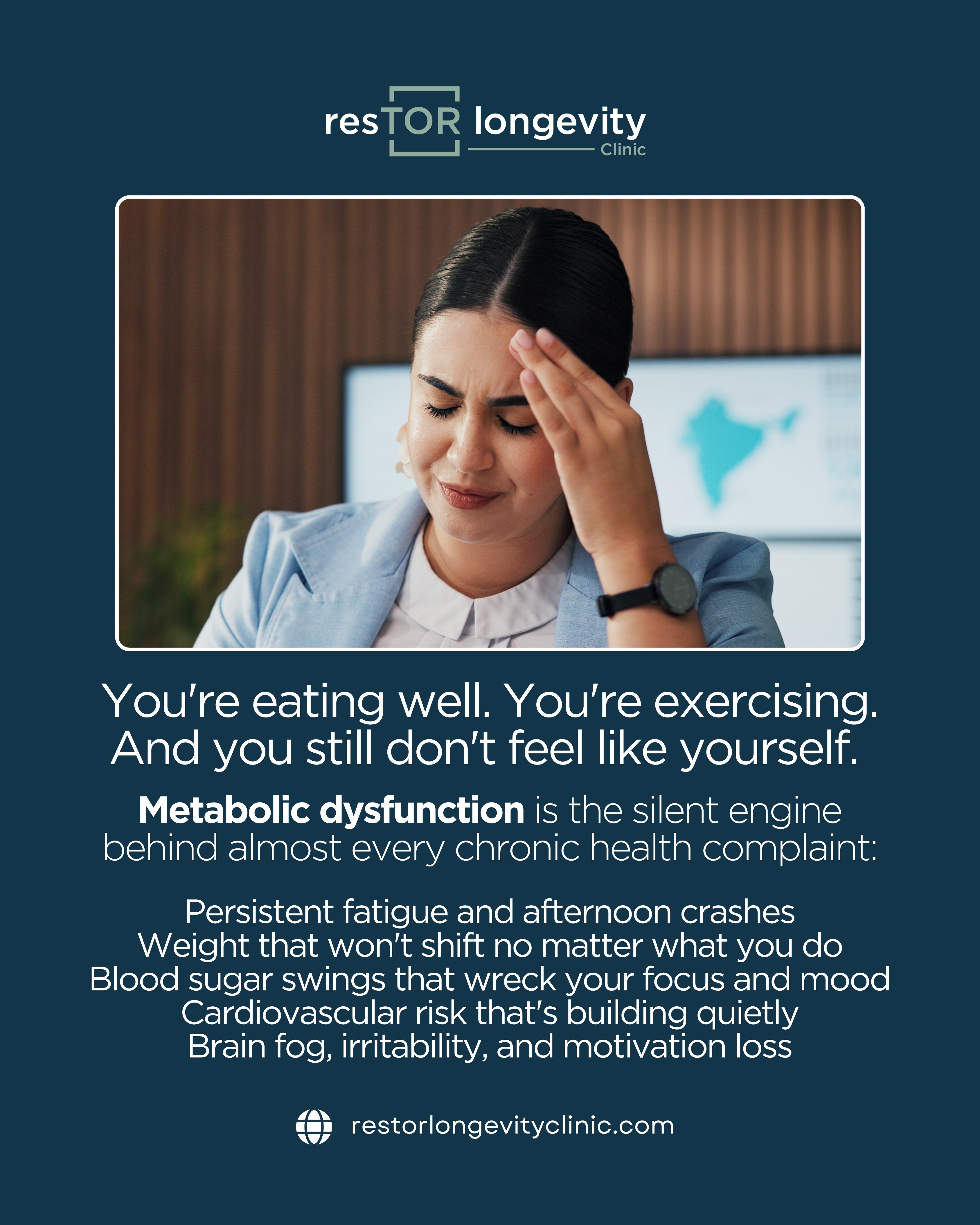
Many people associate poor sleep with feeling tired the next day. While fatigue is common, the effects often extend much further.
Chronic sleep disruption has been associated with:
• brain fog, forgetfulness, and slower thinking
• stronger cravings and harder weight management
• reduced workout performance and slower recovery
• changes in mood, patience, and stress response
• higher strain on blood pressure and heart health
Over time, these issues can begin affecting overall quality of life. Some people notice declining energy, while others experience slower recovery, reduced motivation, increased cravings, or difficulty maintaining healthy habits.
Because these symptoms can develop gradually, many people do not immediately connect them to sleep quality.
Why Sleep Matters for Healthy Aging
Longevity is not simply about living longer. It is about protecting the strength, clarity, mobility, and independence that help people feel well as they age.
Sleep gives the body time to reset systems that are under demand all day. It helps the brain recover, supports repair after physical stress, and gives hormones, metabolism, circulation, and immune function a chance to recalibrate.
When sleep quality declines, the body may spend more time in a stressed state and less time in a restorative one. Over time, that can make it harder to maintain steady energy, healthy aging, and long-term wellness.
How Can Sleep Testing Provide Better Answers?
Many people struggle with poor sleep without knowing why.
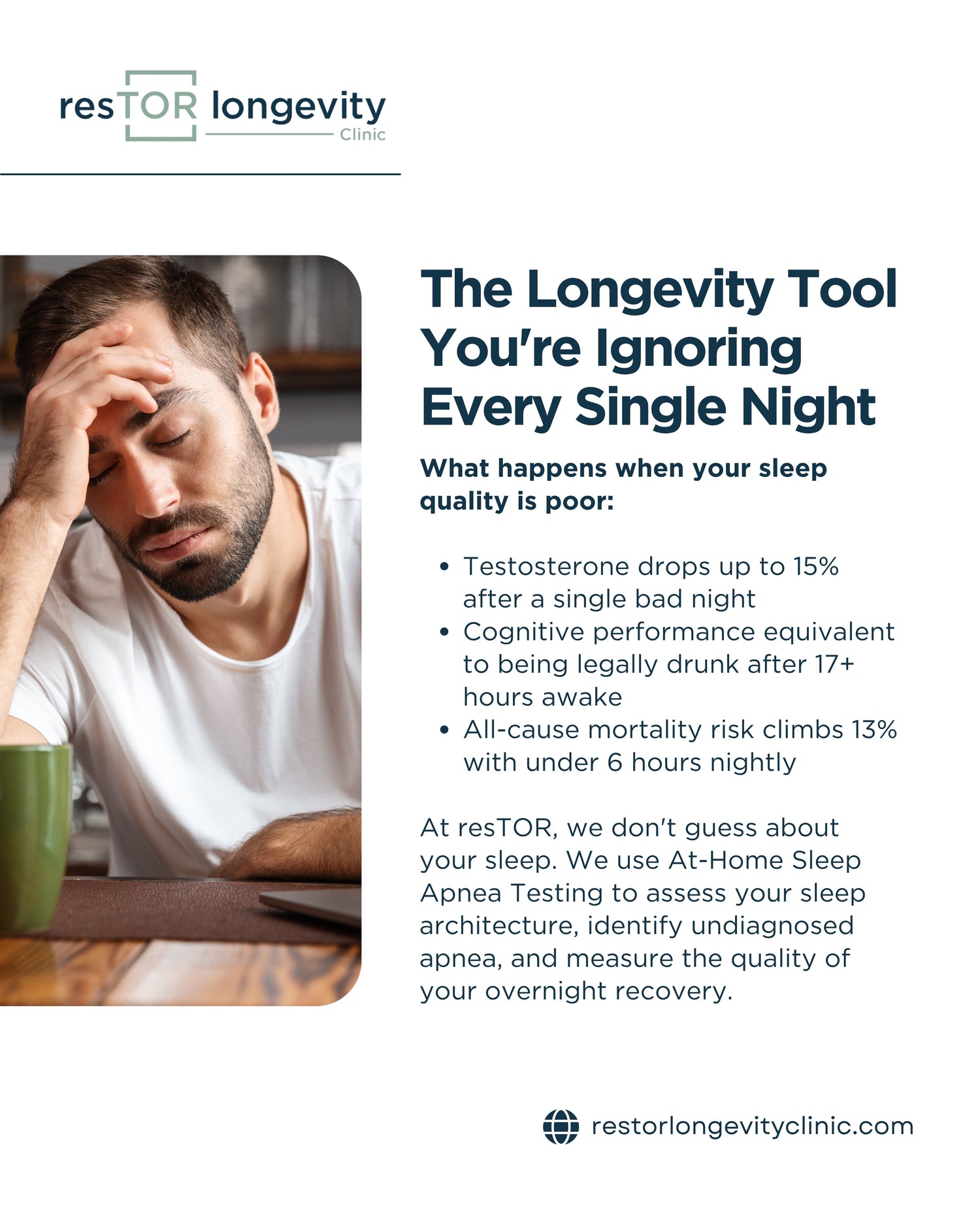
Some wake up feeling exhausted despite spending enough time in bed. Others experience snoring, frequent awakenings, morning headaches, daytime fatigue, or difficulty concentrating. In some cases, an underlying sleep disorder may be contributing to these symptoms.
At-home sleep apnea testing can help identify potential issues that may be affecting overnight recovery and sleep quality. Understanding what happens during sleep can provide valuable information that may not be obvious during the day.
At resTOR Longevity Clinic, sleep evaluation can also be reviewed alongside advanced blood testing and hormone assessments. Looking at these factors together may help create a more complete picture of overall health.
Rather than viewing sleep, hormones, metabolism, and recovery as separate concerns, a comprehensive approach can help patients better understand how these systems interact.
A Better Night of Sleep Can Support Better Long-Term Health
Many people spend years trying to improve their energy, focus, recovery, and overall wellness without ever examining their sleep quality.
The reality is that sleep influences nearly every aspect of health. When recovery is consistently disrupted, it becomes harder for the body to perform at its best.
For individuals interested in longevity, optimizing sleep is often one of the most practical places to start. Better sleep may support better recovery, healthier aging, improved performance, and a stronger foundation for long-term wellness.
At resTOR Longevity Clinic, Dr. Gregory Burzynski and the team help patients look beyond symptoms and better understand the factors influencing their health. If you are curious about how your sleep may be affecting your energy, recovery, and longevity, scheduling a comprehensive longevity assessment can be a valuable next step.
Book Your Consult Now
Published by resTOR Longevity Clinic | Dr. Gregory Burzynski | Serving Houston and Harris County, TX | (832) 968-7531.
Educational purposes only. Not medical advice.