What Hormone Testing Can and Cannot Explain in Midlife
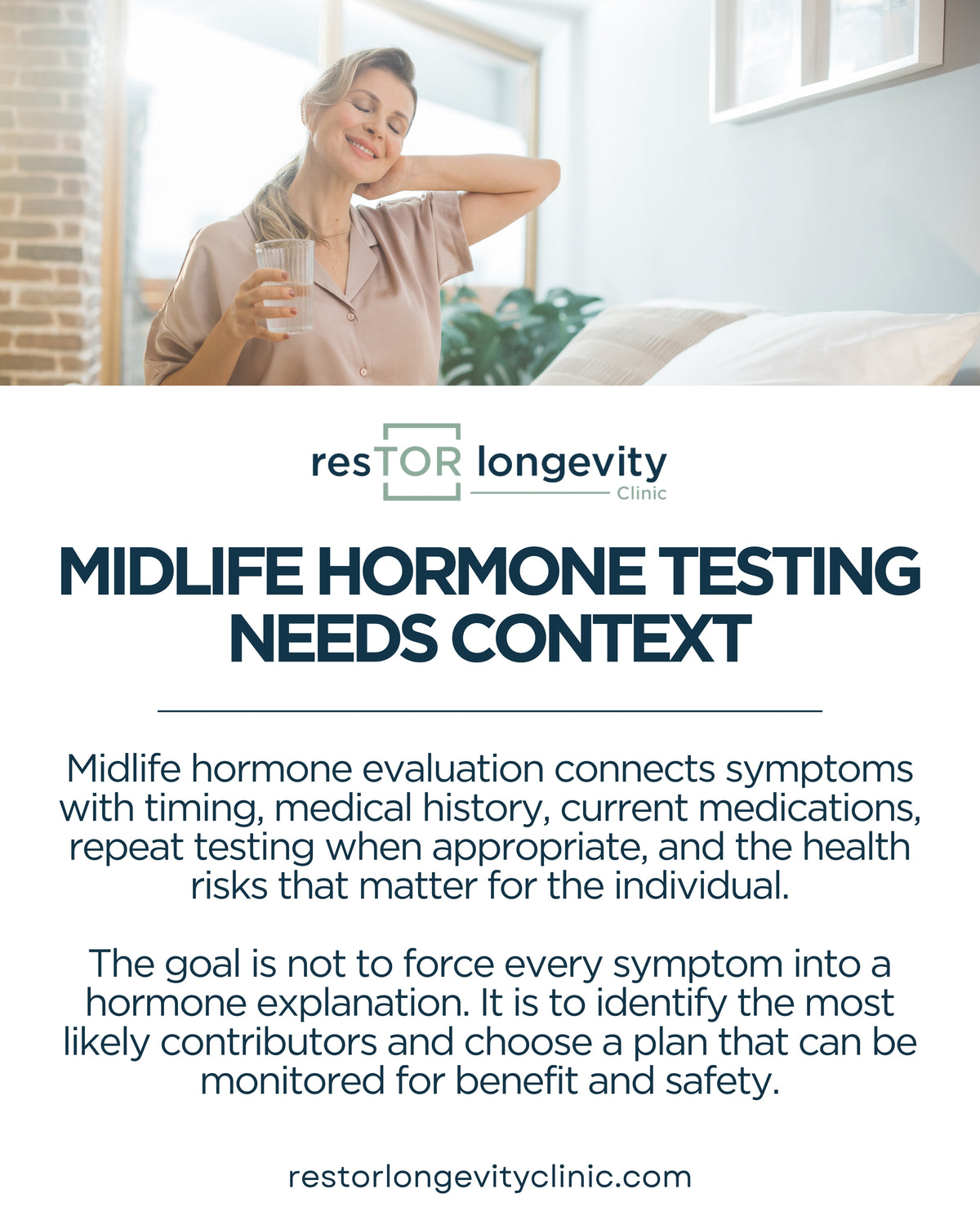
Hormone testing can identify patterns that help explain symptoms or health risks, but a result should be interpreted with age, timing, medications, menstrual or reproductive status, sleep, thyroid function, metabolic health, and medical history. One value rarely explains every midlife change.
At resTOR Longevity Clinic in Houston, Texas, Dr. Gregory Burzynski, MD, reviews this information as one part of a broader physician-guided assessment. The goal is not to chase an isolated score. It is to connect the result with cardiovascular, metabolic, cognitive, hormonal, fitness, sleep, imaging, and family-history data when those categories are relevant.
Why Midlife Symptoms Overlap
Fatigue, low mood, poor sleep, reduced libido, weight change, and slower recovery are nonspecific symptoms. Hormone changes can contribute, but so can anemia, thyroid disease, sleep apnea, depression, medication effects, undernutrition, chronic stress, and metabolic dysfunction.
A useful evaluation begins with the pattern and timeline. Which symptom appeared first? Is it constant or cyclical? Did it begin after a medication change, major stressor, illness, or change in sleep? Those details help decide which laboratory tests are relevant.
Timing and Test Selection Matter
Hormones can vary by time of day, menstrual cycle, recent illness, medication use, and laboratory method. Testosterone is commonly interpreted with attention to morning timing, while reproductive hormone interpretation in women depends on menstrual status and the clinical question.
Broad panels can create incidental low or high values that do not match the person. Testing should be selected to answer a defined question, and an unexpected result may need confirmation before treatment is considered.
Treatment Is More Than Reaching a Target Number
If therapy is appropriate, the goal is a meaningful improvement in symptoms or risk without unacceptable harm. The plan should define what will be monitored, when laboratory testing will be repeated, and which side effects or warning signs require review.
Hormone therapy is not universal and is not the only path. Sleep treatment, nutrition, resistance training, weight management, medication adjustment, or mental-health care may address part of the same symptom cluster.
Connect Hormones to the Longevity Picture
Hormones can influence bone, muscle, body composition, sexual health, sleep, and quality of life. Those systems should be measured directly when relevant instead of assuming a hormone value represents them.
A comprehensive approach allows the clinician and patient to decide which change would matter most and whether improvement is visible in both symptoms and objective health markers.
Frequently Asked Questions
Can a normal hormone result mean symptoms are not real?
No. Symptoms can be real even when one test is within range. The next step is to evaluate other possible contributors and whether the chosen test answered the right question.
Should hormone tests be repeated?
Some results should be confirmed or trended, depending on the hormone, timing, symptoms, and treatment decision.
Does hormone therapy slow aging?
Hormone therapy may be appropriate for specific indications and symptoms, but it should not be presented as a universal anti-aging treatment.
Turn the Result Into a Plan
A useful longevity test should clarify a decision, a priority, or a trend to follow. To discuss a personalized assessment with Dr. Gregory Burzynski, MD, contact resTOR Longevity Clinic at (832) 968-7531. The clinic is located at 9432 Katy Freeway, Suite 400, Houston, Texas 77055.
This article is educational and does not replace individualized medical advice. Testing and follow-up should be selected with a qualified clinician based on personal history, symptoms, risk, and current guidelines.
Sources
Published by resTOR Longevity Clinic | Dr. Gregory Burzynski | Serving Houston and Harris County, TX | (832) 968-7531
Educational purposes only. Not medical advice.