
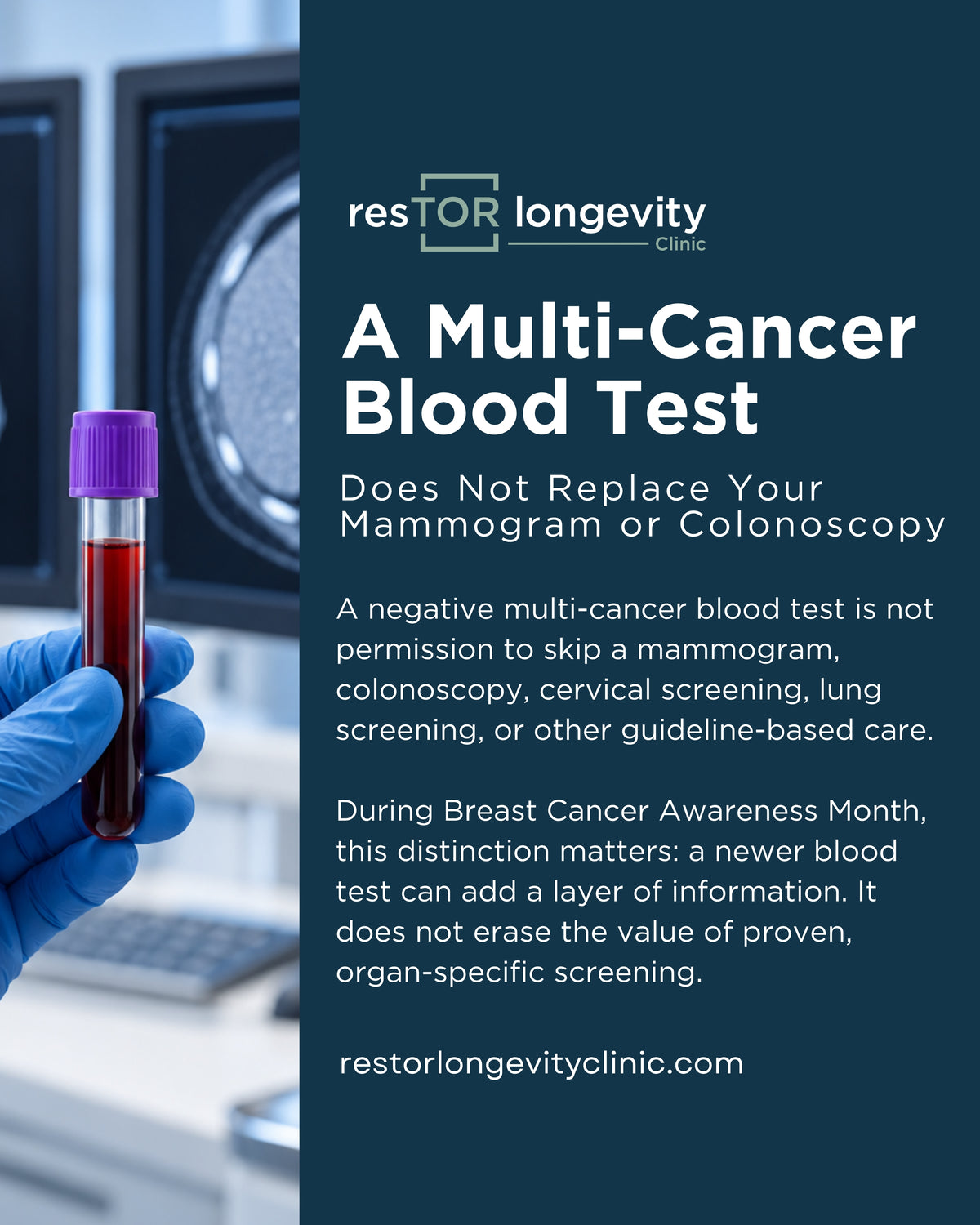
Do Multi-Cancer Early Detection Blood Tests Replace Standard Cancer Screening?
No. Multi-cancer early detection blood tests do not replace standard screening tests such as mammography, colonoscopy, cervical screening, or low-dose CT for eligible people. They may add information, but their benefits, harms, and follow-up pathways are still being evaluated in large trials.
At resTOR Longevity Clinic in Houston, Texas, Dr. Gregory Burzynski, MD, reviews this information as one part of a broader physician-guided assessment. The goal is not to chase an isolated score. It is to connect the result with cardiovascular, metabolic, cognitive, hormonal, fitness, sleep, imaging, and family-history data when those categories are relevant.
What Multi-Cancer Tests Are Designed to Do
Multi-cancer early detection tests analyze a blood sample for molecular signals that may be associated with cancer. Depending on the assay, those signals can include fragments of tumor DNA, methylation patterns, proteins, or combinations of biomarkers.
The appeal is clear: one blood draw may look for signals from several cancers, including some that lack routine population screening. The difficult question is not only whether a signal can be detected. It is whether using the test in people without symptoms ultimately improves outcomes.
Why a Negative Result Is Not an All-Clear
No screening test detects every cancer. A false negative occurs when cancer is present but the test does not identify it. If a negative result leads someone to ignore symptoms or skip proven screening, the new test can create false reassurance.
Organ-specific screening remains important because the evidence, intervals, ages, and follow-up steps have been studied for particular cancers. Mammography still evaluates breast tissue. Colonoscopy can both identify and remove certain precancerous lesions. A blood result does not perform those functions.
Why a Positive Result Needs a Pathway
A positive signal is not the same as a cancer diagnosis. The next step may involve targeted imaging, repeat testing, specialist evaluation, or an invasive procedure. Some signals may never be localized, which can create anxiety and cost without a clear clinical endpoint.
Before testing, patients should understand who will interpret the result, which laboratory is used, what confirmatory pathway is available, and how unexpected findings will be managed. Advanced detection is only as responsible as the system built around it.
How resTOR Uses Complementary Screening
The resTOR approach described in the clinic FAQ combines whole-body MRI, a multi-cancer early-detection blood test, genetic testing, and standard guideline-based protocols. Each tool contributes different information, and none is presented as definitive by itself.
During Breast Cancer Awareness Month, this layered model is especially relevant. Risk can be shaped by age, family history, breast density, genetics, prior findings, hormones, and other factors. The screening plan should reflect the person rather than the popularity of a new test.
Frequently Asked Questions
Are multi-cancer detection tests FDA approved?
As of the National Cancer Institute's current public guidance, no multi-cancer detection test has received FDA approval, although some are offered as laboratory-developed tests.
What happens after a positive result?
Follow-up depends on the suspected tissue of origin and may involve imaging, laboratory tests, specialist referral, or a diagnostic procedure.
Should I still get a mammogram after a negative multi-cancer test?
Yes, if mammography is recommended for you. A negative multi-cancer test does not replace breast screening.
Turn the Result Into a Plan
A useful longevity test should clarify a decision, a priority, or a trend to follow. To discuss a personalized assessment with Dr. Gregory Burzynski, MD, contact resTOR Longevity Clinic at (832) 968-7531. The clinic is located at 9432 Katy Freeway, Suite 400, Houston, Texas 77055.
This article is educational and does not replace individualized medical advice. Testing and follow-up should be selected with a qualified clinician based on personal history, symptoms, risk, and current guidelines.
Sources
- National Cancer Institute questions and answers on multi-cancer detection tests
- NCI Vanguard Study
- resTOR Longevity Clinic FAQ
Published by resTOR Longevity Clinic | Dr. Gregory Burzynski | Serving Houston and Harris County, TX | (832) 968-7531
Educational purposes only. Not medical advice.