
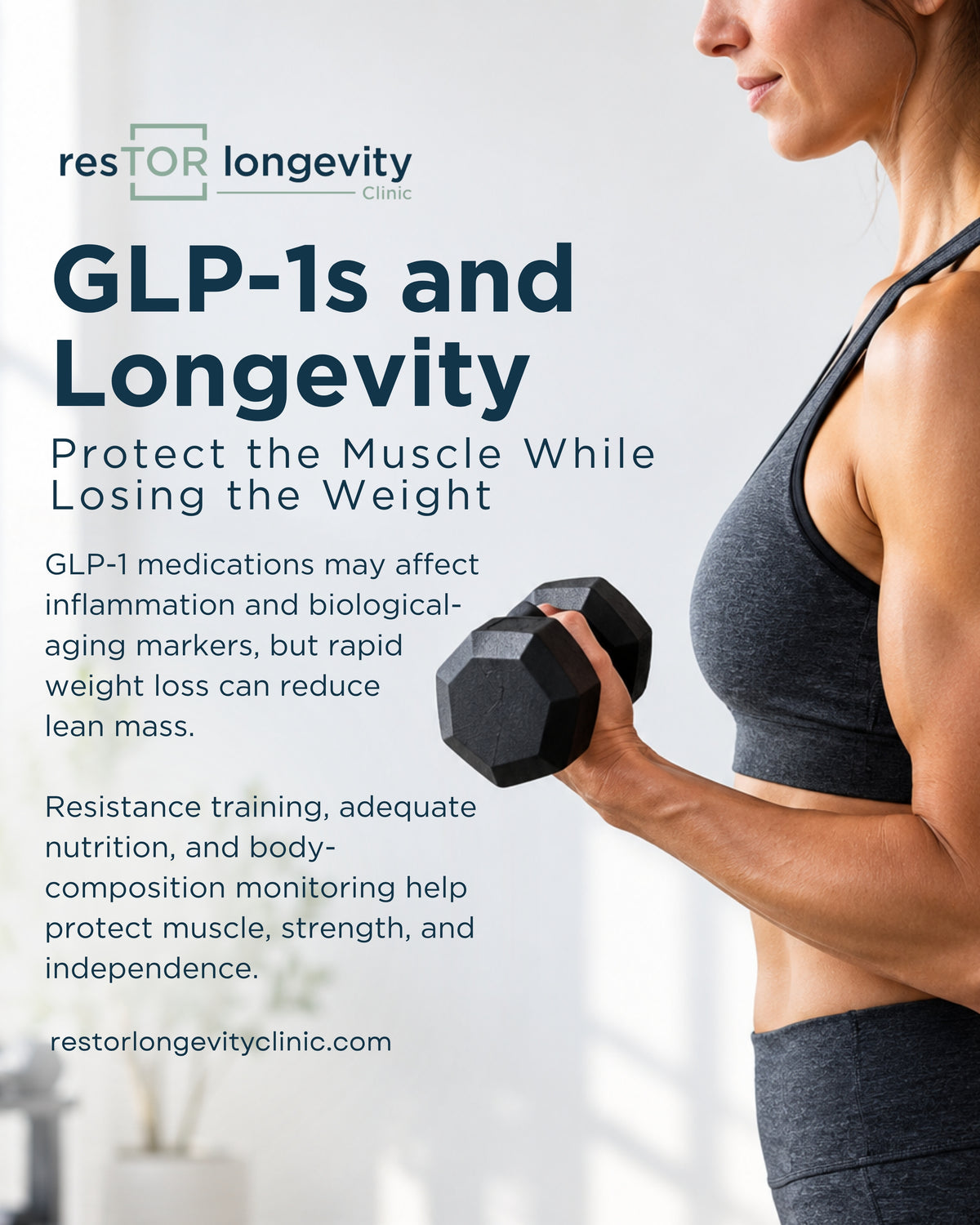
GLP-1 Weight Loss and Longevity: Why Muscle Preservation Matters
Preserving muscle during GLP-1 treatment generally requires a plan that includes adequate nutrition, progressive resistance training, and monitoring of strength or body composition. Medication decisions and nutrition targets should be individualized, especially for older adults or anyone at risk for frailty.
At resTOR Longevity Clinic in Houston, Texas, Dr. Gregory Burzynski, MD, reviews this information as one part of a broader physician-guided assessment. The goal is not to chase an isolated score. It is to connect the result with cardiovascular, metabolic, cognitive, hormonal, fitness, sleep, imaging, and family-history data when those categories are relevant.
Why GLP-1 Medications Entered the Longevity Conversation
GLP-1 receptor agonists were developed for diabetes and later became widely used for obesity. Their effects on body weight, glucose regulation, and cardiovascular outcomes naturally attracted interest from longevity medicine, which focuses on reducing the burden of chronic disease.
A 2026 post hoc analysis of a randomized trial reported changes in several DNA methylation clocks after semaglutide treatment in adults with HIV-associated lipohypertrophy. The finding is scientifically interesting, but the population was specific, the analysis was exploratory, and an epigenetic clock is not the same as proof of longer life.
The Scale Cannot Distinguish Fat From Lean Tissue
Weight change is a total. It does not show how much came from fat, water, or lean tissue. Clinical trials of GLP-1-based therapies have reported lean-mass reductions alongside fat loss, although the proportion varies across studies, methods, and populations.
That distinction matters because skeletal muscle supports glucose disposal, physical function, balance, recovery, and independence. A person can become lighter while also becoming weaker if nutrition and training are not addressed.
What a Muscle-Preservation Plan Can Include
Progressive resistance training gives the body a reason to retain and build strength. Adequate protein and total energy intake provide material for recovery. The right plan depends on kidney health, appetite, age, activity, medications, and starting body composition, so a universal internet target is not appropriate for everyone.
Monitoring can include functional measures such as grip strength or repeated chair stands, plus body-composition assessment when clinically useful. Symptoms such as persistent nausea, dehydration, dizziness, or reduced ability to train deserve prompt review rather than being treated as proof that the medication is working.
A Better Definition of Success
A successful metabolic intervention should improve more than weight. Useful outcomes can include waist or visceral-fat reduction, improved glucose regulation, better blood pressure or lipids, maintained strength, improved stamina, and a plan that can be sustained.
GLP-1 medications can be valuable for appropriately selected patients. Longevity framing adds an important question: is the intervention protecting the physical reserve the person will need later?
Frequently Asked Questions
Does everyone lose muscle on a GLP-1 medication?
Not in the same amount. Lean-mass change varies with the medication, degree of weight loss, age, diet, activity, and measurement method.
Can resistance training prevent all lean-mass loss?
It can support strength and muscle retention, but no single strategy guarantees that all lean mass will be preserved.
Does a 2026 biological-aging study prove semaglutide extends life?
No. It found changes in epigenetic biomarkers in a specific population. It did not establish longer lifespan for the general public.
Turn the Result Into a Plan
A useful longevity test should clarify a decision, a priority, or a trend to follow. To discuss a personalized assessment with Dr. Gregory Burzynski, MD, contact resTOR Longevity Clinic at (832) 968-7531. The clinic is located at 9432 Katy Freeway, Suite 400, Houston, Texas 77055.
This article is educational and does not replace individualized medical advice. Testing and follow-up should be selected with a qualified clinician based on personal history, symptoms, risk, and current guidelines.
Sources
- Nature Communications 2026 semaglutide epigenetic-aging analysis
- PubMed review of lean-mass changes with GLP-1 therapies
- National Institute on Aging strength-training overview
Published by resTOR Longevity Clinic | Dr. Gregory Burzynski | Serving Houston and Harris County, TX | (832) 968-7531
Educational purposes only. Not medical advice.