Why Bone Density Belongs in a Longevity Assessment
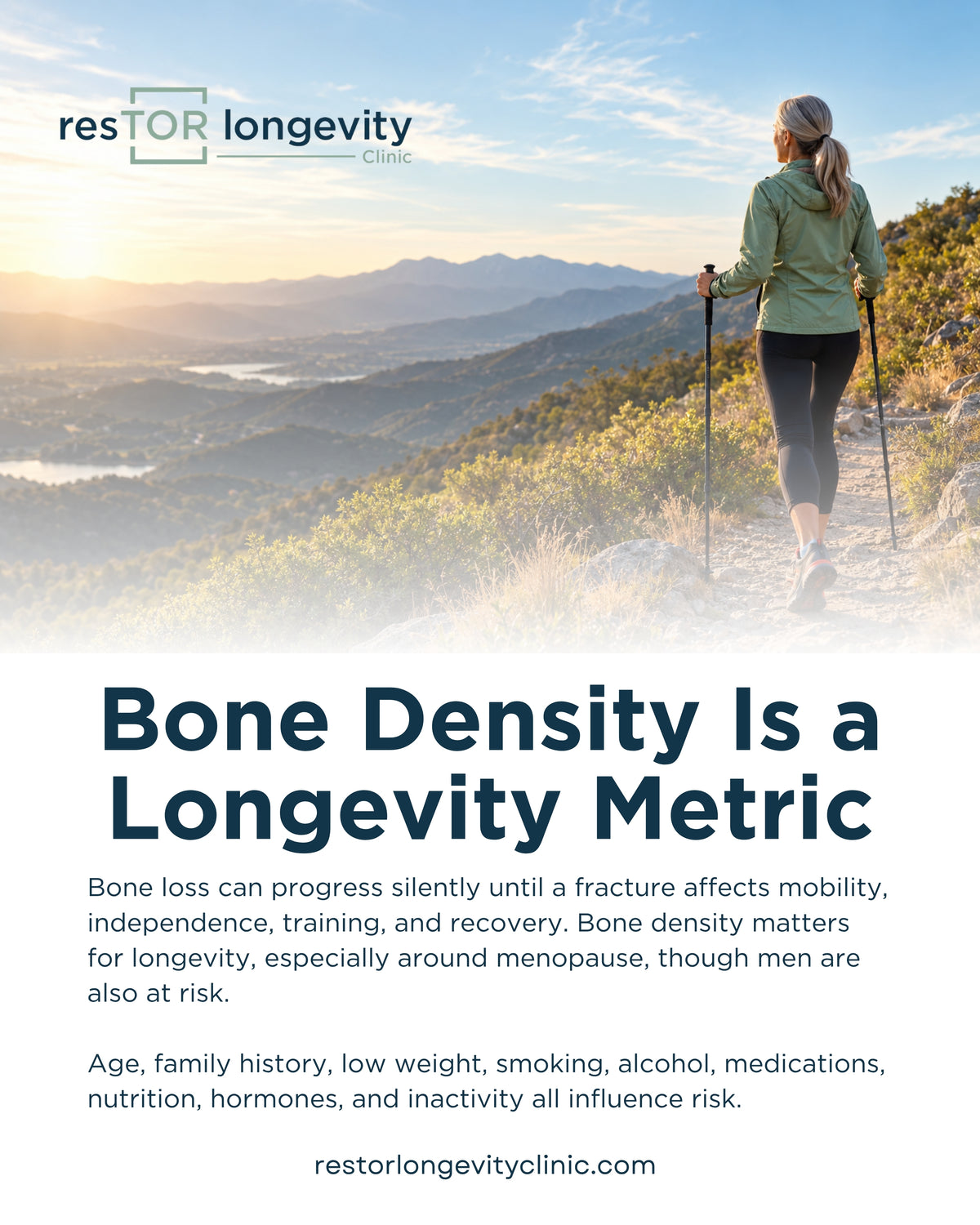
Bone density matters for longevity because fractures can reduce mobility, independence, and the ability to stay physically active. Bone loss is often silent, so risk assessment and appropriate screening need to occur before pain or fracture becomes the warning sign.
At resTOR Longevity Clinic in Houston, Texas, Dr. Gregory Burzynski, MD, reviews this information as one part of a broader physician-guided assessment. The goal is not to chase an isolated score. It is to connect the result with cardiovascular, metabolic, cognitive, hormonal, fitness, sleep, imaging, and family-history data when those categories are relevant.
Why Bone Health Affects More Than the Skeleton
A fracture is not only an orthopedic event. It can interrupt strength training, reduce confidence in movement, increase fall fear, and create a period of inactivity that affects muscle, glucose regulation, and cardiovascular fitness.
Hip and vertebral fractures can be especially disruptive. Preventing them begins years earlier by identifying low bone mass, understanding why it is occurring, and building a plan that supports both bone and muscle.
Who Should Think About Risk Earlier
Age is important, but it is not the only signal. Menopause, early ovarian insufficiency, low testosterone, a history of eating disorders, low body weight, smoking, heavy alcohol use, long-term steroid exposure, certain gastrointestinal conditions, and family history can all influence risk.
Men can also develop osteoporosis and are often diagnosed later. A personalized assessment reviews the combination of risk factors rather than relying on gender stereotypes or waiting for a fracture.
Bone Density Is One Part of the Picture
A bone-density scan estimates mineral density, but interpretation also considers age, prior fractures, medications, laboratory findings, and clinical risk. Hormone status, vitamin D, calcium intake, kidney function, and other factors may be relevant depending on the person.
Strength and balance matter because fracture prevention includes reducing the chance and impact of falls. A person with reasonable density but poor balance still needs a functional plan. A person with low density needs safe, progressive exercise rather than fear-based inactivity.
Build Bone and Muscle Together
Weight-bearing activity and resistance training can support bone and muscle, but the program should match current capacity and medical history. Nutrition must provide adequate energy, protein, calcium, and other needed nutrients without treating supplements as a substitute for food or diagnosis.
Monitoring allows the plan to evolve. A repeated scan, laboratory review, medication discussion, or change in training may be appropriate based on baseline risk and prior results.
Frequently Asked Questions
Does osteoporosis cause pain before a fracture?
Often it does not. Osteoporosis is commonly silent until a fracture or vertebral compression occurs.
Do men need bone-density screening?
Some men do, based on age and risk factors. Screening decisions should be individualized with a clinician.
Can exercise improve bone health?
Weight-bearing and resistance exercise can support bone and strength, but the safest program depends on current density, fracture history, and fitness.
Turn the Result Into a Plan
A useful longevity test should clarify a decision, a priority, or a trend to follow. To discuss a personalized assessment with Dr. Gregory Burzynski, MD, contact resTOR Longevity Clinic at (832) 968-7531. The clinic is located at 9432 Katy Freeway, Suite 400, Houston, Texas 77055.
This article is educational and does not replace individualized medical advice. Testing and follow-up should be selected with a qualified clinician based on personal history, symptoms, risk, and current guidelines.
Sources
- National Institute on Aging exercise guidance
- resTOR FAQ on women, osteoporosis, and longevity assessment
Published by resTOR Longevity Clinic | Dr. Gregory Burzynski | Serving Houston and Harris County, TX | (832) 968-7531
Educational purposes only. Not medical advice.