
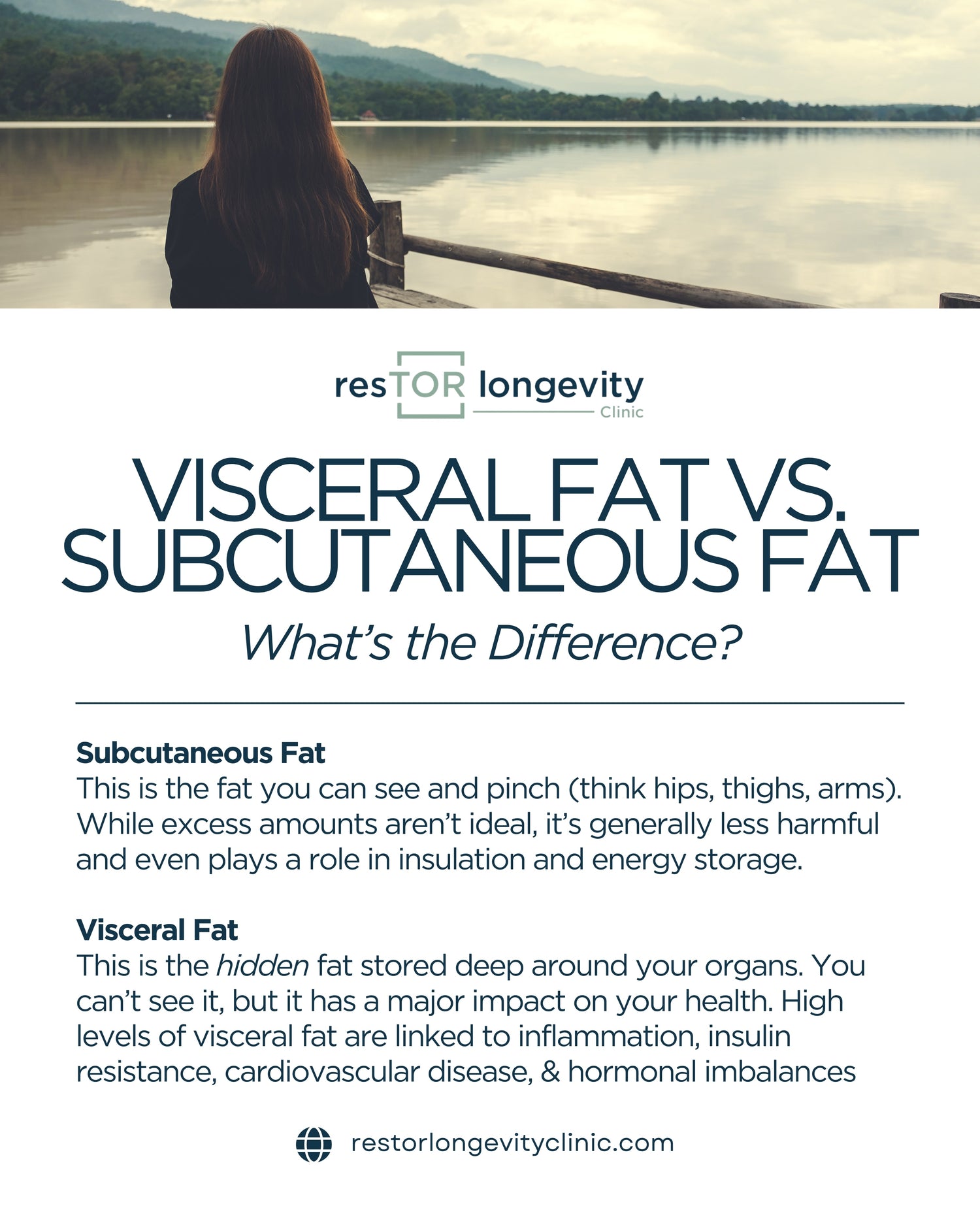
Visceral Fat vs. Subcutaneous Fat: What’s the Difference?
Not all body fat is the same. The number on the scale can show weight, but it does not always show where fat is stored or how it may affect your health.
At resTOR Longevity Clinic in Houston, Texas, Dr. Gregory Burzynski and the resTOR team look beyond surface-level measurements to better understand body composition, metabolic health, and long-term wellness.
Why Does Body Fat Location Matter?
Subcutaneous fat is the fat stored just beneath the skin. It is the fat you can often see or pinch around the hips, thighs, arms, or abdomen. While too much subcutaneous fat can still affect health, it is generally less concerning than visceral fat.
Visceral fat is stored deeper in the abdomen around organs like the liver, intestines, and pancreas. Because it is hidden, a person can look “healthy” on the outside and still have higher levels of visceral fat internally.
Dr. Gregory Burzynski explains: “The scale can miss a lot. When we look deeper at body composition, we can often see patterns that help explain energy, weight, inflammation, and metabolic health.”
Subcutaneous Fat vs. Visceral Fat
Subcutaneous fat plays a role in energy storage, insulation, and cushioning. It is also the type of fat most people notice first because it affects body shape and how clothes fit.
Visceral fat is more metabolically active. Higher levels are linked to inflammation, insulin resistance, cardiovascular risk, hormone imbalance, and fatty liver concerns. This is why body composition testing can be more useful than weight alone.
Visceral fat may be influenced by:
- Low muscle mass
- Poor sleep
- Chronic stress
- Blood sugar imbalance
- High alcohol intake
- Sedentary habits
- Ultra-processed foods
- Hormonal changes with age
Because visceral fat can affect health in ways that are not always visible, it is often the type of fat that deserves closer attention.
Why Is Visceral Fat More Concerning?
Visceral fat can affect how the body regulates blood sugar, inflammation, hormones, and cardiovascular health. It may also make weight loss more frustrating because the issue is not always just calories or exercise.
For patients in Houston and those traveling from nearby areas such as Katy and River Oaks, understanding visceral fat can help create a more targeted plan. Instead of guessing, advanced testing can show whether the focus should be fat loss, muscle support, metabolic health, hormone balance, or recovery.
Looking Beyond the Scale at resTOR Longevity Clinic
At resTOR Longevity Clinic, body composition is viewed as part of the bigger picture. A personalized plan may include advanced testing, body composition analysis, lab work, nutrition guidance, movement planning, and physician-led support.
Visceral fat and subcutaneous fat are different, and knowing the difference can change how you approach your wellness. At resTOR Longevity Clinic in Houston, Dr. Gregory Burzynski and the resTOR team help patients better understand what is happening beneath the surface so they can make more informed decisions about their long-term health.
Book Your Consult Online
Published by resTOR Longevity Clinic | Dr. Gregory Burzynski | Serving Houston and Harris County, TX | (832) 968-7531
Educational purposes only. Not medical advice.