Zone 2 Cardio and Longevity: Why Steady Effort Matters
When people think about exercise for longevity, they often imagine intense workouts, heavy sweat, and pushing to exhaustion. While higher-intensity training can have a place, it is not the only path to better health. In many cases, one of the most useful forms of exercise is also one of the most overlooked.
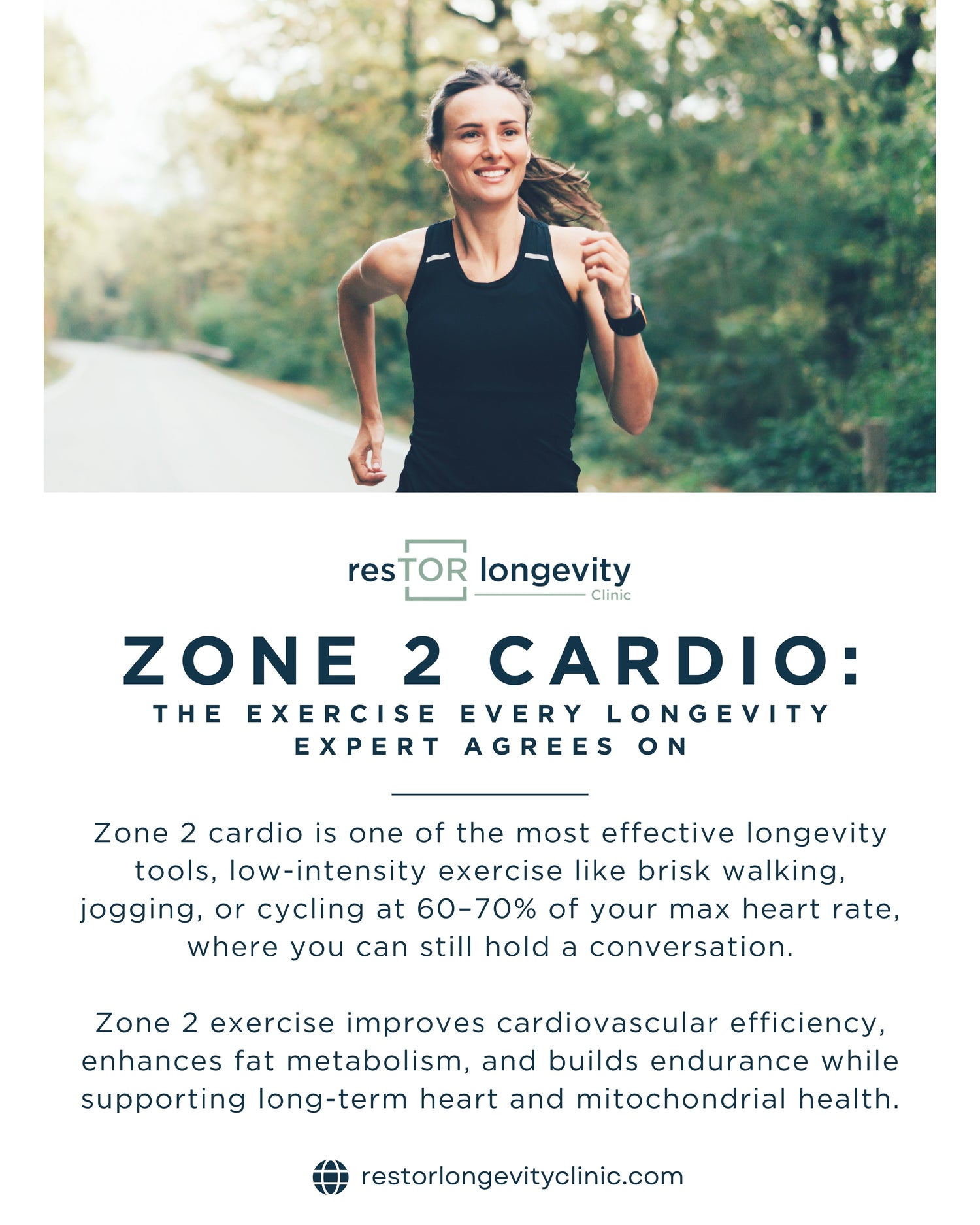
Zone 2 cardio is low-to-moderate intensity, steady-state exercise. It is the pace where you can still hold a conversation, but you know your body is working. For some people, that may be a brisk walk. For others, it may be an easy jog, bike ride, incline walk, swim, or rowing session.
At resTOR Longevity Clinic in Houston, Dr. Gregory Burzynski and the resTOR team look at exercise through a longevity lens. The goal is not just burning calories. The goal is improving how the body produces energy, uses fuel, supports cardiovascular health, and adapts over time.
What Is Zone 2 Cardio?
Zone 2 cardio is typically described as exercise performed at about 60 to 70 percent of maximum heart rate, though the exact range can vary from person to person. The easiest way to think about it is steady effort. You should be breathing more than normal, but not gasping. You should be able to speak in short sentences without needing to stop.
Common examples include:
• brisk walking
• light jogging
• cycling at an easy pace
• incline treadmill walking
• swimming at a steady pace
• rowing without sprinting
• hiking on mild terrain
This type of training may not feel dramatic, which is part of the reason people skip it. It does not always give the immediate rush of a high-intensity workout. But over time, consistent Zone 2 work can support important systems tied to metabolic health, cardiovascular fitness, and aging.
Dr. Gregory Burzynski says, “The most effective exercise plan is not always the hardest one. For longevity, we want training that the body can adapt to, recover from, and repeat consistently.”
Why Does Zone 2 Matter for Longevity?
Zone 2 cardio is often discussed in longevity care because of how it supports the body at a cellular and metabolic level. One key area is mitochondrial function. Mitochondria help produce energy inside cells, and regular aerobic training can support the body’s ability to use oxygen and fuel more efficiently.
Zone 2 training may also help improve metabolic flexibility. This means the body becomes better at switching between fuel sources, including carbohydrates and fat. Better fuel use may support healthier blood sugar patterns, endurance, energy, and body composition goals.
Another important area is cardiovascular fitness. Aerobic exercise helps train the heart, lungs, blood vessels, and muscles to work together more efficiently. VO2 max, which reflects the body’s ability to use oxygen during exercise, is often used as a marker of cardiorespiratory fitness. Higher cardiorespiratory fitness is strongly associated with better long-term health outcomes.
Zone 2 cardio may also support brain health. Regular aerobic movement has been linked with improved blood flow, mood support, cognitive function, and factors involved in brain adaptation. It is not a cure or quick fix, but it can be a practical tool for supporting mental and physical resilience.
The Biology Behind Steady-State Training
Zone 2 cardio works because it gives the body enough stimulus to adapt without creating excessive strain. Instead of repeatedly pushing into exhaustion, the body spends time in a sustainable aerobic state.
Over time, consistent Zone 2 training may support:
• improved mitochondrial efficiency
• better oxygen use
• stronger aerobic base
• healthier blood sugar response
• improved fat oxidation
• better endurance and recovery
• lower resting cardiovascular strain
This is why Zone 2 is often recommended alongside strength training. Strength training helps preserve muscle and bone. Zone 2 helps build aerobic capacity and metabolic efficiency. Together, they create a stronger foundation for aging well.
For patients who feel tired, deconditioned, metabolically stuck, or unsure where to begin, Zone 2 can be a reasonable starting point because it is scalable. A person does not have to be an athlete to benefit. The key is finding the right intensity and staying consistent.
How Much Zone 2 Cardio Do You Need?
Many adults may benefit from building toward 150 minutes or more of moderate aerobic activity per week, depending on their current health, fitness level, and physician guidance. For Zone 2 training, that might look like 30 to 45 minutes, three to five days per week.
A simple weekly structure may include:
• 30 minutes, five days per week
• 40 minutes, four days per week
• 45 to 60 minutes, three days per week
The best plan is the one a person can repeat. Going too hard too soon can lead to soreness, burnout, or poor recovery. For many people, the better strategy is to start with a manageable pace, track progress, and increase gradually.
This is also where testing matters. Heart rate formulas can be helpful, but they are estimates. Wearables can provide useful trends, but they do not always tell the full story. VO2 max testing can give a clearer baseline and help show whether training is actually improving aerobic fitness over time.
Turning Cardio Into Measurable Progress
Zone 2 cardio is simple, but simple does not mean vague. When paired with data, it becomes much more useful.
At resTOR Longevity Clinic in Houston, VO2 max testing and other longevity assessments can help patients understand their current fitness baseline. This information can guide smarter training, more realistic goals, and better follow-up. Instead of guessing whether a routine is working, patients can compare results over time.
For patients in Houston, Baytown, and surrounding Harris County Texas communities, resTOR offers a more personalized way to approach exercise, fitness, and healthy aging. If you want to understand your VO2 max, improve your aerobic base, and build a longevity plan backed by data, schedule a consultation with resTOR Longevity Clinic today.
Contact us Now
Published by resTOR Longevity Clinic | Dr. Gregory Burzynski | Serving Houston and Harris County, TX | (832) 968-7531
Educational purposes only. Not medical advice.