Why Showing Up Isn’t Always Enough
Building muscle isn’t just about showing up at the gym or following a workout plan consistently. Many adults put in the time and effort but don’t see the results they expect — and it’s not because they’re lazy or unmotivated. Consistent effort is essential, but it’s only one piece of the puzzle. At resTOR Longevity Clinic in Houston, Texas, Dr. Gregory Burzynski often sees patients who train regularly yet feel frustrated by slow progress or plateaus.
The Hidden Factors Behind Stalled Muscle Growth
The reason progress stalls usually comes down to internal factors that aren’t always obvious: hormones that regulate growth, cellular energy to fuel workouts, proper nutrition to repair tissue, and recovery strategies that allow muscles to rebuild. Even a disciplined training program can fall short without attention to these areas. Understanding how your body responds to exercise and identifying subtle barriers is key to achieving results and sustaining long-term muscle health and strength.
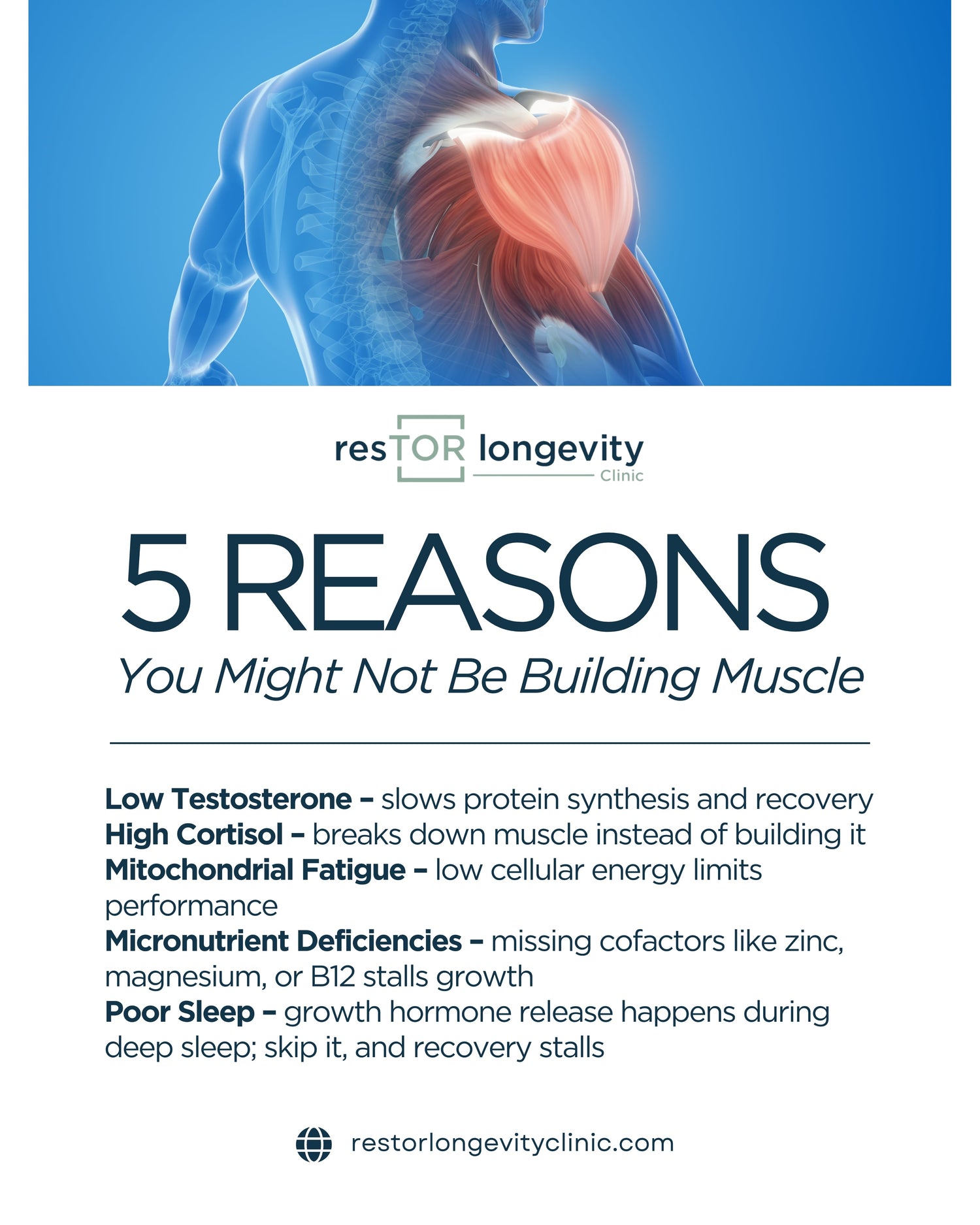
With that in mind, here are five common factors that can prevent muscle growth even when your workouts are consistent:
1. Low Testosterone
Testosterone isn’t just about libido — it’s essential for muscle protein synthesis and recovery. Low testosterone slows the body’s ability to repair and build new muscle tissue after workouts. Adults with declining hormone levels may notice slower gains, decreased energy, or increased fatigue. Dr. Gregory Burzynski evaluates hormone function as part of a holistic approach, helping patients optimize testosterone safely and effectively. This may include lifestyle adjustments, nutrition strategies, and targeted medical interventions, ensuring the body has the hormonal support needed for strength building.
2. High Cortisol
Cortisol, the body’s stress hormone, is vital in short bursts, but chronically elevated levels can break down muscle instead of building it. High stress, overtraining, or poor lifestyle habits can shift the body toward catabolism (muscle loss). Strategies to manage cortisol — including stress reduction, recovery protocols, mindfulness practices, and lifestyle adjustments — are often included in personalized plans at resTOR Longevity Clinic. Keeping cortisol in check protects muscle tissue and supports overall metabolic health and energy.
3. Mitochondrial Fatigue
Mitochondria are the “powerhouses” of your cells, producing the energy needed for movement, recovery, and growth. When mitochondria are fatigued or dysfunctional, energy levels drop, performance suffers, and workouts become less effective. Dr. Gregory Burzynski and the resTOR team support cellular energy through targeted nutrition, supplementation, and metabolic optimization. Strategies like antioxidant support, proper hydration, and interventions to improve cellular metabolism ensure the body can sustain exercise and recovery effectively.
4. Micronutrient Deficiencies
Even with perfect workouts, your body needs essential cofactors like zinc, magnesium, and vitamin B12 to build muscle efficiently. Deficiencies can stall progress, impair recovery, and contribute to fatigue. Personalized testing and supplementation help patients address nutritional gaps. Dr. Burzynski emphasizes a measured approach: patients receive individualized recommendations based on lab results and functional assessments to maximize growth safely and effectively.
5. Poor Sleep
Sleep is when growth hormone is released, muscle repair occurs, and energy stores are replenished. Skipping quality sleep means recovery stalls, and gains can plateau or even reverse. At resTOR Longevity Clinic sleep is a cornerstone of muscle health so incorporating strategies to improve sleep quality is important. This may include optimizing the sleep environment, timing, and circadian rhythm support. Quality rest enhances recovery, strengthens muscles, and supports overall well-being.
Beyond Consistency: A Holistic Approach at resTOR Longevity Clinic
Consistency is important, but it’s only part of the puzzle. True muscle growth requires a comprehensive approach that addresses hormones, stress, cellular energy, nutrition, training, and recovery. Dr. Gregory Burzynski works with patients to create individualized plans that optimize each of these factors. By supporting your body at the cellular and systemic level, you can finally see the results you’ve been working toward.
Whether your goal is to build strength, improve balance, or maintain independence, resTOR Longevity Clinic in Houston provides the expertise, testing, and personalized care to help you reach your potential. Understanding why your body may not be responding as expected is the first step toward long-term muscle health and vitality.
Take the guesswork out of your fitness journey. By addressing the root causes of stalled progress, you can maximize strength, recovery, and overall wellness — now and for decades to come.