
What Is Insulin Sensitivity, and How Do You Know If Yours Is Slipping?
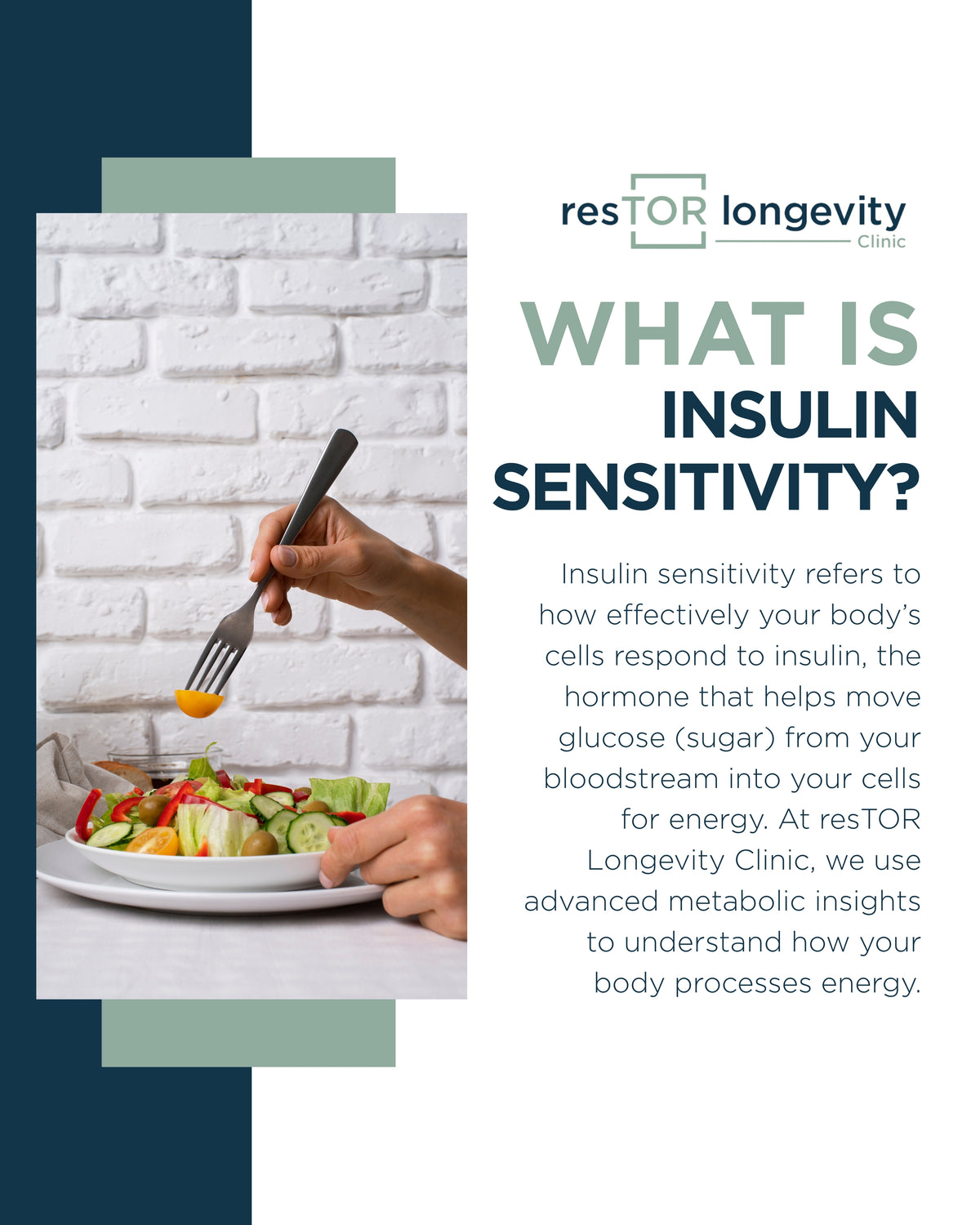
Insulin sensitivity describes how readily your cells respond to insulin and take glucose out of the bloodstream for energy. When sensitivity is good, less insulin is needed to do the job. When it declines, the body compensates by producing more.
That compensation is the part most people never see. At resTOR Longevity Clinic in Houston, Texas, insulin sensitivity is evaluated with metabolic testing rather than inferred from a single fasting glucose number.
Why Fasting Glucose Often Looks Fine For Years
A standard fasting glucose test measures the result, not the effort. If your pancreas is producing extra insulin to hold that number steady, the reading can stay in range while the underlying process quietly progresses.
This is why reduced insulin sensitivity frequently goes unnoticed until it has been developing for a long time. The lab value has not changed. The work required to produce it has.
Signs That Are Easy to Explain Away
Declining insulin sensitivity rarely announces itself. It tends to show up as a set of ordinary complaints that get attributed to age, stress, or a busy season.
- An energy crash an hour or two after eating
- Increasing difficulty losing weight, particularly around the abdomen
- Strong cravings for sugar or caffeine in the afternoon
- Mental fog that lifts and returns without an obvious trigger
None of these confirms anything on its own. Together, and alongside testing, they start to form a pattern worth looking at.
How Insulin Sensitivity Is Actually Measured
Getting a real picture requires more than one data point. A metabolic evaluation at resTOR looks at several measures side by side.
- Fasting insulin alongside fasting glucose, not glucose alone
- Hemoglobin A1c for a longer term average
- Continuous glucose monitoring to see real world response to real meals
- Body composition, since muscle mass influences glucose disposal
Continuous glucose monitoring is often the most revealing of these, because it shows what specific foods, stress, and sleep actually do to an individual rather than what they do on average.
What Tends to Move the Number
Insulin sensitivity is one of the more responsive metabolic markers, which is genuinely encouraging news. Several ordinary changes influence it, though the degree of response varies from person to person.
Muscle is a major factor. Skeletal muscle is where a large share of glucose is stored, so resistance training tends to support glucose handling over time.
Sleep matters more than most people expect. Short or fragmented sleep has a measurable effect on how the body handles glucose the following day.
Meal composition and timing play a role as well, and this is where individual data beats general advice. Two people can respond quite differently to the same breakfast.
Where This Fits Into a Longevity Assessment
Metabolic health interacts with cardiovascular, cognitive, and inflammatory health rather than sitting in its own lane. That is why insulin sensitivity is reviewed as part of the broader evaluation in the Core and Essential programs rather than as a standalone test.
Dr. Gregory Burzynski, MD reviews metabolic markers alongside body composition, hormone results, and cardiovascular findings during the results consultation described on the resTOR process page.
Patients from Katy, Bellaire, and across the Houston area complete this testing within a single assessment day.
"Fasting glucose tells me the outcome. Fasting insulin tells me what it cost to get there. Those are different questions, and only one of them catches a problem early," says Dr. Gregory Burzynski, MD.
Frequently Asked Questions
Can you have insulin resistance with normal blood sugar?
Yes, and it is common. The body can maintain a normal glucose reading by producing additional insulin, which means glucose alone may look unremarkable for years. Measuring fasting insulin alongside glucose gives a fuller picture.
Is a continuous glucose monitor useful if I am not diabetic?
It can be. A monitor shows how your body responds to your actual meals, sleep, and stress rather than to population averages. Many people find the individual patterns more actionable than general nutrition advice. Whether it is appropriate for you is a clinical decision.
How quickly can insulin sensitivity improve?
It varies considerably by individual, starting point, and the changes made. Insulin sensitivity is generally considered one of the more responsive metabolic markers, but no specific timeline or result can be promised.
Get the Metabolic Picture, Not Just the Snapshot
If you have been told your numbers are fine while not feeling fine, a fuller metabolic evaluation may be worth having. Contact resTOR Longevity Clinic in Houston, Texas to schedule a consultation.
Published by resTOR Longevity Clinic | Dr. Gregory Burzynski | Serving Houston and Harris County, TX | (832) 968-7531
Educational purposes only. Not medical advice.