What Can Video Movement Analysis Reveal About Joint Pain?
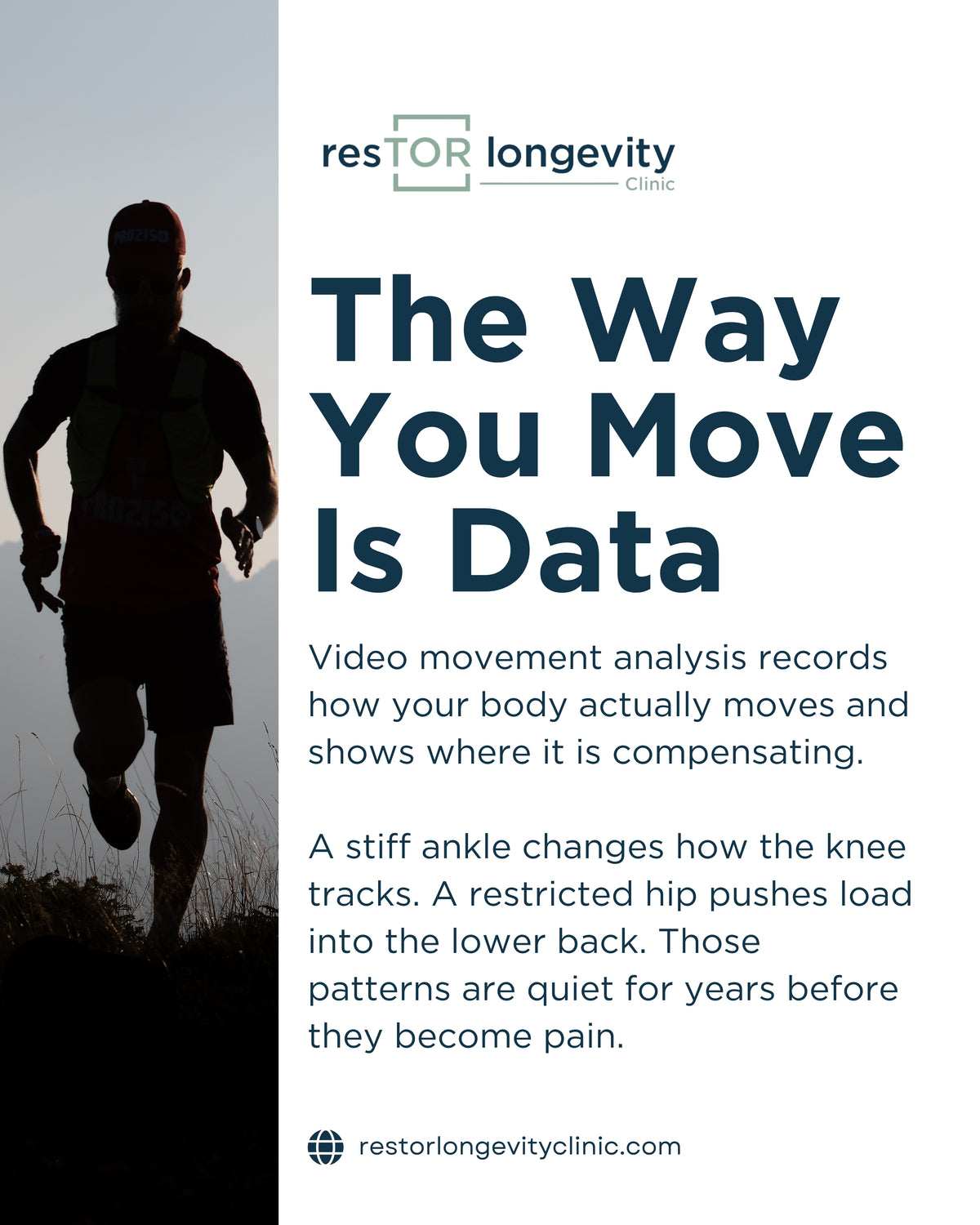
Video movement analysis records how your body moves through specific patterns and identifies where one area is compensating for another. Pain frequently appears in the joint doing extra work, not the joint that stopped working properly.
At resTOR Longevity Clinic in Houston, Texas, movement analysis is used to find that distinction before it becomes a long term problem.
Why Pain and Cause Are Often in Different Places
The body is efficient at working around restriction. When one joint loses range of motion, neighboring joints absorb the difference, usually without any conscious awareness.
A stiff ankle changes how the knee tracks during a squat or a stair descent. A restricted hip pushes rotational load into the lumbar spine. A limited shoulder shifts work to the neck.
Those compensations are silent for a long time. Then a knee or a back starts hurting, and the treatment focuses on the site of the pain rather than the source of the load.
What the Analysis Actually Looks For
Movement analysis observes patterns rather than isolated joints. A handful of everyday movements reveal most of what matters.
- Squat mechanics, including depth, knee tracking, and torso position
- Gait, looking at symmetry, stride, and foot strike
- Single leg balance and control, which exposes asymmetries quickly
- Overhead reach, which reflects shoulder and thoracic spine mobility
Video matters because these things happen faster than the eye reliably registers, and because a recording can be compared against a later one.
Why This Belongs in a Longevity Assessment
Movement quality is closely tied to long term independence. The ability to get off the floor, climb stairs, and catch your balance is what determines how someone lives in their seventies and eighties.
Strength and mobility are related but not interchangeable. Someone can be strong within a limited range and still be at risk when they move outside it.
That is why movement analysis is read next to grip strength, VO2 max, and body composition rather than as a standalone finding.
What Usually Comes Out of It
The typical output is not a diagnosis. It is a short list of specific limitations and a targeted plan, which tends to be more useful than a general instruction to stretch more.
Where restriction is significant or pain is present, referral for further evaluation may be appropriate. Movement analysis identifies patterns worth investigating rather than replacing orthopedic assessment.
Individual findings and appropriate next steps vary considerably.
Where It Sits at resTOR
Video movement analysis is part of the functional testing in the Core and Essential programs, completed during the same assessment day as cardiovascular, metabolic, and imaging work.
Dr. Gregory Burzynski, MD reviews movement findings alongside the rest of your results during the consultation outlined on the resTOR process page. Patients from The Heights, Katy, and across Houston complete this in one visit.
"People are usually surprised by the footage. They have a picture in their head of how they move, and the video rarely matches it. That gap is where the useful information lives," says Dr. Gregory Burzynski, MD.
Frequently Asked Questions
Do I need to be in pain to benefit from movement analysis?
No, and there is a case for doing it before pain appears. Compensation patterns generally develop well before symptoms, so a baseline assessment while you feel fine gives you more time to address them.
Is this the same as physical therapy?
No. Movement analysis is an assessment that identifies patterns and limitations. Physical therapy is treatment. The two work well together, and findings from an assessment can inform a therapy plan.
What should I wear for the assessment?
Comfortable athletic clothing that allows free movement, and shoes you would normally train or walk in. Clothing that lets joint positions be seen clearly makes the analysis more accurate.
See How You Actually Move
If a joint has been complaining for a while without a clear explanation, the cause may sit somewhere else entirely. Contact resTOR Longevity Clinic in Houston, Texas to schedule a consultation.
Published by resTOR Longevity Clinic | Dr. Gregory Burzynski | Serving Houston and Harris County, TX | (832) 968-7531
Educational purposes only. Not medical advice.