What Is the Thermic Effect of Food?
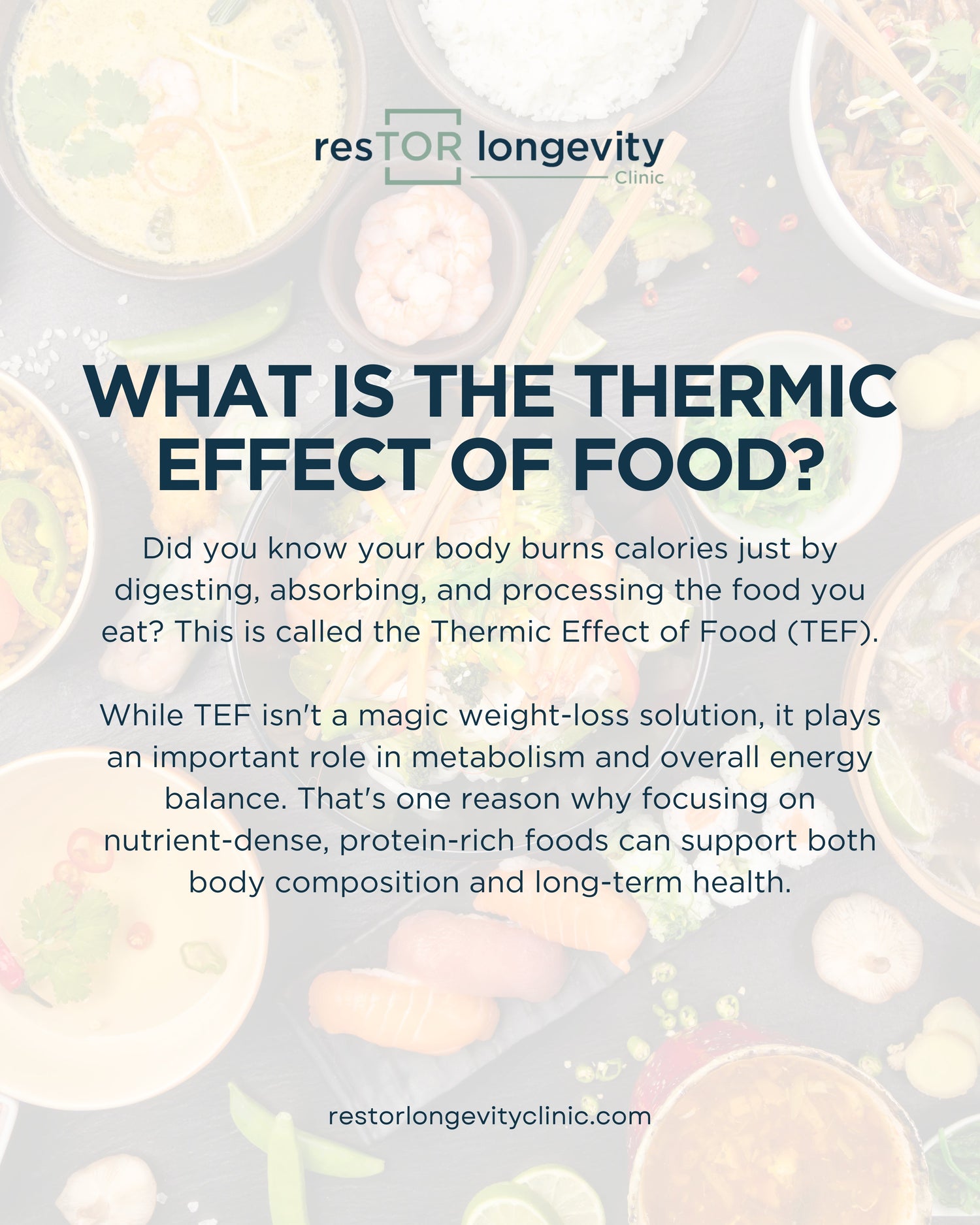
Most people think about food in terms of calories, carbs, protein, fat, or portion size. Those things matter, but they are not the full picture. Your body also uses energy to digest, absorb, transport, and process the food you eat. This is called the thermic effect of food, or TEF.
TEF is one part of total daily energy expenditure. It is not a shortcut or a magic weight-loss solution, but it does help explain why food quality matters. Different foods require different amounts of energy to process, and that can influence metabolism, satiety, body composition, and long-term health.
At resTOR Longevity Clinic in Houston, Dr. Gregory Burzynski and the resTOR team look beyond calories alone. Nutrition is evaluated as part of a larger picture that may include metabolism, body composition, blood sugar response, inflammation, hormones, nutrient status, and longevity goals.
Why Does the Thermic Effect of Food Matter?
The thermic effect of food matters because the body does not process every food the same way. Protein generally has the highest thermic effect, meaning the body uses more energy to digest and process it compared with carbohydrates or fats. Fiber-rich foods can also require more digestive work and may support fullness, gut health, and blood sugar balance.
Highly processed foods often have a lower thermic effect because they are easier for the body to break down quickly. They may also be less filling, easier to overeat, and less supportive of stable energy.
In practical terms, TEF is one reason many nutrition plans emphasize:
• lean protein
• high-fiber vegetables
• whole-food carbohydrates
• minimally processed foods
• balanced meals that support fullness
Dr. Gregory Burzynski says, “When we talk about nutrition, we are not just asking how many calories a person eats. We want to understand how those foods affect energy, metabolism, recovery, and the patient’s long-term goals.”
Protein, Fiber, and Metabolic Health
Protein plays an important role in muscle maintenance, recovery, immune function, and healthy aging. Because muscle is closely tied to metabolism and strength, protein intake becomes especially important in longevity care.
Fiber-rich foods also matter. Vegetables, legumes, berries, nuts, seeds, and whole-food carbohydrates can help support digestion, satiety, and more stable blood sugar patterns. These foods may not feel as exciting as processed snacks, but they often give the body more nutritional value.
A helpful way to build meals is to start with protein, add fiber-rich plants, and include healthy fats or whole-food carbohydrates based on your needs. This does not have to be complicated. A meal with eggs and vegetables, salmon and greens, chicken with roasted vegetables, or Greek yogurt with berries can support fullness and provide more metabolic value than a highly processed option.
Can TEF Help With Weight Loss?
The thermic effect of food can support energy balance, but it should not be viewed as a stand-alone weight-loss strategy. TEF is only one piece of metabolism. Sleep, stress, hormones, muscle mass, activity level, medications, blood sugar patterns, and overall calorie intake all matter.
Still, choosing foods with a higher thermic effect may help support a better nutrition foundation. Protein-rich meals can help preserve lean mass during weight loss. Fiber-rich foods can help with fullness. Minimally processed meals can make it easier to maintain steady energy and reduce frequent cravings.
This is where personalized testing can be useful. At resTOR, patients may evaluate metabolism and body composition through tools such as RMR testing, DEXA, CGM, advanced labs, hormone testing, and micronutrient testing. These insights can help show whether a nutrition plan is supporting the body or needs adjustment.
Looking Beyond Calories Alone
Calories still matter, but the source of those calories can change how a person feels and functions. A 400-calorie meal built around protein and fiber may affect fullness, blood sugar, energy, and recovery differently than a 400-calorie processed snack.
That difference matters for people working on body composition, athletic performance, fatigue, metabolic health, or longevity. Food is not just fuel. It is also information for the body.
A more complete nutrition strategy may consider:
• protein needs and body composition goals
• blood sugar response and steady energy
• fiber intake, gut health, and fullness
• nutrient status, recovery, and long-term consistency
The goal is to understand what your body responds to and build a plan you can repeat consistently.
A Smarter Way to Support Metabolism
The thermic effect of food is a helpful reminder that nutrition is more than calorie counting. Protein, fiber, food quality, meal timing, metabolism, hormones, and daily habits all work together.
At resTOR Longevity Clinic in Houston, nutrition is part of a broader physician-led longevity plan. By combining advanced testing with personalized guidance, patients can better understand how food choices may affect metabolism, performance, body composition, and long-term health.
For patients in Houston, Cypress, and surrounding Harris County communities, resTOR offers a proactive way to understand metabolism and build a nutrition plan around real data.
Contact resTOR Longevity Clinic Today
Published by resTOR Longevity Clinic | Dr. Gregory Burzynski | Serving Houston and Harris County, TX | (832) 968-7531
Educational purposes only. Not medical advice.