
NEAT and Longevity: Why Daily Movement Matters
Not every health-supporting habit happens in the gym. Some of the most meaningful movement happens during normal daily life. Walking to your car, taking the stairs, cleaning the house, standing while working, gardening, carrying groceries, and moving around the office all add up.
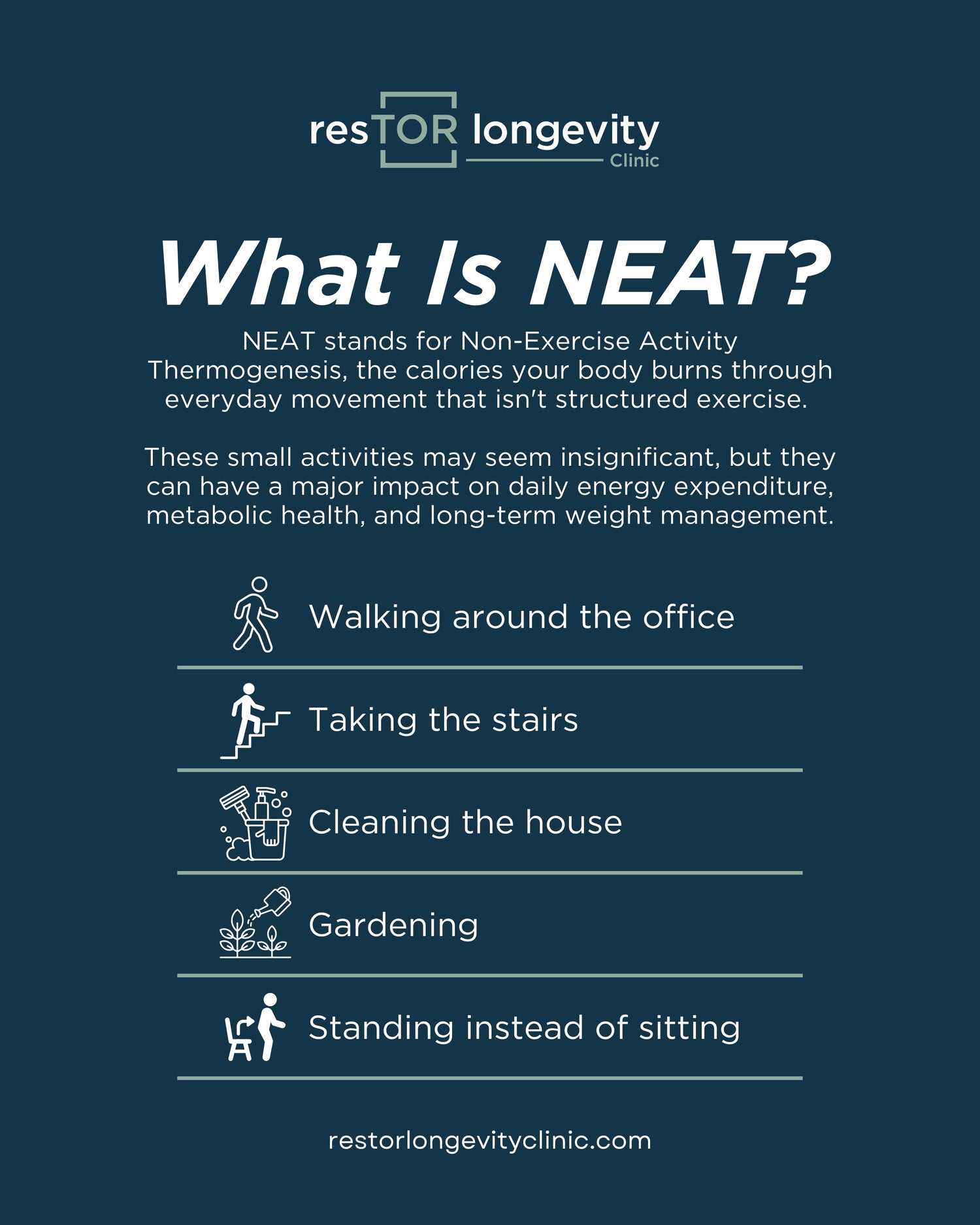
This type of movement is called NEAT, which stands for Non-Exercise Activity Thermogenesis. It refers to the calories your body burns through everyday movement that is not structured exercise.
At resTOR Longevity Clinic in Houston, Texas, Dr. Gregory Burzynski and the resTOR team look at movement as part of a larger longevity picture. Exercise matters, but so does what happens during the rest of the day. For many people, improving daily movement is one of the most realistic ways to support metabolism, energy balance, and long-term health.
What Is NEAT?
NEAT includes the movement you do outside of formal workouts. It is not your treadmill session, weight training, or fitness class. It is the movement built into your day.
Examples of NEAT include:
• walking around the office
• taking the stairs
• cleaning the house
• gardening or yard work
• standing instead of sitting
• carrying groceries
• pacing while on the phone
• fidgeting and general movement
These activities may seem small, but they can make a real difference in daily energy expenditure. Two people may complete the same workout but have very different total movement levels based on how active they are during the rest of the day.
"A patient’s health plan should fit into real life. Sometimes the most effective starting point is not adding another hard workout, but simply parking farther from the grocery store door.” - Dr. Gregory Burzynski
Why Does NEAT Matter for Metabolic Health?
NEAT matters because the body is designed to move often, not just exercise for one hour and sit for the rest of the day. Long periods of sitting can work against metabolic health, especially when they are combined with stress, poor sleep, low muscle mass, or blood sugar concerns.
Increasing daily movement may help support:
• daily calorie burn
• blood sugar regulation
• insulin sensitivity
• cardiovascular health
• joint mobility
• energy and focus
• weight management efforts
NEAT is not a replacement for strength training, Zone 2 cardio, or other structured exercise. Instead, it helps fill the gap between workouts. For people who feel overwhelmed by intense fitness plans, NEAT can be a practical place to begin.
Small Movement Changes That Add Up
One reason NEAT is useful is that it does not require a major lifestyle overhaul. The goal is to build more movement into routines that already exist.
A person may increase NEAT by parking farther away, taking short walking breaks, standing during phone calls, using stairs when possible, doing light housework, walking after meals, or setting a reminder to move every hour.
These small changes can support consistency because they feel manageable. A ten-minute walk after lunch may not seem dramatic, but repeated daily movement can have a meaningful effect over time.
At resTOR Longevity, testing can help connect daily movement to metabolism, fitness, body composition, and long-term health goals.
For many patients, NEAT works best when it is connected to habits they already have. Instead of relying on motivation, the movement becomes part of the routine.
How Can You Measure Whether Daily Movement Is Enough?
Many people are surprised to learn how little they move on a typical day. A wearable step count, activity tracker, or daily movement log can help reveal patterns. Someone may work out three times a week but still spend most waking hours sitting.
Tracking can help answer practical questions:
• How many steps do you average each day?
• Are you sitting for long stretches without breaks?
• Do you move after meals?
• Does your activity drop on busy workdays?
• Is your movement consistent throughout the week?
At resTOR, movement is reviewed alongside other longevity markers. Testing such as RMR, DEXA Body Composition, VO2 Max, Continuous Glucose Monitoring, Grip Strength Testing, and Video Movement Analysis can help connect daily habits to metabolism, fitness, body composition, and long-term health goals.
NEAT, Healthspan, and Sustainable Change
Longevity care is not only about adding years. It is about improving healthspan, which means supporting energy, independence, mobility, strength, metabolic health, and quality of life over time.
NEAT fits well into this approach because it is sustainable. Most people cannot train intensely every day, and many do not need to. But almost everyone can look for ways to move more often.
A longevity-focused movement plan may include structured exercise, strength training, aerobic conditioning, mobility work, and daily movement. NEAT supports the foundation by making activity part of everyday life instead of something that only happens during workouts.
For patients who are working on weight management, blood sugar, cardiovascular risk, energy, or body composition, NEAT can be one of the simplest areas to improve. It is not about perfection. It is about making the body less sedentary and more engaged throughout the day.
A Smarter Way to Move More
NEAT is a reminder that movement does not have to be complicated to matter. Walking more, standing more, taking breaks from sitting, and adding small bursts of activity can support metabolism and long-term wellness when practiced consistently.
At resTOR Longevity Clinic in Houston, Dr. Gregory Burzynski and the resTOR team help patients use data to better understand their metabolism, movement patterns, body composition, and health goals. The goal is to build habits that are realistic, measurable, and sustainable.
Schedule Your Consult Online
Published by resTOR Longevity Clinic | Dr. Gregory Burzynski | Serving Houston and Harris County, TX | (832) 968-7531
Educational purposes only. Not medical advice.