Aging is not driven by time alone. At the cellular level, aging is shaped by how well the body repairs damage, manages inflammation, and maintains healthy communication between cells. One of the most talked-about advances in longevity science focuses on senescent cells, often referred to as “zombie cells,” and the emerging role of senolytics in supporting long-term health.
At resTOR Longevity Clinic in Houston, Texas, longevity care is centered on understanding how cellular health influences strength, cognition, recovery, and resilience over time. Under the medical guidance of Dr. Gregory Burzynski, advanced strategies such as senolytic support are explored as part of a broader, personalized approach to aging well.
The Role of Senescent Cells in Chronic Inflammation
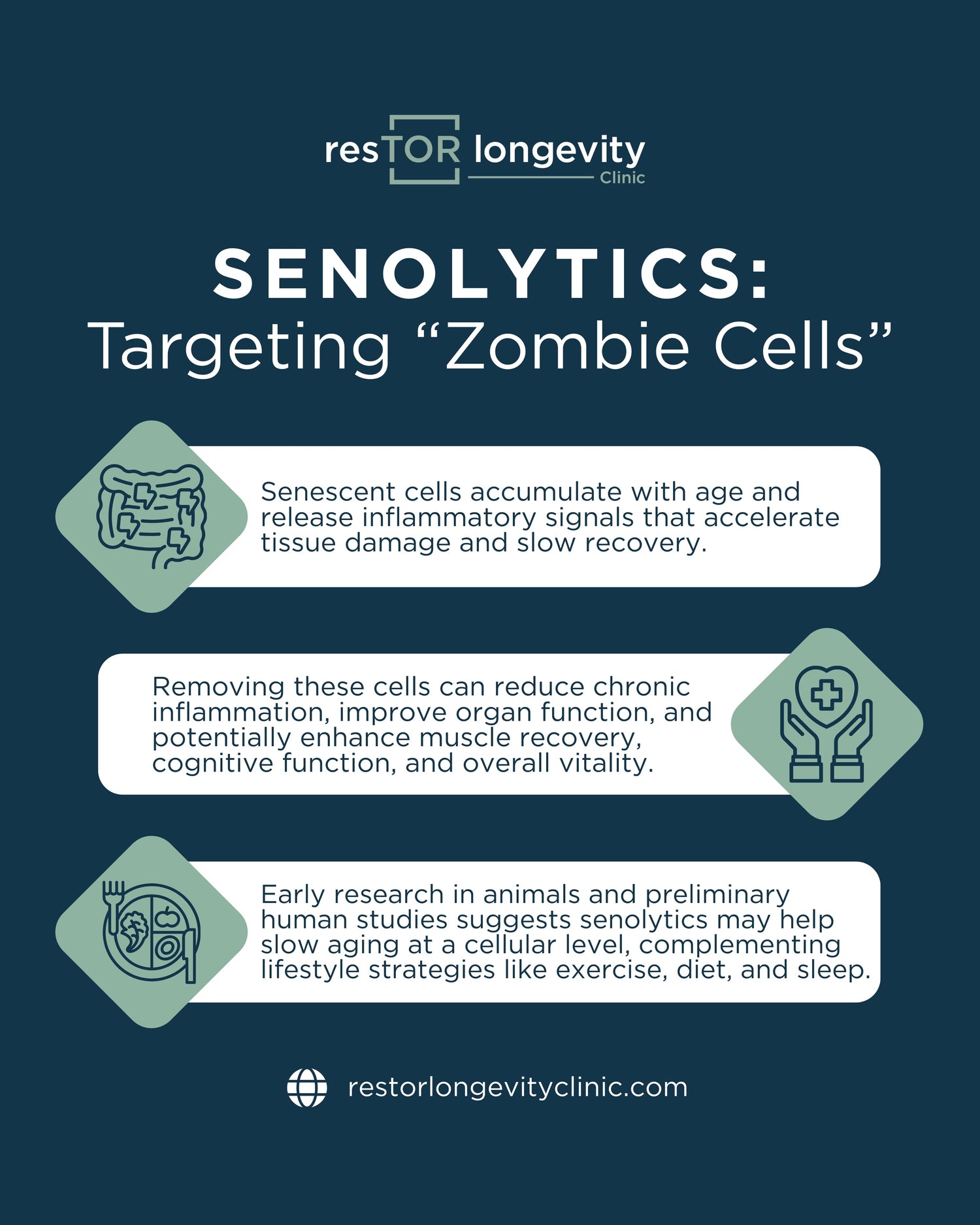
Senescent cells are damaged or aged cells that have stopped dividing but do not die off as they should. Instead, they linger in tissues and release inflammatory signals that disrupt surrounding healthy cells. Over time, these cells accumulate and contribute to many age-related changes in the body.
As senescent cells build up, they can interfere with normal tissue repair, slow recovery after exercise or injury, and increase systemic inflammation. This chronic inflammatory state is believed to play a role in muscle loss, joint discomfort, reduced metabolic efficiency, and cognitive decline. While senescent cells serve a protective role in short-term injury response, their long-term accumulation becomes problematic.
Senolytics and Their Role in Longevity Science
Senolytics are compounds designed to help the body identify and clear senescent cells. By selectively targeting these dysfunctional cells, senolytics aim to reduce the inflammatory burden they create while allowing healthier cells to function more effectively.
Early research, particularly in animal models, has shown promising results. Studies suggest that reducing senescent cell load may improve physical function, support organ health, and enhance resilience as the body ages. Preliminary human research continues to explore how senolytics may complement established longevity strategies rather than replace them.
How Do Senolytics Support Cellular Health?
Senolytics are not positioned as a shortcut to longevity. Instead, they are viewed as a tool that may help restore a healthier cellular environment when used appropriately under medical supervision. By reducing inflammatory signaling at the cellular level, senolytics may help the body respond more efficiently to exercise, nutrition, and recovery.
Potential areas of support include:
• Lowering chronic inflammation that interferes with tissue repair
• Supporting muscle recovery and physical performance
• Promoting healthier metabolic and cardiovascular function
• Supporting cognitive clarity and long-term brain health
Because aging affects each person differently, senolytic strategies are evaluated in the context of overall health, lifestyle, and existing risk factors.
How Senolytic Care Fits Into a Longevity Plan
Longevity medicine emphasizes layering strategies rather than relying on a single intervention. At resTOR Longevity Clinic, senolytics are considered alongside foundational pillars such as movement, sleep quality, nutrition, stress management, and advanced diagnostics.
Dr. Gregory Burzynski often frames longevity as building resilience, not following trends. “I see senolytics as a way to support the body’s ability to reset,” he says. “When cellular stress is lower, people respond better to movement, nutrition, and other long-term health strategies.”
This integrated approach ensures that cellular interventions align with real-world habits and sustainable health goals.
Who May Benefit From Senolytic Support?
Senolytic care is not one-size-fits-all. It may be appropriate for individuals experiencing signs of accelerated aging, chronic inflammation, or slower recovery despite healthy habits. Others may explore senolytics as part of proactive longevity planning under medical guidance.
Comprehensive evaluations help determine whether senolytic support fits into a patient’s overall care plan. This includes reviewing health history, current symptoms, lifestyle factors, and objective health markers to ensure safety and appropriateness.
Moving Forward With Cellular-Focused Longevity Care
Senolytics represent an exciting frontier in longevity science, offering a way to address aging at its cellular roots. While research continues to evolve, their role as a supportive tool within a medically guided longevity plan is gaining attention.
At resTOR Longevity Clinic, Houston, Texas patients are supported with evidence-informed care that prioritizes safety, personalization, and long-term outcomes. If you are interested in learning how cellular health strategies like senolytics may fit into your longevity journey, scheduling a consultation is the first step toward informed, proactive care.