Protein: One of the Most Important Nutrients for Healthy Aging
Protein is often talked about in fitness circles, but it is not just for athletes or people trying to build muscle. As we age, protein becomes one of the most important nutrients for strength, mobility, metabolism, recovery, and long-term independence.
Muscle naturally becomes harder to maintain over time. That does not mean weakness is inevitable, but it does mean the body often needs more intentional support. Adequate protein, regular movement, resistance training, sleep, and metabolic health all play a role in how well a person maintains strength as they age.
At resTOR Longevity Clinic in Houston, Texas, Dr. Gregory Burzynski and the resTOR team help patients from Houston, Baytown, and surrounding areas take a more proactive look at healthy aging. Nutrition is one part of that conversation, but it connects to many others, including body composition, metabolism, hormones, recovery, and long-term performance.
Why Does Protein Matter More With Age?
Protein helps build and repair tissue throughout the body. It supports muscles, bones, skin, enzymes, immune function, and recovery. While every adult needs protein, it becomes especially important with age because maintaining lean muscle can become more challenging.
Muscle does more than help a person lift weights or exercise. It supports balance, posture, mobility, blood sugar regulation, metabolism, and day-to-day function. Losing too much muscle over time can make everyday activities harder, from climbing stairs to carrying groceries to recovering after illness or injury.
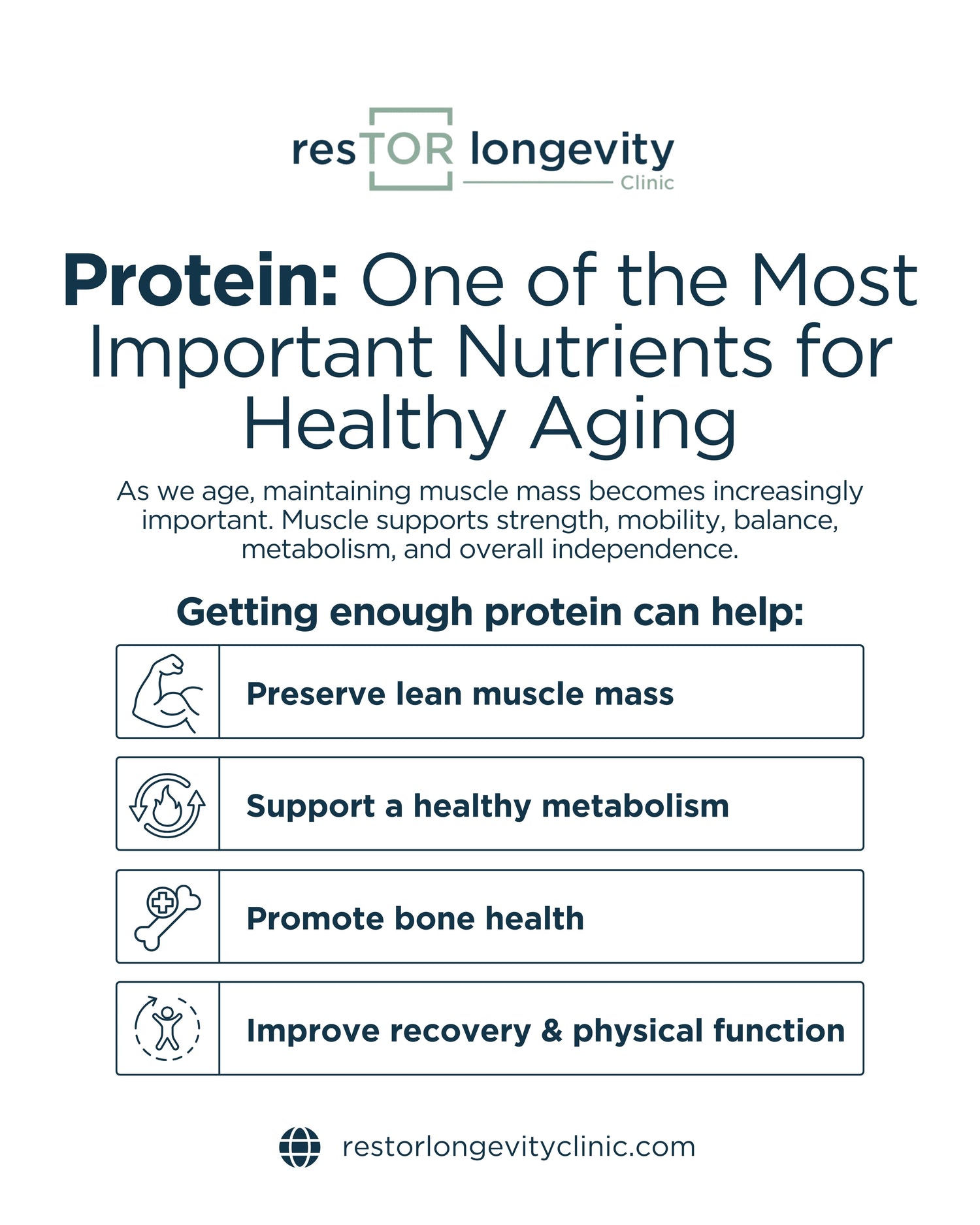
Getting enough protein may help support:
• Lean muscle maintenance
• Healthy metabolism
• Bone and tissue support
• Exercise recovery
• Strength, balance, and physical function
Protein is not the only factor, but it is one of the foundational pieces. Without enough of it, the body may have a harder time maintaining the strength and resilience needed for healthy aging.
Muscle Is a Longevity Marker
Many people focus heavily on weight, but body weight alone does not tell the full story. Two people can weigh the same and have very different levels of muscle, fat, bone density, and metabolic health.
That is why muscle matters. Lean muscle is closely connected to how the body moves, uses energy, recovers, and ages. A person who is losing muscle may not notice it right away, especially if the number on the scale stays the same. Over time, however, changes in strength, endurance, balance, and energy may become more noticeable.
At resTOR, body composition testing can help give patients a clearer picture of what is actually changing. Instead of guessing based on weight alone, patients can better understand lean mass, fat mass, and other markers that help guide a more personalized plan.
“Protein is one of those basics that can have a real impact when it is done consistently,” says Dr. Gregory Burzynski. “For healthy aging, we are not just thinking about living longer. We are thinking about staying strong, capable, and independent for as long as possible.”
How Protein Supports Metabolism and Recovery
Protein plays an important role in metabolism because muscle tissue is metabolically active. In simple terms, maintaining muscle helps support how the body uses energy. This is one reason protein and resistance training are often discussed together in longevity care.
Recovery is another major piece. The body needs protein to repair and rebuild after exercise, daily stress, injury, or illness. When protein intake is too low, recovery may feel slower, strength may be harder to build, and fatigue may become more noticeable.
Protein needs can vary based on age, activity level, health history, body composition, and goals. Some people may need support improving the quality of their meals, while others may need help timing protein throughout the day or pairing nutrition with a strength plan.
Helpful protein-focused habits may include:
• Including protein with each meal
• Pairing protein intake with resistance training
• Choosing high-quality protein sources
• Supporting hydration and recovery
• Reviewing body composition over time
The goal is not to chase perfection. The goal is to build habits that support strength, energy, and function in a realistic way.
Are You Getting Enough Protein for Your Goals?
Many adults do not realize they may be under-eating protein, especially if they are eating smaller meals, skipping breakfast, relying on convenience foods, or focusing mostly on calories. Even people who eat “healthy” may not be getting enough protein to support muscle maintenance and recovery.
This is where personalized guidance can be helpful. A protein plan should fit the person, not just follow a generic number online. At resTOR Longevity Clinic, nutrition conversations may be considered alongside body composition, metabolic testing, lab markers, hormone health, sleep, exercise habits, and recovery.
That broader view helps patients ask better questions. Instead of only asking, “Am I eating healthy?” the better question may be, “Am I eating in a way that supports the body I want to maintain as I age?”
Building Strength for the Long Term
Protein is not a trend. It is a foundational nutrient for muscle, metabolism, recovery, and healthy aging. When paired with resistance training and a personalized longevity plan, it can help support strength, mobility, balance, and independence over time.
At resTOR Longevity Clinic in Houston, TX, Dr. Gregory Burzynski and the resTOR team help patients take a deeper look at the habits and health markers that influence how they age.
Schedule a Visit With resTOR Longevity Clinic
Published by resTOR Longevity Clinic | Dr. Gregory Burzynski | Serving Houston and Harris County, TX | (832) 968-7531
Educational purposes only. Not medical advice.