Creatine Is Not Just for the Gym: What It May Mean for Brain Health
Creatine has long been associated with athletes, weight training, strength, and muscle performance. For many people, it brings to mind gym bags, protein shakes, and workout routines.
But creatine is not only a muscle topic.
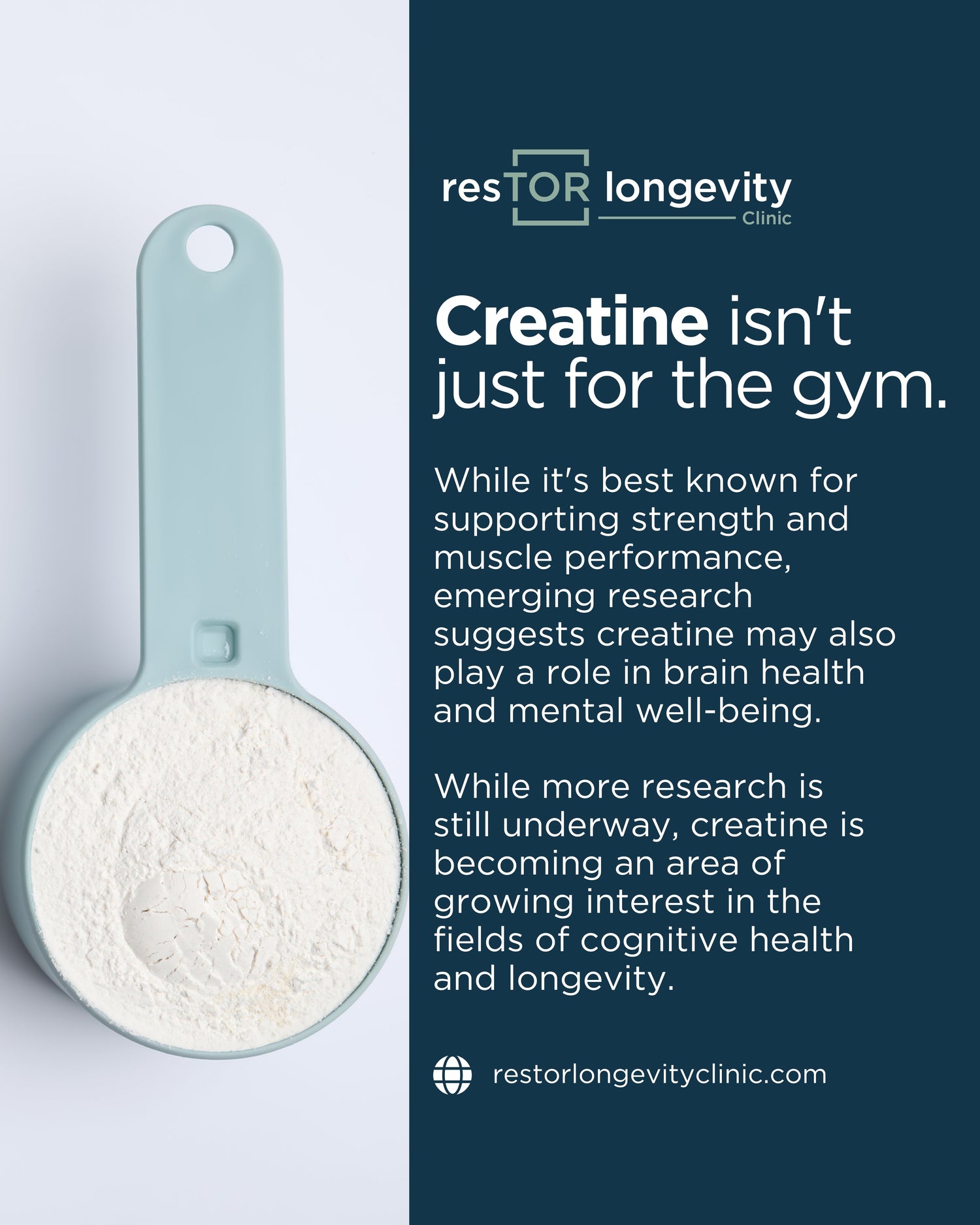
Your brain also needs a steady supply of energy to think clearly, focus, remember information, manage stress, and function throughout the day. Because creatine helps support cellular energy production, researchers are paying closer attention to how it may relate to brain health, cognitive performance, and healthy aging. Current research suggests creatine monohydrate may offer cognitive benefits in some adults, especially in areas such as memory, attention, and processing speed, although larger studies are still needed.
At resTOR Longevity Clinic in Houston, Texas, Dr. Gregory Burzynski and the resTOR team help patients from Houston, Baytown, and surrounding areas take a whole-body view of health. That means looking beyond workouts, weight, or standard labs to better understand the brain, metabolism, recovery, nutrition, and the systems that help a person feel and function well over time.
Why Does the Brain Need So Much Energy?
The brain is always working. Even when you are resting, it is helping regulate memory, mood, decision-making, movement, sleep, hormones, and countless background processes.
That level of activity requires energy.
Creatine helps the body recycle ATP, which is often described as the energy currency of cells. Most creatine is stored in muscle, but smaller amounts are also found in the brain. This is one reason researchers are studying whether creatine supplementation may help support brain energy during times of higher demand.
Those higher-demand moments may include poor sleep, stress, aging, intense mental work, or periods of fatigue. Creatine is not a substitute for sleep, medical care, or a well-rounded health plan, but its connection to cellular energy is one reason it is becoming part of a larger conversation around brain metabolism.
Creatine and Cognitive Health
Creatine research is still developing, but early findings are interesting. Scientists are exploring how creatine may relate to:
- Mental energy and focus
- Memory and learning
- Information processing speed
- Cognitive performance during stress or fatigue
- Brain energy support with aging
This does not mean creatine is a quick fix for brain fog, mood changes, poor sleep, or memory concerns. It also does not mean everyone needs the same supplement plan.
At resTOR, these conversations are more useful when they are placed in context. A person struggling with low energy may need a deeper look at sleep, hormones, nutrient status, glucose patterns, inflammation, cardiovascular fitness, body composition, or recovery. Creatine may be one piece of the picture, but it is not the whole picture.
What Makes Creatine a Longevity Topic?
Longevity is not only about living longer. It is about protecting strength, energy, independence, clarity, mobility, and quality of life.
That is why creatine has become interesting beyond fitness. Muscle health and brain health are both closely tied to how people age. Maintaining lean mass, supporting metabolism, staying active, and protecting cognitive function all matter over time.
For some patients, creatine may be discussed alongside strength training, protein intake, hydration, sleep quality, and recovery. For others, the first step may be understanding why they feel tired, foggy, weak, or slower to recover in the first place.
Creatine is easy to find, but that does not mean it should be added without thought. Health history, kidney function, medications, diet, hydration, current symptoms, and personal goals can all play a role in whether it makes sense.
At resTOR Longevity Clinic, supplement conversations are looked at as part of the bigger picture, which may include:
That broader view helps patients move beyond guesswork. Instead of asking, “Should I take this because I saw it online?” the better question becomes, “Does this make sense for my body, my data, and my long-term goals?”
Supporting the Body and the Brain
Creatine may be best known for muscle performance, but its role in cellular energy makes it part of a bigger conversation around brain health, focus, memory, mood, stress resilience, and healthy aging.
Research is still ongoing, so creatine should not be oversold as a cure or guaranteed solution. But for patients who want a more proactive approach to longevity, it may be a meaningful topic to discuss.
At resTOR Longevity Clinic in Houston, TX, Dr. Gregory Burzynski and the resTOR team help patients move beyond wellness trends and better understand what their body may need to function well over time.
Schedule a visit with resTOR Longevity Clinic to take a clearer look at your brain health, energy, aging, and long-term wellness.