Can Different Organs Age at Different Rates? What Organ-Age Research Means
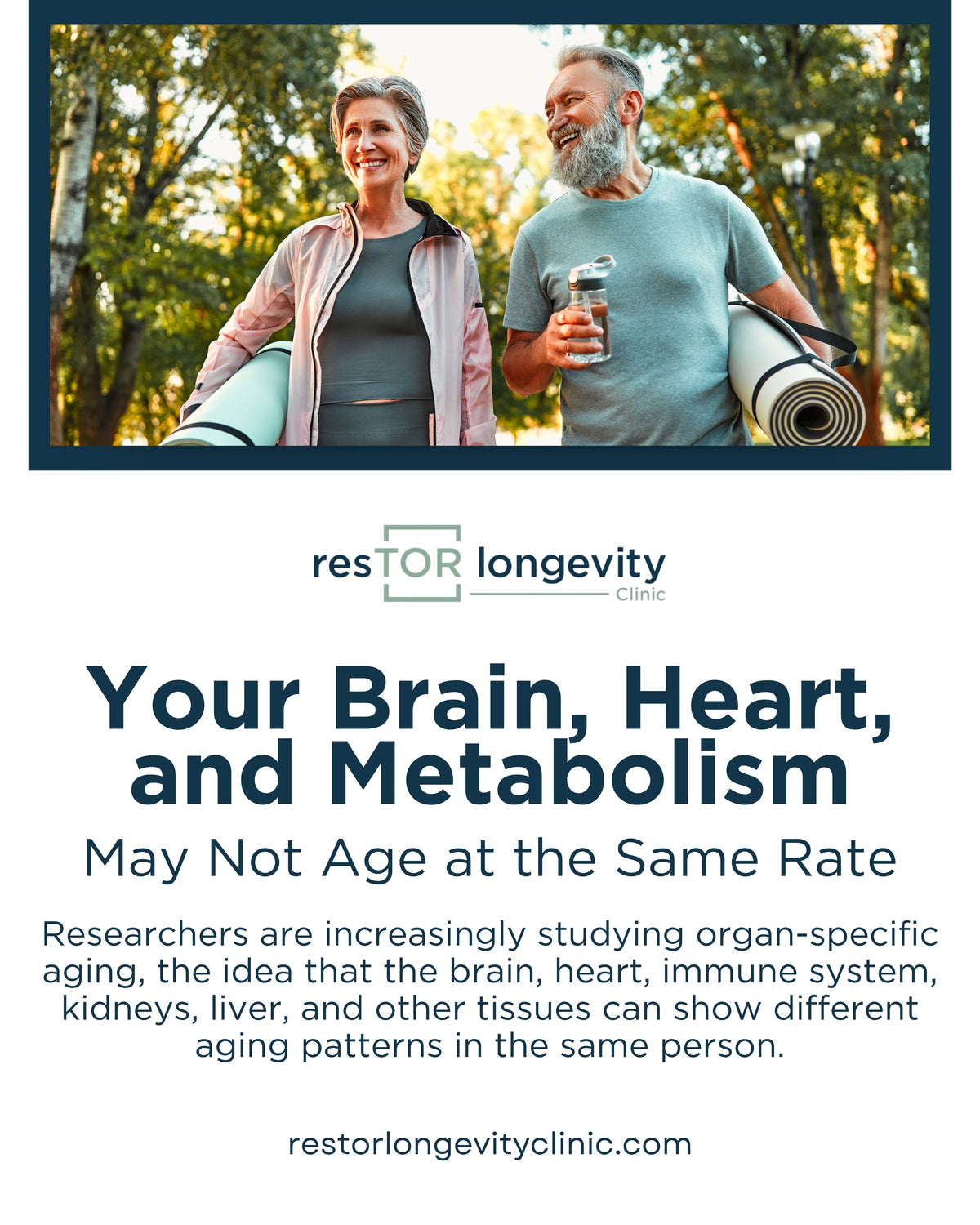
Yes, different organs and tissues can show different molecular and functional aging patterns. Organ-age research may eventually improve risk prediction, but current estimates are still developing and should not replace established, system-specific evaluation.
At resTOR Longevity Clinic in Houston, Texas, Dr. Gregory Burzynski, MD, reviews this information as one part of a broader physician-guided assessment. The goal is not to chase an isolated score. It is to connect the result with cardiovascular, metabolic, cognitive, hormonal, fitness, sleep, imaging, and family-history data when those categories are relevant.
What Researchers Mean by Organ Age
Chronological age applies to the whole person. Organ-age models attempt to estimate whether a particular tissue or system shows molecular patterns that look older or younger than expected for that chronological age.
Some research uses proteins in blood that can be traced to particular organs. Other approaches use imaging, gene expression, epigenetics, or functional testing. Because the methods differ, organ-age estimates are not interchangeable.
Why the Brain Received So Much Attention
A large 2025 study reported that protein-based estimates of organ aging were associated with future disease and mortality, with brain-age patterns showing especially strong relationships. The work generated attention because it suggested that aging information may become more useful when it is localized to a system.
Association is not destiny. A protein-based estimate does not diagnose Alzheimer's disease, and it does not prove that changing the estimate will prevent an outcome. It is a research signal that needs clinical validation.
One Young Score Cannot Cancel Another Risk
A favorable epigenetic-age result cannot prove the coronary arteries are free of plaque. Strong cardiorespiratory fitness does not replace cancer screening. A normal whole-body MRI does not measure insulin sensitivity. Each test has a defined purpose and limitation.
The organ-age trend reinforces a practical rule: match the test to the decision. Use established cardiovascular, metabolic, cognitive, skeletal, and cancer-risk tools when those are the questions being asked.
What Is Ready for Practice Now
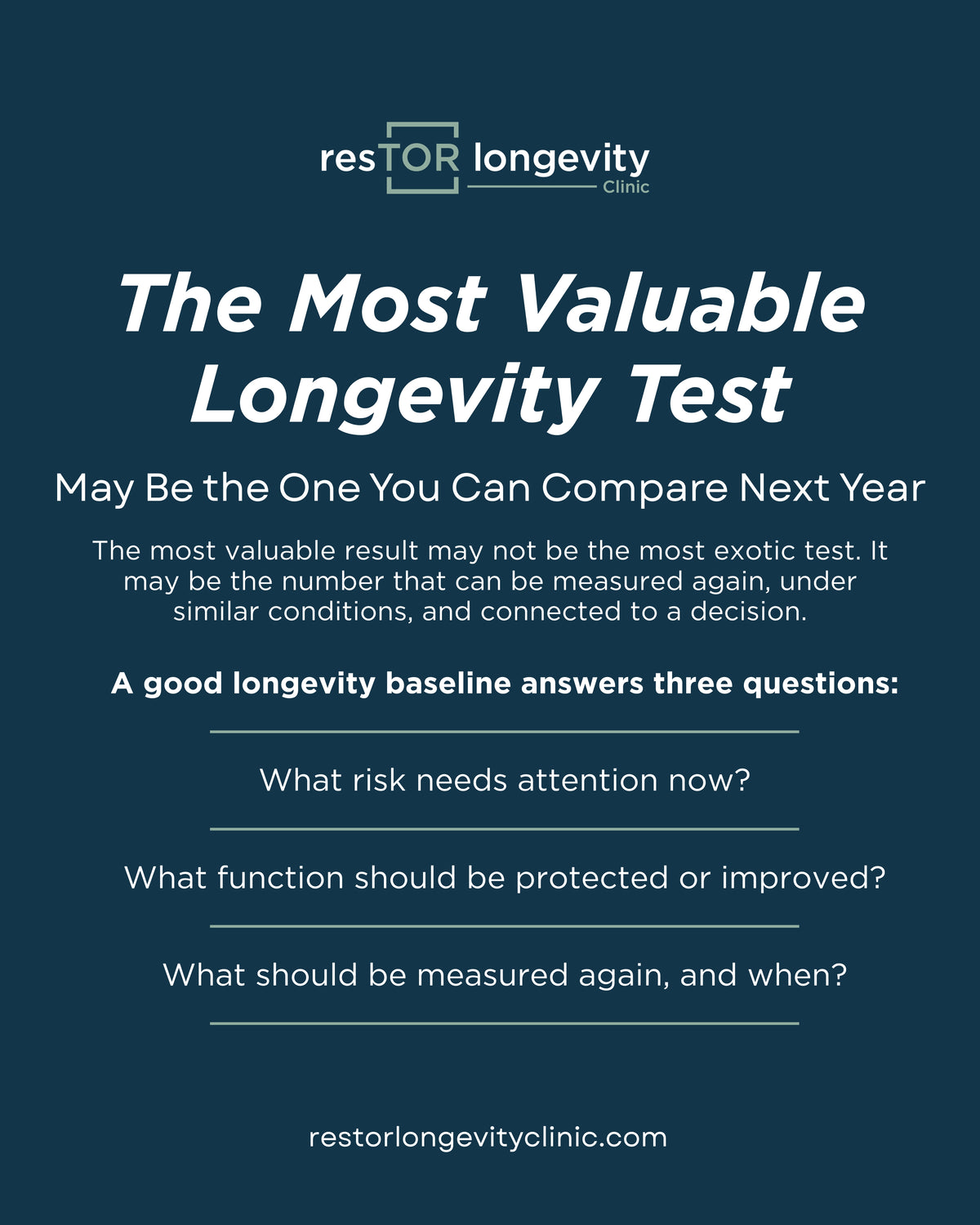
Clinicians can already build system-specific baselines from history, physical examination, blood pressure, advanced labs, imaging when appropriate, body composition, fitness, strength, sleep evaluation, cognition, and genetics. Those measures have clearer pathways for interpretation and follow-up.
Emerging organ-age models may eventually refine that dashboard. Until then, the responsible approach is to separate exciting research from commercial certainty and avoid translating an algorithm into a promise.
Frequently Asked Questions
Can I buy an organ-age test now?
Some commercial tests make organ-age claims, but methods, validation, and clinical utility vary. Ask what the model measures and what decision the result would change.
Does a young brain-age estimate mean I will not develop dementia?
No. An estimate is not a guarantee and does not replace clinical evaluation, risk reduction, or attention to symptoms.
Why does resTOR use several testing categories?
Cardiovascular, metabolic, cognitive, imaging, fitness, sleep, hormonal, and genetic information answer different questions and help create a more complete plan.
Turn the Result Into a Plan
A useful longevity test should clarify a decision, a priority, or a trend to follow. To discuss a personalized assessment with Dr. Gregory Burzynski, MD, contact resTOR Longevity Clinic at (832) 968-7531. The clinic is located at 9432 Katy Freeway, Suite 400, Houston, Texas 77055.
This article is educational and does not replace individualized medical advice. Testing and follow-up should be selected with a qualified clinician based on personal history, symptoms, risk, and current guidelines.
Sources
- Nature Medicine study on organ-specific aging and health outcomes
- National Institute on Aging overview of biological-age tools
- resTOR testing categories
Published by resTOR Longevity Clinic | Dr. Gregory Burzynski | Serving Houston and Harris County, TX | (832) 968-7531
Educational purposes only. Not medical advice.