Nutrition and Neurotransmitters: How Food Supports Brain Health
The foods you eat do more than provide calories. They supply many of the building blocks your body uses to support brain communication, energy production, cell protection, and healthy aging. One meal cannot instantly change mood or concentration, but your overall nutrition pattern can support these functions over time.
At resTOR Longevity Clinic in Houston, Dr. Gregory Burzynski and the resTOR team consider nutrition alongside metabolism, sleep, physical activity, stress, and other longevity markers. Patients from Houston and nearby Cypress may seek this perspective when they want to better understand changes in focus, energy, or cognitive performance.
What Are Neurotransmitters and Why Do They Matter?
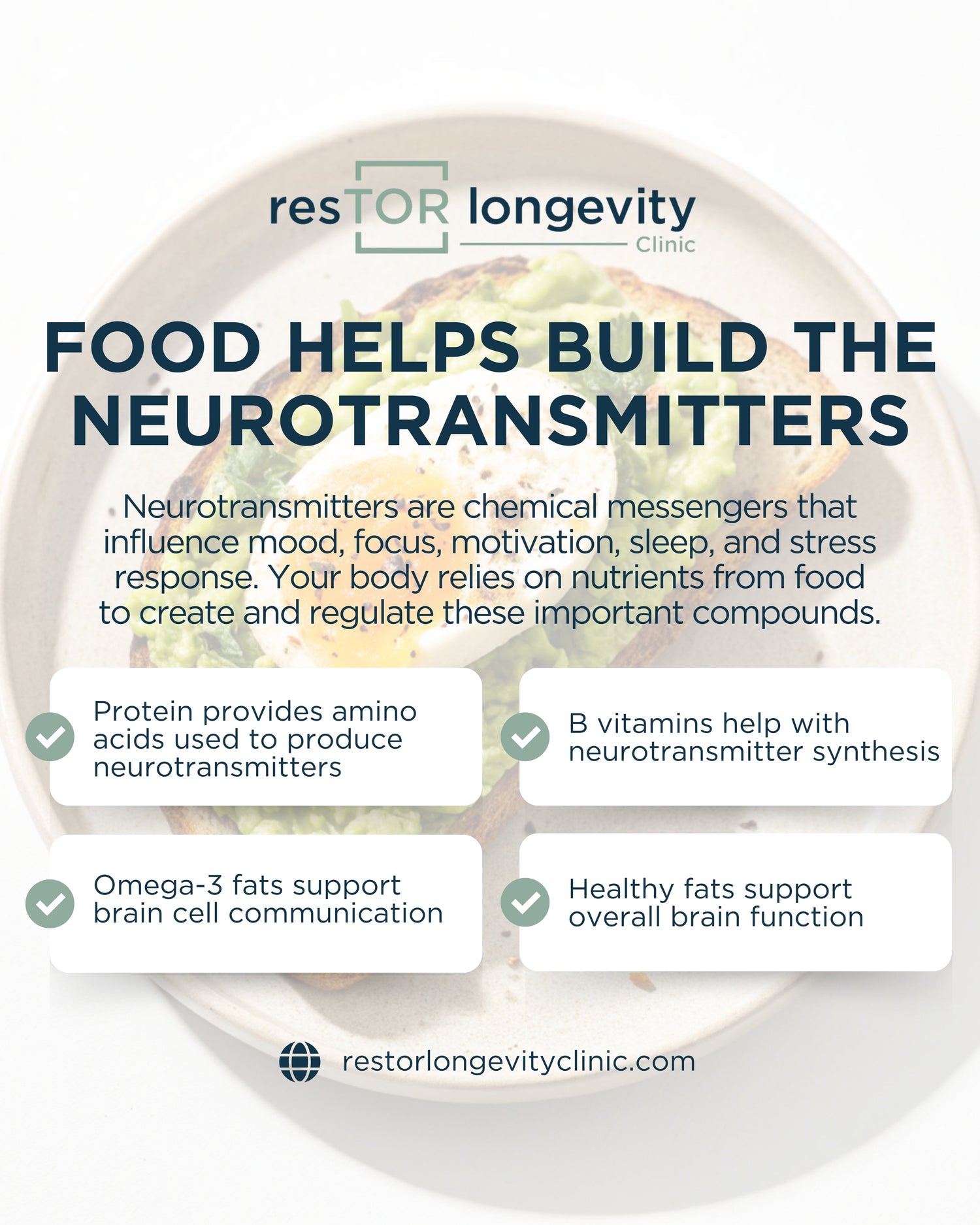
Neurotransmitters are chemical messengers that allow nerve cells to communicate. They are involved in attention, motivation, movement, sleep, memory, mood, and the body’s response to stress.
Different neurotransmitters have different roles. Dopamine is associated with motivation and movement, serotonin is involved in mood and sleep, and acetylcholine contributes to memory and learning.
The body regulates these compounds through complex processes. Food is only one part of that picture, but nutrients provide raw materials that support the reactions involved.
Protein is especially important because it supplies amino acids. Some amino acids serve as precursors for neurotransmitters. Tryptophan is involved in serotonin production, while tyrosine is used in pathways that produce dopamine and norepinephrine.
Eating one high-protein food will not automatically increase a neurotransmitter or correct a symptom. Sleep, stress, medications, hormones, and overall health may also affect these systems.
Nutrients That Help Support Brain Function
A balanced eating pattern provides a range of nutrients rather than relying on one “brain food.”
• Protein from eggs, fish, poultry, beans, lentils, dairy, nuts, and seeds provides amino acids used for many chemical processes.
• Omega-3 fats, including DHA and EPA, are found in fatty fish and are important components of cell membranes. DHA is present in high levels in the brain.
• B vitamins support energy metabolism and nervous system function. Vitamin B6 is involved in neurotransmitter production, while vitamin B12 helps maintain healthy nerve and blood cells.
• Choline, found in eggs, meat, fish, soybeans, and some vegetables, is needed to produce acetylcholine and important cell-membrane compounds.
• Antioxidant nutrients from colorful fruits and vegetables help the body manage oxidative stress, which can affect brain cells.
Many people benefit from meals built around minimally processed foods, adequate protein, fiber-rich carbohydrates, and healthy fats.
“I encourage people to think less about finding one perfect brain food and more about building consistent meals that support the whole body. Brain health is connected to metabolism, sleep, movement, and the nutrients you take in every day,” says Dr. Gregory Burzynski.
How Can You Build a More Brain-Supportive Eating Pattern?
Supporting brain health does not require a complicated diet. Repeatable choices often matter more than short-term extremes.
Start with protein at each meal, add colorful produce throughout the week, and choose healthy fats when appropriate. Regular meals may also help some people avoid large swings in hunger and energy.
Helpful habits may include:
• Planning simple, balanced meals
• Pairing carbohydrates with protein or healthy fats
• Staying hydrated throughout the day
• Choosing nutrient-dense foods more often
• Discussing supplements with a medical professional
Supplements may help in specific situations, such as a confirmed deficiency, but they are not necessary for everyone. High doses may cause side effects or interact with medications. A professional evaluation can help determine whether food changes, testing, or supplementation may be appropriate.
Looking at the Bigger Brain Health Picture
Nutrition works alongside sleep, stress, movement, cardiovascular health, and metabolism. These factors can also influence attention, mood, energy, recovery, and healthy aging.
That is why brain health should not be reduced to one nutrient, supplement, or symptom. A broader review may consider bloodwork, body composition, metabolic health, cardiovascular fitness, sleep quality, family history, medications, and daily habits.
At resTOR Longevity Clinic, the goal is to help patients see how these areas connect. A more complete picture can make it easier to identify practical changes that support long-term health without relying on guesswork.
Support Your Brain Health With a Personalized Plan
Food provides important building blocks for the brain, but the right nutrition strategy varies based on health history, metabolism, nutrient needs, medications, and goals. If you are experiencing ongoing brain fog, fatigue, mood changes, sleep concerns, or changes in cognitive performance, a medical evaluation may help identify factors that deserve attention.
Contact resTOR Longevity Clinic in Houston to learn more about a personalized approach to nutrition, brain health, metabolism, and longevity.
Contact us Today
Published by resTOR Longevity Clinic | Dr. Gregory Burzynski | Serving Houston and Harris County, TX | (832) 968-7531
Educational purposes only. Not medical advice.