Train Your Body to Switch Fuel Sources for Better Energy and Longevity
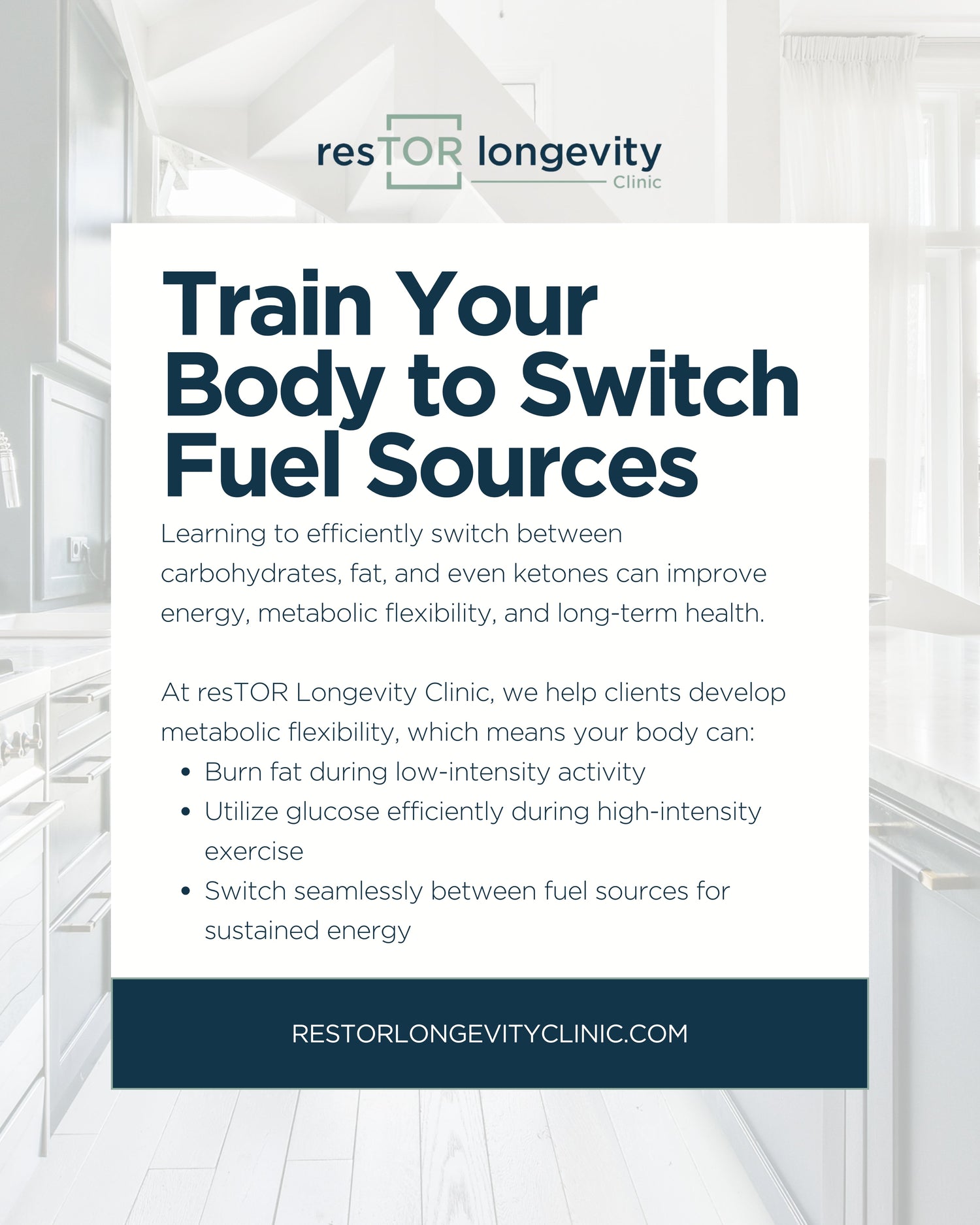
Your body is designed to use multiple fuel sources depending on what you are doing, how you are eating, and how your metabolism is functioning. When this system works efficiently, you can shift between burning carbohydrates, fat, and ketones without major drops in energy. This ability is known as metabolic flexibility, and it plays a key role in both performance and long-term health.
Dr. Gregory Burzynski and our team at resTOR Longevity Clinic in Houston, Texas focus on helping individuals improve how their body produces and uses energy. By combining data-driven insights with structured lifestyle strategies, it becomes easier to train your body to use the right fuel at the right time.
What Is Metabolic Flexibility and Why Does It Matter?
Metabolic flexibility refers to your body’s ability to adapt to different energy demands. Instead of relying heavily on one fuel source, a metabolically flexible body can switch efficiently based on activity level and nutrient availability.
This means:
- Burning fat more efficiently during rest or low-intensity activity
- Using glucose effectively during high-intensity exercise
- Maintaining steady energy levels throughout the day
- Reducing reliance on constant food intake for energy
Dr. Gregory Burzynski often incorporates metabolic flexibility into longevity-focused plans, helping patients understand how their body responds to different inputs.
“A lot of people notice energy crashes because their body gets stuck relying on one fuel source. When you improve that flexibility, energy tends to feel more steady throughout the day.”
How Do You Know If Your Body Is Struggling to Switch Fuel Sources?
When your body is not efficiently switching between fuel types, it often shows up in ways that are easy to overlook. These patterns can indicate that your metabolism is not adapting as well as it could.
Common signs include:
- Energy crashes between meals
- Strong cravings for sugar or quick carbohydrates
- Difficulty maintaining consistent energy during workouts
- Feeling fatigued despite adequate rest
These patterns can often be measured through tools like metabolic testing, which provides insight into how your body is currently using energy.
Key Ways to Train Your Body to Switch Fuel Sources
Improving metabolic flexibility does not require extreme changes. Consistent habits that challenge your body in the right way can gradually improve how it uses fuel.
Effective strategies include:
- Aerobic exercise to support fat utilization during lower-intensity activity
- Interval training to improve how your body handles glucose during higher demand
- Strength training to support muscle mass and overall metabolic function
- Strategic eating patterns that allow your body to shift between fed and fasted states
These approaches help your body become more efficient over time, improving both performance and recovery.
How Does Exercise Influence Fuel Switching?
Different types of movement signal your body to use different energy systems. Structuring your workouts intentionally can help train your metabolism to adapt more efficiently.
For example:
- Lower-intensity, steady-state activity encourages fat utilization
- Higher-intensity training increases your ability to use and store glucose efficiently
- Resistance training supports lean muscle, which plays a major role in metabolic health
Dr. Gregory Burzynski takes a practical, balanced approach when guiding patients through this process, focusing on building sustainable habits that help the body adapt more efficiently over time.
The Role of Nutrition in Metabolic Flexibility
What and when you eat also plays a major role in how your body switches between fuel sources. The goal is not restriction, but creating conditions that allow your metabolism to adapt.
This can include:
- Timing meals to avoid constant energy spikes and crashes
- Including balanced macronutrients to support steady energy
- Allowing periods where the body can rely more on stored energy
- Adjusting intake based on activity level and goals
When combined with exercise, these strategies help reinforce a more adaptable and efficient metabolism.
Building a Sustainable Approach to Energy and Performance
Metabolic flexibility is not something that improves overnight. It develops through consistent habits that support how your body naturally functions.
resTOR Longevity Clinic helps patients create structured plans that combine metabolic testing with practical strategies for exercise, nutrition, and recovery. This approach allows for measurable progress rather than relying on guesswork.
Improving how your body uses fuel can lead to more stable energy, better performance, and long-term health benefits. Schedule an appointment to build a personalized strategy that supports your goals and helps your body perform more efficiently over time.
Book Your Consultation Online
Published by resTOR Longevity Clinic | Dr. Gregory Burzynski | Serving Houston & Surrounding Areas | (832) 968-7531
Educational purposes only. Not medical advice.