When most people think of strength training, they picture toned muscles, improved posture, or weight management. While all of these benefits are real, emerging research shows that resistance exercise plays a crucial role in brain health as well. From boosting memory to supporting long-term cognitive function, building muscle isn’t just about aesthetics—it’s about preserving and enhancing your mind.
At resTOR Longevity Clinic in Houston, Dr. Gregory Burzynski and his team work with adults to integrate resistance training into comprehensive longevity plans, combining physical strength with brain optimization strategies for lasting wellness.
Why Resistance Training Matters for the Brain
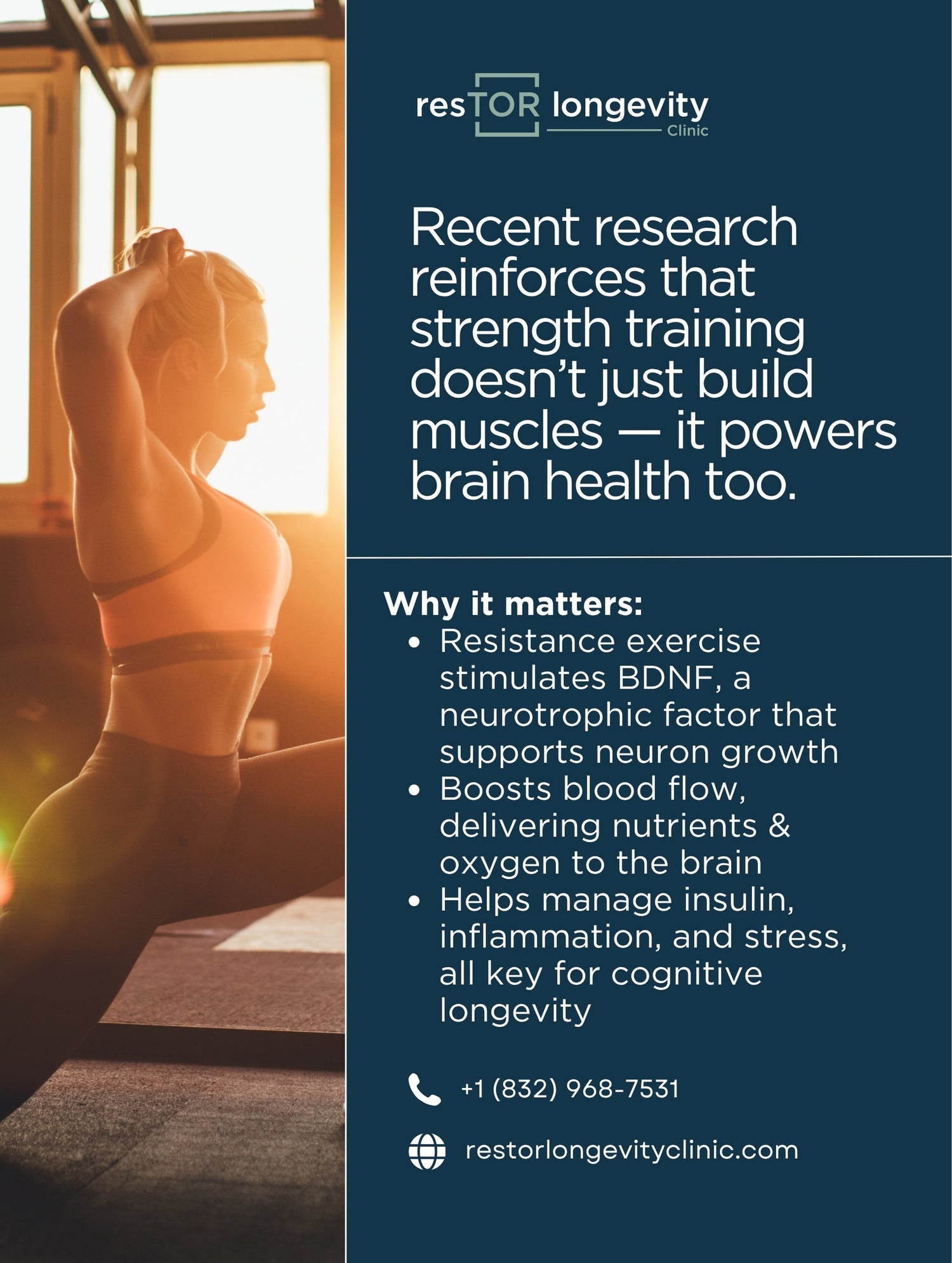
Recent studies highlight several ways that strength training supports cognitive health:
-
Stimulates BDNF (Brain-Derived Neurotrophic Factor) – BDNF is a protein that encourages the growth and survival of neurons. Higher levels of BDNF are associated with improved learning, memory, and overall brain resilience. Resistance exercise has been shown to increase BDNF levels, directly supporting neuroplasticity—the brain’s ability to adapt and reorganize.
-
Improves blood flow to the brain – Muscular contractions during resistance training boost circulation, delivering oxygen and nutrients to brain tissue. Enhanced blood flow supports energy production, clears metabolic waste, and helps maintain healthy cognitive function as we age.
-
Regulates metabolic and inflammatory factors – Strength training helps manage insulin sensitivity, reduces chronic inflammation, and can moderate stress hormone levels. All of these factors are linked to long-term cognitive health and may reduce the risk of age-related neurodegenerative conditions.
Combining physical resistance training with lifestyle strategies—such as proper nutrition, sleep, and stress management—can amplify brain benefits, making strength training a cornerstone of longevity-focused wellness plans.
How to Get Started
For adults looking to enhance both muscle and mind, the goal isn’t necessarily lifting the heaviest weights, but training intelligently and consistently. Here are some tips from the resTOR Longevity team:
- Frequency – Aim for 2–3 resistance training sessions per week. This frequency is enough to stimulate strength gains and support brain health without overtaxing the body.
- Compound Movements – Exercises like squats, deadlifts, presses, and rows engage multiple muscle groups at once, improving coordination, balance, and overall functional strength.
- Progressive Overload – Gradually increasing weight, reps, or sets challenges your muscles and nervous system, encouraging growth both physically and cognitively.
- Mind-Muscle Connection – Paying attention to form, breathing, and the muscles being worked enhances neuromuscular engagement and reinforces the brain-body connection.
It is recommended to tailor your resistance programs to your individual fitness levels and health conditions. With proper guidance, adults of all ages can safely build strength while simultaneously supporting cognitive function.
Additional Benefits of Strength Training
Beyond its direct impact on the brain, resistance training provides a host of other wellness benefits:
- Improved bone density – Supporting skeletal health reduces the risk of osteoporosis and fractures as we age.
- Enhanced metabolism – Muscle tissue burns more calories at rest, helping maintain a healthy weight.
- Better mood and stress management – Physical exertion releases endorphins and promotes resilience to daily stressors.
- Functional independence – Stronger muscles improve balance, mobility, and overall quality of life, particularly for older adults.
When integrated thoughtfully, resistance training becomes a multifaceted tool for longevity, improving physical performance, mental clarity, and overall well-being.
The resTOR Longevity Process
At resTOR Longevity Clinic, Dr. Gregory Burzynski and his team guide patients through a personalized, step-by-step approach to optimize both physical strength and brain health. The process begins with understanding your current health, setting goals, and identifying key factors through comprehensive testing.
Key steps include:
- Foundation & Discovery: Initial consultation, baseline health assessment, goal setting, and lab/diagnostic testing.
- Deeper Insights & Optimization: Review test results and implement a personalized plan combining resistance training, nutrition, and lifestyle strategies.
- Risk Management & Future Planning: Assess long-term risks, track progress, and refine the plan for continued optimization and longevity.
This structured process ensures every patient receives a tailored, actionable plan that supports lasting improvements in both body and mind.
Making Strength + Brain Health Part of Your Routine
Starting a strength program doesn’t have to be intimidating. At resTOR Longevity Clinic, Dr. Burzynski and his team develop personalized plans that combine resistance training with strategies to support brain health, nutrition, and overall lifestyle. Each plan is tailored to an individual’s fitness level, goals, and health needs.
Even a few weekly sessions, performed consistently with proper form and gradual progression, can lead to noticeable improvements in energy, cognition, and overall vitality. By supporting the body, you also strengthen the mind, creating a lasting cycle of wellness that promotes long-term health and longevity.