NAD+ and Longevity: Why Cellular Energy Matters
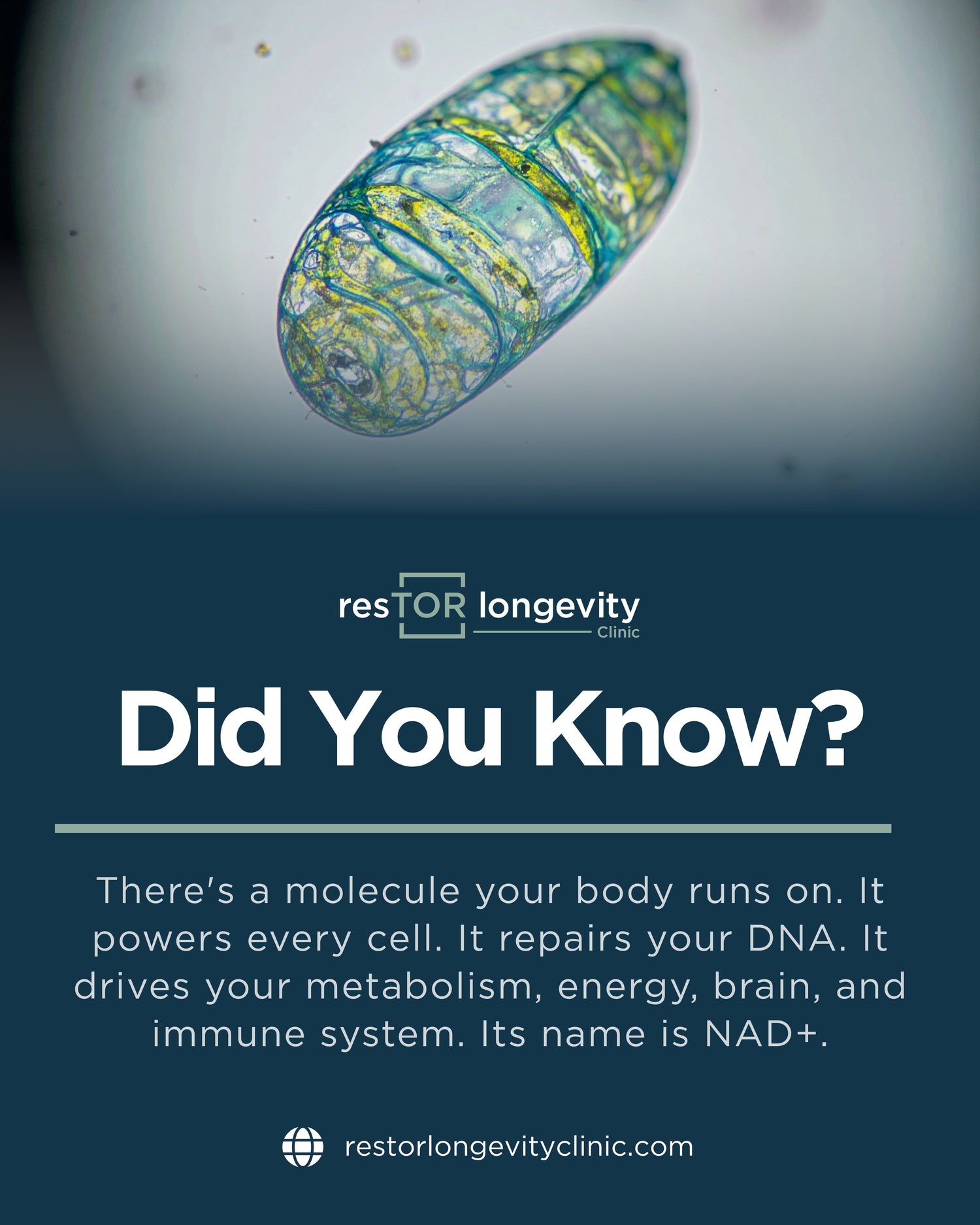
Your body depends on cellular energy to power your brain, muscles, metabolism, immune system, recovery, and repair. NAD+, short for nicotinamide adenine dinucleotide, plays a major role in that process by helping cells convert nutrients into energy and supporting mitochondrial function, DNA repair, and healthy aging pathways.
At resTOR Longevity Clinic in Houston, Texas, Dr. Gregory Burzynski and the resTOR team take a physician-led, data-driven approach to cellular health. Convenient to Cypress and Spring, resTOR helps patients move beyond guessing and better understand what their body may need through advanced testing and personalized guidance.
What Does NAD+ Do in the Body?
NAD+ helps support the body’s ability to make energy at the cellular level. It is involved in how the body uses food, oxygen, and nutrients to fuel daily function. When cellular energy production is working well, it can support stamina, mental clarity, recovery, metabolism, and overall resilience.
One of the biggest reasons NAD+ matters is its connection to mitochondria. Mitochondria are often described as the power centers of the cells because they help produce energy. When mitochondrial function slows down, people may notice changes in energy, exercise tolerance, recovery, focus, and metabolic flexibility.
NAD+ also plays a role in DNA repair and cellular maintenance. Daily life exposes the body to stress from inflammation, poor sleep, environmental factors, metabolic strain, and normal aging. The body has repair systems that help manage this stress, and NAD+ is involved in several of those pathways.
NAD+ may support:
- Cellular energy production
- Mitochondrial function
- DNA repair processes
- Metabolic health
- Brain and cognitive function
- Recovery and resilience
- Healthy aging pathways
This does not mean NAD+ is a magic switch for aging. It means it is one important part of a much bigger picture. Hormones, inflammation, nutrition, sleep, stress, body composition, cardiovascular health, genetics, and lifestyle all matter too.
Dr. Gregory Burzynski says: “NAD+ is popular right now, but I do not want patients guessing their way through another trend. I want to look at what their body is actually showing us and build from there.”
Why Are NAD+ Levels Important for Healthy Aging?
NAD+ levels matter because they are tied to how well cells create energy, repair damage, and respond to stress. As people age, changes in sleep, metabolism, recovery, focus, muscle health, and endurance may be connected to declining cellular function.
When cellular energy is lower, patients may feel less sharp, less recovered, or more drained than they used to, even when basic labs do not explain why. A longevity-focused evaluation can help look beyond one symptom and review broader patterns that may influence cellular health and aging.
This may include reviewing areas such as:
- Inflammation and oxidative stress
- Metabolism and insulin response
- Nutrient and hormone status
- Body composition and cardiovascular risk
- Sleep, recovery, and mitochondrial health
This kind of deeper evaluation can offer more direction. It helps patients understand whether their symptoms may be tied to energy production, metabolic stress, inflammation, or other health patterns that deserve attention.
A Data-Driven Approach to NAD+ Support
NAD+ supplements and related compounds have become popular in the wellness world. Many people are hearing about NAD+, NMN, NR, IV therapy, peptides, and mitochondrial support. While these conversations can be helpful, they can also lead to guessing.
At resTOR Longevity Clinic, the focus is not on following trends blindly. The focus is on testing, evaluating, and creating a plan that fits the patient. NAD+ support may be part of the conversation, but it should be considered alongside the full health picture.
A personalized plan may include nutrition, exercise, sleep support, stress management, targeted supplementation, metabolic strategies, and physician-guided recommendations. For some patients, the goal may be better energy. For others, it may be improved recovery, healthier aging, better metabolic function, or a clearer plan for prevention.
The difference is the starting point. Instead of asking, “What should I take?” a better question is, “What does my body actually need?”
That question can lead to a more thoughtful plan. A patient with inflammation, poor sleep, nutrient deficiencies, insulin resistance, or high stress may need a different approach than someone focused mainly on performance or long-term prevention.
NAD+ is important, but it works within a larger system. Supporting cellular health often means looking at the habits, risks, and biomarkers that influence how the body functions every day.
Cellular Energy and a Smarter Longevity Plan
Healthy aging is not only about living longer. It is about maintaining the energy, clarity, strength, and resilience to live better. NAD+ has become an important part of the longevity conversation because it is connected to cellular energy, mitochondrial health, DNA repair, and metabolic function.
At resTOR Longevity Clinic in Houston, Dr. Gregory Burzynski and the resTOR team help patients move beyond guessing with physician-led testing and personalized guidance. For those ready to better understand their cellular health, energy, and long-term wellness, scheduling a longevity assessment is a clear place to begin.
Published by resTOR Longevity Clinic | Dr. Gregory Burzynski | Serving Houston and Harris County, TX | (832) 968-7531
Educational purposes only. Not medical advice.