Why Muscle Mass Matters for Metabolism and Longevity
Muscle mass is often associated with strength, fitness, or physical appearance, but it plays a much bigger role in long-term health. Your muscles are active tissue, which means they use energy, support movement, influence metabolism, and help your body respond to daily demands. When muscle mass is healthy, the body is often better equipped to manage energy, blood sugar, mobility, recovery, and resilience with age.
At resTOR Longevity Clinic in Houston, Texas, muscle health is viewed as an important part of a physician-led longevity plan. Dr. Gregory Burzynski and the resTOR team focus on helping patients better understand what is happening inside the body, not just what shows up on the scale. For many people, preserving and building lean muscle is one of the most practical ways to support healthspan, metabolism, and quality of life over time.
Why Does Muscle Mass Matter for Your Metabolism?
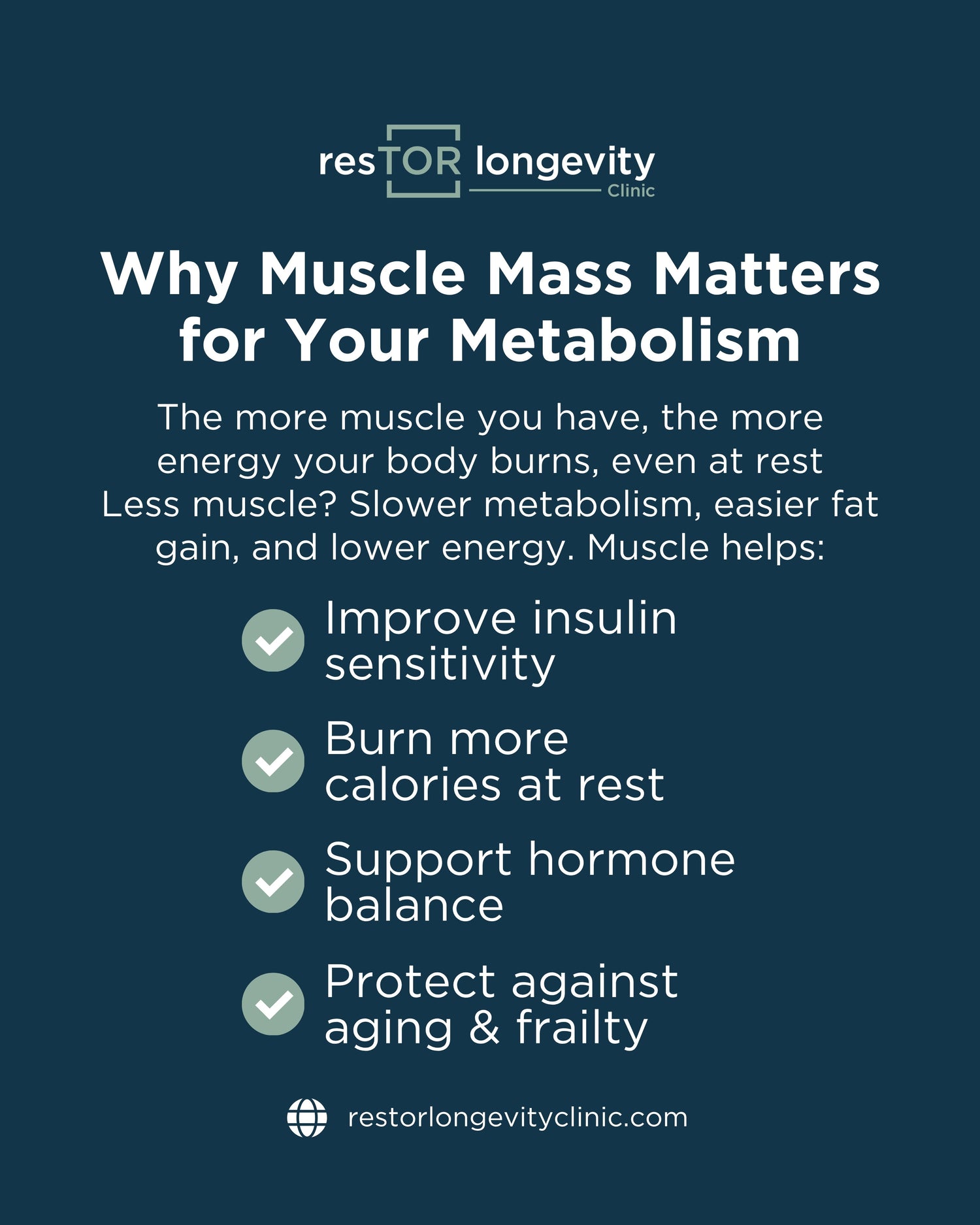
Muscle mass matters for your metabolism because muscle is metabolically active. This means it requires energy to maintain, even when you are resting. While exercise can help burn calories during a workout, muscle continues to influence how the body uses energy throughout the day.
When someone has more lean muscle, their resting metabolic rate may be better supported. Resting metabolic rate refers to the amount of energy the body uses for basic functions such as breathing, circulation, temperature regulation, and cellular repair. Muscle is not the only factor involved, but it is an important one.
Healthy muscle mass can help support:
- Better calorie burning at rest
- Improved glucose use and insulin sensitivity
- More stable energy throughout the day
- Stronger physical performance and recovery
- Better support for long-term weight management
This is one reason the scale can be misleading. Two people may weigh the same, but their body composition can be very different. One person may have more lean muscle, while another may have more body fat. Those differences can affect metabolism, energy, strength, and long-term health risks.
Muscle Loss and Aging
After about age 30, adults can begin to lose muscle mass gradually, especially without regular strength training, proper nutrition, and recovery. This age-related muscle loss can become more noticeable over time, affecting balance, mobility, posture, metabolism, and independence.
For adults in Houston and nearby areas such as Sugar Land and The Woodlands, this is an important part of preventive wellness. Many people do not realize they are losing muscle until they notice changes in strength, stamina, body shape, or weight that feels harder to manage.
Loss of muscle mass may contribute to:
- Slower metabolism
- Easier fat gain
- Lower daily energy
- Reduced balance and stability
- Greater risk of frailty with age
The goal is not extreme bodybuilding or chasing a certain appearance. The goal is function. Stronger muscles help you move better, recover better, and stay more capable as you age.
How Does Muscle Support Blood Sugar and Hormone Health?
Muscle plays an important role in blood sugar regulation because it helps absorb and store glucose. When muscle tissue is active and healthy, the body may use glucose more efficiently. This can support better metabolic health and may help reduce some of the stress placed on the body’s insulin response.
Muscle health can also connect with hormone balance. Hormones influence how the body builds muscle, stores fat, responds to stress, recovers from exercise, and maintains energy. When muscle mass declines, it can become harder to maintain metabolic flexibility and steady energy.
At resTOR Longevity Clinic, this is why muscle is not treated as a separate fitness issue. It is part of a broader health picture that may include biomarkers, body composition, hormone patterns, inflammation, recovery, and lifestyle habits.
“Muscle is one of the most overlooked parts of longevity,” says Dr. Gregory Burzynski. “It is not just about looking stronger. It is about helping your body stay more resilient, metabolically active, and capable as you get older.”
Building Muscle Through a Longevity-Focused Plan
Building and preserving muscle takes consistency. It usually requires a combination of resistance training, adequate protein intake, recovery, sleep, and a plan that fits your current health status. For some patients, advanced testing may also help identify factors that could be making progress more difficult, such as hormone changes, nutrient gaps, inflammation, or metabolic dysfunction.
A longevity-focused muscle plan may include:
- Strength training several times per week
- Adequate protein spread throughout the day
- Recovery time between challenging workouts
- Sleep habits that support repair and hormone function
- Body composition tracking to measure real progress
This is where many people benefit from guidance. Guessing can lead to frustration, especially when weight loss, fatigue, or aging-related changes are involved. A physician-led approach can help connect the dots between effort, results, and what the body may need to respond better.
Muscle Mass as a Foundation for Healthspan
Healthspan is about more than living longer. It is about maintaining strength, independence, clarity, energy, and quality of life for as many years as possible. Muscle mass supports that goal because it helps the body stay physically capable and metabolically active.
For many adults, the best time to focus on muscle is before major decline begins. However, it is never too late to start improving strength and body composition with the right plan. Small, consistent steps can make a meaningful difference over time.
At resTOR Longevity Clinic in Houston, Texas, Dr. Gregory Burzynski and the resTOR team help patients take a more personalized look at metabolism, muscle, and longevity. If you are ready to better understand your body and support long-term health from the inside out, scheduling a consultation is a great first step.
Schedule Your Consultation
Published by resTOR Longevity Clinic | Dr. Gregory Burzynski | Serving Houston & Surrounding Areas | (832) 968-7531
Educational purposes only. Not medical advice.