Grip Strength Testing for Longevity and Muscle Health
Muscle strength is one of the clearest indicators of how well your body is aging. While many people focus on weight, lab values, or cardiovascular health, strength often tells a deeper story about resilience, mobility, and long-term independence. At resTOR Longevity Clinic in Houston, Texas, grip strength testing offers a simple, measurable way to assess how your body is functioning today and what it may mean for your future.
Patients often travel from nearby Katy and Sugar Land for advanced longevity-focused care that looks beyond surface-level metrics. Grip strength testing is one of the most efficient tools used to evaluate muscle function and guide personalized strategies for maintaining strength over time.
What Is Grip Strength Testing?
Grip strength testing measures the force generated by your hand and forearm muscles using a handheld dynamometer. While it may seem like a small measurement, it reflects broader muscle health throughout the body.
This test is quick, non-invasive, and easy to repeat over time, making it ideal for tracking changes in strength. Because muscle function is closely tied to mobility, balance, and metabolic health, grip strength provides valuable insight into how well your body is maintaining its physical capacity.
At resTOR Longevity Clinic, this data is used as part of a larger picture to help identify early signs of decline and create targeted plans to support long-term strength.
Why Does Grip Strength Matter for Longevity?
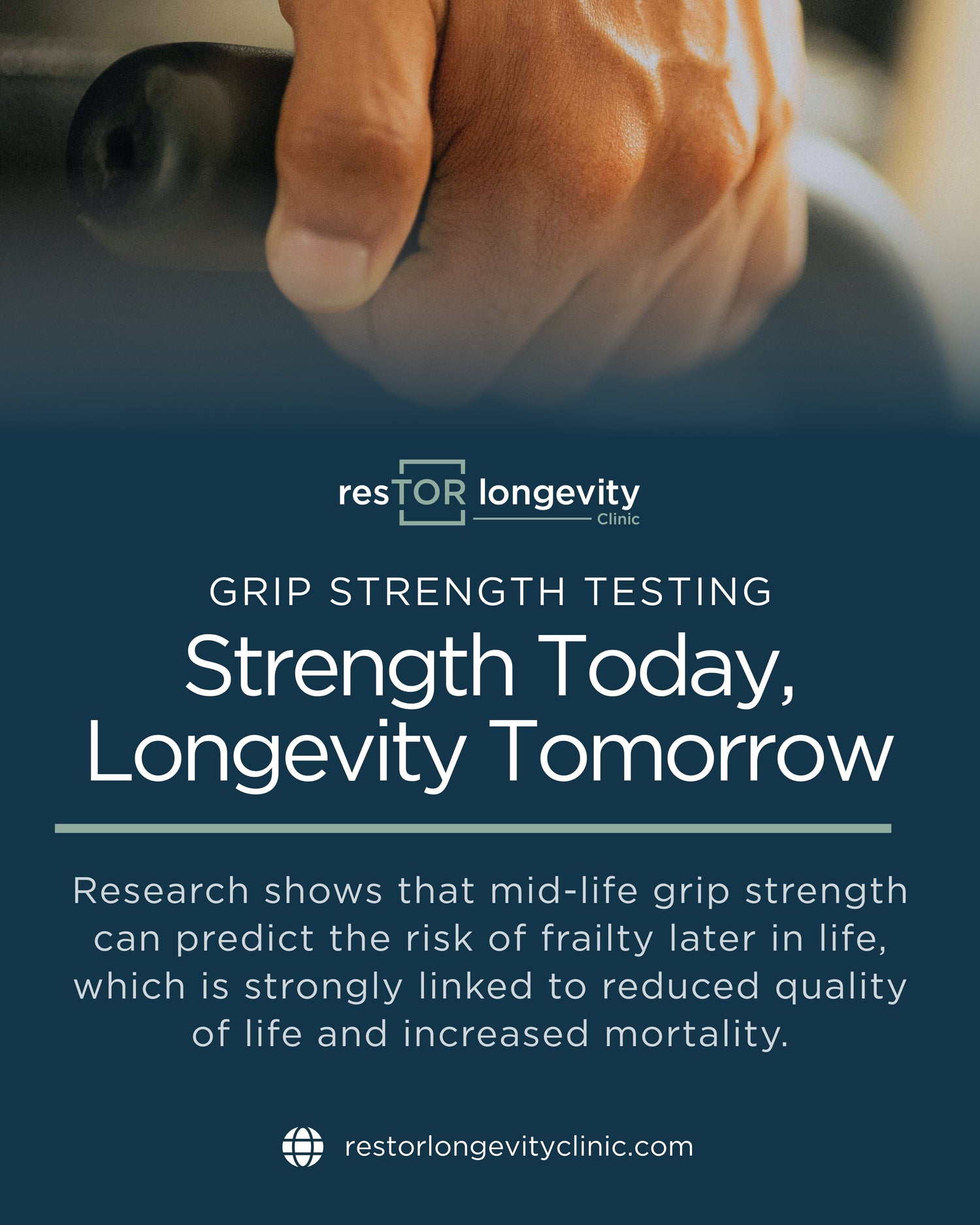
Grip strength has been widely studied as a predictor of long-term health outcomes. Lower grip strength has been associated with increased risk of frailty, reduced mobility, and even higher mortality rates.
Rather than waiting for symptoms to appear, this test helps identify potential concerns early.
Key reasons it matters include:
- Reflects total body muscle strength and function
- Helps detect early signs of age-related muscle loss
- Provides insight into overall physical resilience
Muscle strength naturally declines with age, but the rate of decline varies from person to person. Identifying where you stand allows for early intervention, which can significantly impact long-term health.
How Is Grip Strength Connected to Overall Health?
Grip strength is more than just a measurement of hand function. It is closely tied to several key areas of health that influence daily life and longevity.
It plays a role in mobility, balance, and reducing fall risk, while also supporting metabolic health and energy regulation. Stronger muscle function also helps maintain the ability to perform everyday activities independently.
When muscle strength is maintained, it supports better posture, coordination, and endurance. This translates into a higher quality of life and greater independence as you age.
At resTOR Longevity Clinic, testing is used to guide personalized programs that may include:
- Strength training tailored to your current ability
- Nutritional strategies to support muscle maintenance
Dr. Gregory Burzynski integrates strength-based assessments into broader longevity planning, helping patients understand how physical performance connects to overall health and aging.
Who Should Consider Grip Strength Testing?
Grip strength testing is beneficial for a wide range of individuals, not just those already experiencing weakness or mobility concerns.
It may be especially helpful for:
- Adults interested in preventive health and longevity
- Individuals noticing changes in strength or endurance
- Patients beginning or adjusting a fitness routine
Because it is quick and easy to perform, it can be incorporated into regular wellness visits to establish a baseline and monitor changes over time.
Can Grip Strength Be Improved?
Yes, grip strength can improve with the right approach. Like other muscles in the body, the muscles responsible for grip respond to consistent training and proper support.
Improvement strategies often include:
- Resistance training and functional exercises
- Grip-specific strengthening movements
- Adequate protein intake and recovery
Tracking grip strength over time helps ensure that your efforts are effective and allows adjustments to be made as needed.
As Dr. Gregory Burzynski often explains, “Strength is something you can build at any stage of life, and measuring it gives us a clear starting point to create a plan that supports long-term health and independence.”
What Can You Expect During Testing?
The process is simple and takes only a few minutes. You will be asked to squeeze a handheld device with maximum effort, usually multiple times to ensure accuracy.
There is no downtime, and results are available immediately. These results are then compared to age- and sex-based norms to determine where you fall and what steps may be beneficial moving forward.
This makes grip strength testing one of the most accessible and actionable tools in longevity-focused care.
Supporting Strength for the Future
Maintaining muscle strength is one of the most effective ways to support long-term health, mobility, and independence. Grip strength testing offers a clear, measurable way to understand where you stand today and how to improve for the future.
At resTOR Longevity Clinic in Houston, patients receive personalized guidance designed to support strength, function, and overall health for years to come. If you are ready to take a proactive approach to aging, this simple test can be a powerful first step.
Book Your Consultation Today!
Educational purposes only. Not medical advice