
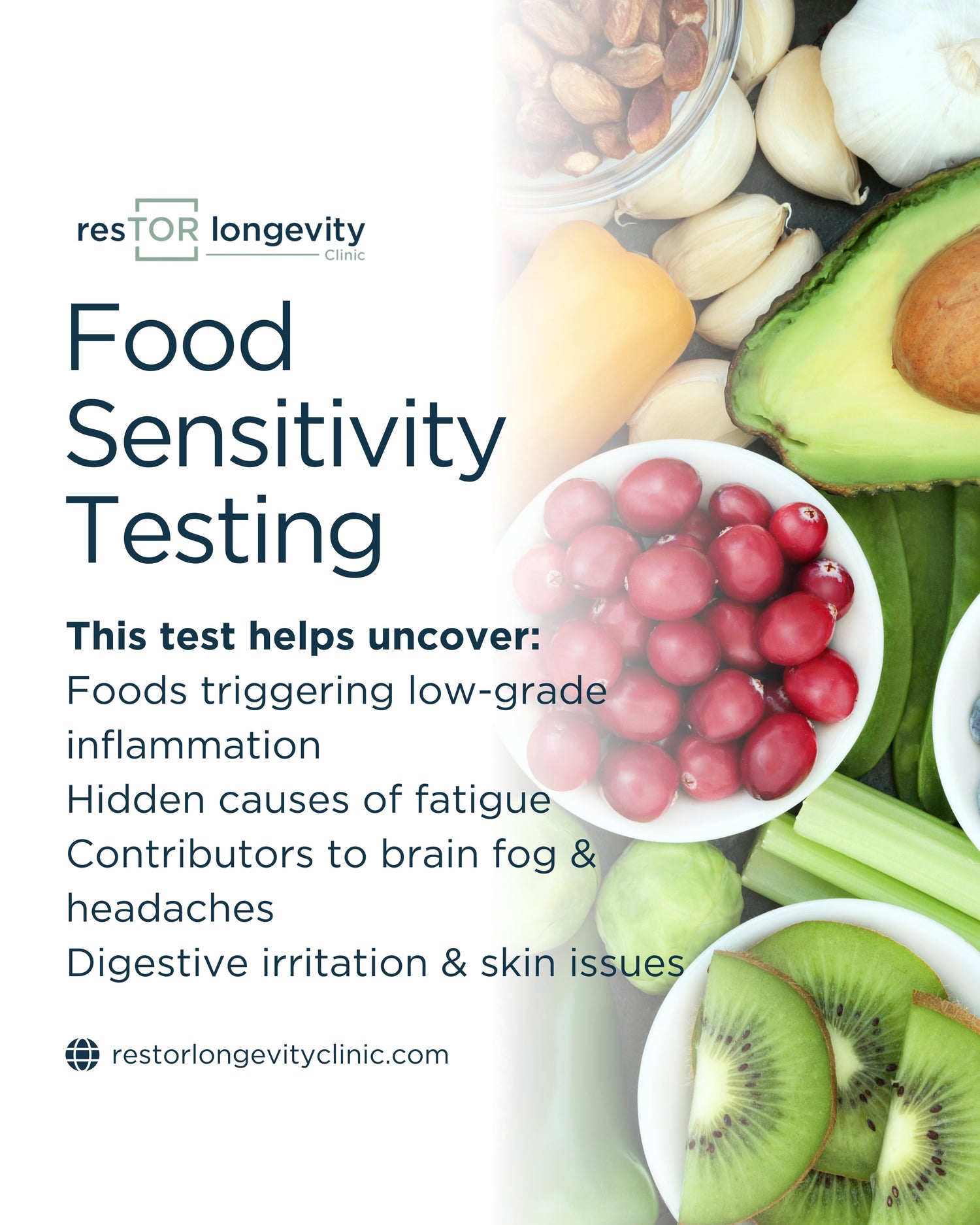
Food Sensitivity Testing for Personalized Nutrition in Houston
Many people experience symptoms that seem difficult to explain. Bloating after meals, unexplained fatigue, recurring headaches, skin flare-ups, or persistent digestive discomfort can sometimes leave individuals wondering whether something in their diet may be contributing to how they feel.
Food sensitivities are often overlooked because their symptoms may not appear immediately after eating. Instead, reactions may develop gradually over hours or even days, making it challenging to identify which foods may be triggering inflammation or discomfort.
At resTOR Longevity Clinic in Houston, Texas, Food Sensitivity Testing helps patients explore how their immune system responds to certain foods. Under the guidance of Dr. Gregory Burzynski, this testing is used as part of a broader longevity-focused approach that looks at nutrition, inflammation, and metabolic balance as key components of long-term health.
Understanding Delayed Immune Responses to Foods
Unlike classic food allergies, which typically trigger immediate reactions such as swelling or difficulty breathing, food sensitivities often involve delayed immune responses. These responses are commonly associated with IgG antibodies that the body produces after exposure to certain foods.
Because these reactions are delayed, the connection between a specific food and symptoms may not be obvious. A meal eaten the day before could contribute to symptoms experienced the following morning or even later.
Food Sensitivity Testing, at resTOR Longevity Clinic, helps identify patterns that may otherwise go unnoticed. By evaluating immune responses to a variety of common foods, clinicians can gain insights into which items may be contributing to low-grade inflammation or other health concerns.
Many patients seek testing when experiencing symptoms such as:
- Digestive discomfort including bloating or irregular digestion
- Persistent fatigue or low energy
- Brain fog or difficulty concentrating
- Headaches that seem to occur without a clear trigger
- Skin concerns such as rashes, irritation, or breakouts
While these symptoms can have many possible causes, understanding potential food sensitivities can help provide additional insight into how diet may influence overall well-being.
How Can Food Sensitivity Testing Support Long-Term Health?
Nutrition plays a central role in longevity medicine. When the body is repeatedly exposed to foods that trigger immune reactions, it may contribute to ongoing inflammation that affects multiple systems throughout the body.
Food Sensitivity Testing helps create a clearer picture of how the immune system interacts with certain foods. Rather than relying solely on guesswork or restrictive elimination diets, testing can help guide more informed dietary decisions.
Potential benefits of identifying food sensitivities may include:
- Supporting improved digestion and nutrient absorption
- Reducing sources of low-grade inflammation
- Helping patients better understand patterns behind fatigue or headaches
- Supporting clearer skin and improved energy levels
- Creating a more personalized nutrition strategy
The goal is not to permanently eliminate large categories of food, but rather to understand how the body responds so that dietary choices can better support metabolic balance and overall wellness.
Personalized Nutrition and Longevity Medicine
Longevity-focused healthcare emphasizes prevention and optimization rather than waiting for illness to develop. Nutrition plays a critical role in this strategy because the foods people eat every day influence inflammation, metabolism, gut health, and immune function.
Food Sensitivity Testing is often combined with other assessments that evaluate metabolic health, gut function, and inflammatory markers. By looking at these factors together, clinicians can develop more personalized recommendations tailored to each individual.
Dr. Gregory Burzynski often emphasizes that understanding how the body responds to food can provide valuable insight into overall health. “Sometimes the foods we eat can quietly contribute to symptoms like bloating, fatigue, or headaches. When we identify those triggers, it becomes easier to adjust nutrition in ways that help the body feel and function better.”
This individualized approach allows patients to better understand their bodies while building nutrition habits that support energy, resilience, and healthy aging.
Integrating Food Insights Into Daily Life
Once potential sensitivities are identified, patients can work with their provider to determine how to adjust their nutrition in a practical and sustainable way. In many cases, temporary elimination followed by gradual reintroduction may help clarify which foods are most likely to trigger symptoms.
Tips from the resTOR Longevity team that may support better digestive and immune health:
- Emphasizing whole, nutrient-dense foods
- Supporting gut microbiome balance
- Maintaining stable blood sugar through balanced meals
- Identifying dietary patterns that support energy and focus
Rather than relying on generic nutrition advice, Food Sensitivity Testing in Houston provides information that can help guide more personalized dietary decisions.
Personalized Nutrition Insights at resTOR Longevity Clinic
Many individuals experiencing ongoing symptoms may benefit from a closer look at how nutrition interacts with immune and metabolic health. Food Sensitivity Testing at resTOR Longevity Clinic is designed to help uncover patterns that may influence inflammation, digestion, and overall wellness.
Patients in Houston, Texas who are interested in learning more about personalized nutrition strategies can schedule a consultation with Dr. Gregory Burzynski to explore whether Food Sensitivity Testing may be a helpful part of their longevity-focused care plan.
Book Consult Today
Educational purposes only. Not medical advice.