When it comes to living a long, healthy life, nutrition plays a central role. The foods you choose each day aren’t just about weight management or energy—they directly impact how your cells age, how your body responds to inflammation, and how well you maintain strength and vitality over time. Understanding the core principles of a longevity-focused diet can help you make practical, science-based choices that support health now and for decades to come.
Nutrition Matters for Longevity
Aging is inevitable, but the rate at which your body ages can be influenced by what you eat. The right nutrients support overall health by helping maintain muscle strength, reducing chronic inflammation, and promoting long-term vitality. Research from the world’s “Blue Zones”—regions where people live longer than average—shows that the key isn’t a fad diet or extreme restriction; it’s consistent intake of nutrient-dense foods and balanced portions over a lifetime.
At resTOR Longevity Clinic in Houston, Texas, Dr. Gregory Burzynski emphasizes a practical, customized approach to nutrition that helps adults build habits supporting long-term cellular health.
What Is Cellular Nourishment?
Cellular nourishment is all about feeding your body at the level of your cells. Every cell in your body relies on essential nutrients—vitamins, minerals, amino acids, and healthy fats—to function, repair, and protect itself. Foods rich in antioxidants and phytochemicals, like colorful fruits and vegetables, help shield cells from damage, while protein supports muscle and tissue repair. By focusing on nutrient-dense choices rather than just calories, you give your cells the tools they need to thrive, which supports energy, immune function, and overall longevity.
The Core Principles of a Longevity Diet
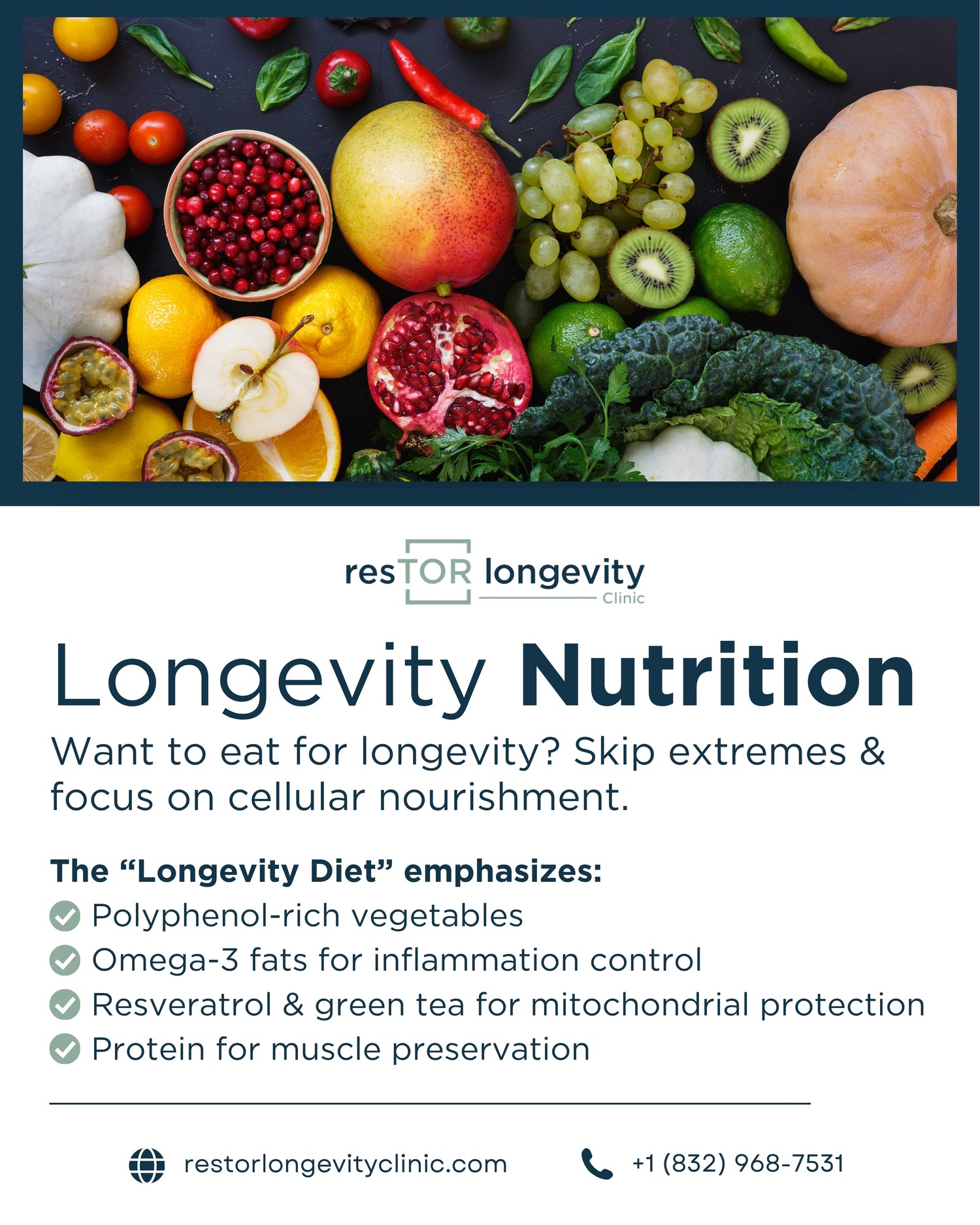
Polyphenol-Rich Vegetables
Vegetables are a cornerstone of longevity. Dark leafy greens, cruciferous vegetables like broccoli and Brussels sprouts, and colorful peppers are packed with polyphenols—plant compounds that help protect cells from oxidative stress and support immune function. Including a wide variety of vegetables daily ensures your body receives a diverse array of nutrients essential for long-term health.
Omega-3 Fats for Inflammation Control
Chronic inflammation is a major driver of aging and age-related diseases. Omega-3 fatty acids, found in fatty fish such as salmon, sardines, and mackerel, help reduce inflammation at the cellular level. Plant-based sources like chia seeds, flaxseeds, and walnuts are excellent alternatives for those who prefer a vegetarian approach. Balancing healthy fats supports heart health, cognitive function, and joint mobility over time.
Resveratrol & Green Tea for Mitochondrial Protection
The mitochondria—your cells’ energy powerhouses—play a critical role in longevity. Polyphenols such as resveratrol (found in grapes and red wine) and compounds in green tea help protect mitochondrial function, supporting energy production and slowing cellular aging. Including these nutrient-rich beverages and foods in your diet can provide a subtle but meaningful boost to overall cellular health.
Protein for Muscle Preservation
Maintaining lean muscle mass is key to mobility and independence as you age. High-quality protein from sources like eggs, poultry, fish, beans, and legumes helps preserve muscle strength and supports recovery from daily activity or exercise. Adequate protein, combined with regular movement, helps adults avoid age-related muscle loss and maintain vitality.
Practical Tips for Everyday Longevity Eating
-
Emphasize Whole Foods
Skip highly processed foods and refined sugars. Focus on vegetables, fruits, lean proteins, and healthy fats. -
Eat for Nutrient Density, Not Volume
Choose foods that deliver the most vitamins, minerals, and antioxidants per calorie. -
Moderation Over Restriction
The goal isn’t to follow extreme diets but to practice portion awareness and mindful eating. -
Consistency is Key
Daily habits add up over years—small, positive changes are more sustainable than dramatic shifts.
Learning from the Blue Zones
Populations in the Blue Zones, including Okinawa (Japan) and Sardinia (Italy), share common dietary patterns: plant-heavy meals, moderate calorie intake, occasional fish and legumes, and limited processed foods. These principles have been linked to lower rates of heart disease, diabetes, and cognitive decline. By incorporating these lessons into modern nutrition, adults can create a diet that’s practical, enjoyable, and scientifically grounded.
Taking the First Step
Longevity nutrition isn’t about perfection—it’s about building habits that support your body’s cellular health, energy, and resilience. Dr. Burzynski encourages adults to view nutrition as a lifelong investment in wellness, not a short-term project. Whether you’re looking to improve energy, support healthy aging, or reduce chronic disease risk, adopting a nutrient-dense, balanced approach can help you thrive for decades to come.
At resTOR Longevity Clinic in Houston, patients work with experts like Dr. Burzynski to create personalized nutrition strategies that fit real lifestyles. Small, science-backed changes can help you fuel your body to live not just longer—but better.