Cold Plunge and Sauna Therapy: Temperature Tools for Longevity
Two of the most talked-about longevity tools right now involve temperature. Both cold plunge and sauna therapy create controlled stress on the body, and that stress may support recovery, circulation, energy, and resilience when used safely.
Cold and heat exposure are not new. Saunas have been used for generations, and cold-water immersion has long been part of athletic recovery. What has changed is the growing interest in how these practices fit into a larger longevity plan.
At resTOR Longevity Clinic in Houston, Texas, Dr. Gregory Burzynski and the resTOR team help patients look beyond wellness trends and understand what their body may actually need. Temperature therapy can be useful, but it works best when paired with baseline data, medical guidance, and a plan that fits the individual.
What Can Cold Plunge Do for Recovery and Resilience?
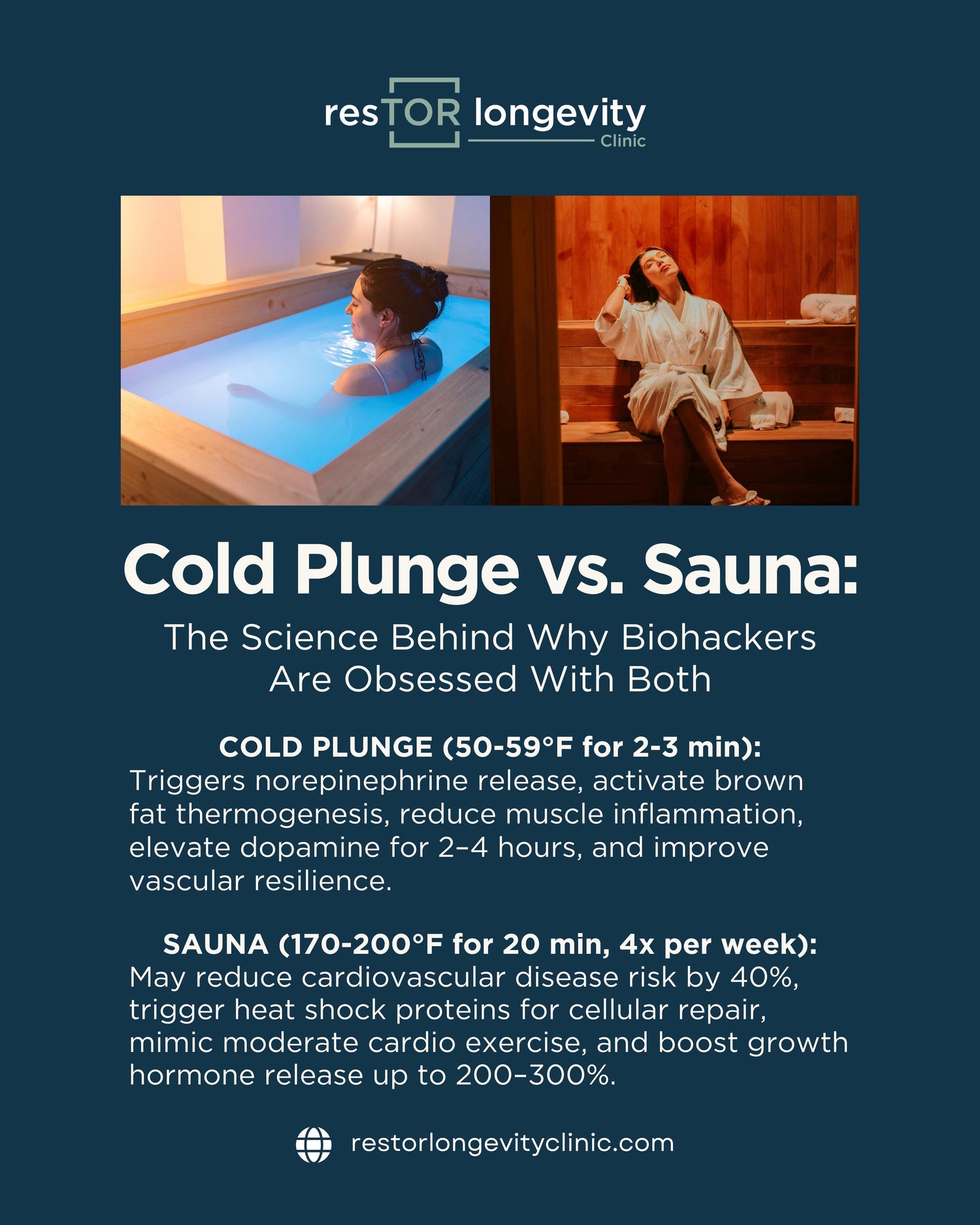
Cold plunge therapy usually involves sitting in cold water for a short period of time, often around 50 to 59 degrees Fahrenheit for two to three minutes. During that exposure, blood vessels constrict, breathing changes, and the nervous system becomes more alert. Many people describe feeling focused, energized, or mentally clear afterward.
Cold water immersion may support post-exercise recovery for some people by helping reduce soreness and the perception of muscle fatigue after intense activity. Cold exposure may also stimulate norepinephrine, a chemical involved in alertness and mood, while activating brown fat, a type of metabolically active fat that helps the body generate heat.
That does not make cold plunging a weight loss solution or a cure-all. The benefit is not just in the cold. It is in how the body adapts to short, controlled stress. People with cardiovascular disease, uncontrolled high blood pressure, fainting history, certain neurologic conditions, pregnancy, or other medical concerns should speak with a healthcare professional before beginning.
How Can Sauna Support Long-Term Wellness?
Sauna therapy works in the opposite direction. Instead of cold stress, the body experiences heat stress. In a hot sauna, heart rate rises, sweating increases, and blood vessels widen. This can create a cardiovascular response similar to light or moderate exercise, even though the body is resting.
Sauna use has been studied for its potential connection to cardiovascular health, circulation, relaxation, and recovery. Some long-term population research has linked frequent sauna use with lower cardiovascular risk, especially in Finnish studies where sauna bathing is part of daily life. While those studies do not mean sauna therapy is a cure or guarantee, they suggest heat exposure may be one part of a heart-supportive lifestyle.
Heat exposure may also stimulate heat shock proteins, which help the body respond to cellular stress and repair damaged proteins. For patients focused on longevity, this is one reason sauna therapy has become so interesting. It may support the body’s natural repair systems while also offering a calming recovery ritual.
“Cold and heat therapy can be great tools, but they are not one-size-fits-all,” says Dr. Gregory Burzynski. “I would rather help someone understand their baseline first, then build a plan that feels safe, realistic, and actually useful for their body.”
Contrast Therapy and the Bigger Longevity Picture
Contrast therapy usually means alternating between heat and cold, such as moving from a sauna into a cold plunge. The body experiences repeated shifts as blood vessels widen in the heat and constrict in the cold. This may support circulation, recovery, and nervous system flexibility for some people.
Many people enjoy contrast therapy because it creates a strong physical reset. The sauna encourages relaxation, while the cold plunge wakes up the body and sharpens attention. However, more intense does not always mean more effective. Dehydration, low blood pressure, medications, poor sleep, illness, or cardiovascular risk can all change how someone responds.
Start With Your Baseline Before Starting the Trend
The biggest mistake with longevity trends is starting with the tool before understanding the body. Cold plunge, sauna therapy, fasting, supplements, exercise plans, and recovery devices can all sound promising, but none should replace a clear look at what is happening internally.
Someone with poor sleep, elevated inflammation, hormone imbalance, low muscle mass, insulin resistance, or nutrient deficiencies may need a different plan than someone who is already training consistently and recovering well. A longevity assessment can help identify patterns that may influence recovery, metabolism, cardiovascular health, energy, and resilience.
For patients in Houston, Texas, and surrounding Harris County communities, resTOR Longevity Clinic offers physician-led care that helps connect advanced testing with practical longevity strategies. If you are curious about cold plunge, sauna use, contrast therapy, or other wellness tools, the best place to begin is with your baseline data.
Schedule a longevity assessment at resTOR Longevity Clinic and learn what your body may be ready for next.
Published by resTOR Longevity Clinic | Dr. Gregory Burzynski | Serving Houston and Harris County, TX | (832) 968-7531.
Educational purposes only. Not medical advice.